


Phone:
+86-138-0577-0261


Views: 0 Author: Site Editor Publish Time: 2025-12-04 Origin: Site


In today’s fast-paced food industry, packaging is not just a protective measure—it is an essential component that directly influences food safety, quality, operational efficiency, and consumer perception. Among various packaging materials, Trey Plastic has emerged as a highly effective solution due to its combination of durability, versatility, and cost-efficiency. These trays are widely used across retail, catering, logistics, and food service sectors to store, transport, and display a broad range of food products.
The advantages of trey plastic go beyond simple containment. They offer robust physical protection, preserve the freshness and nutritional value of food, enhance hygiene standards, improve product presentation, and streamline operational processes. Moreover, the evolution of sustainable designs and recyclable materials has made trey plastic an increasingly environmentally responsible option.
This article delves into the multifaceted benefits of trey plastic in food packaging, highlighting functional, commercial, and environmental advantages. Understanding these benefits enables businesses to make informed packaging choices, optimize their supply chain, enhance brand reputation, and satisfy the growing consumer demand for convenient and safe food packaging solutions.
One of the foremost advantages of trey plastic in food packaging is its ability to provide physical protection. Food products, particularly delicate items like fruits, vegetables, baked goods, and ready-to-eat meals, are prone to damage from handling, transportation, and storage processes. Trey plastic offers rigid support and structural stability, which:
Prevents crushing, deformation, and bruising during stacking and shipping
Protects products from vibrations, shocks, and external pressure
Maintains the original shape, texture, and quality of food until consumption
Physical protection provided by trey plastic is critical for reducing product losses and operational costs. By minimizing spoilage and maintaining the integrity of food items, businesses can enhance efficiency while ensuring that products meet quality expectations upon reaching the consumer.
In addition to physical protection, trey plastic contributes significantly to food hygiene. Contamination is a major concern in the food industry, and plastic trays reduce direct handling of food during packaging, transport, and retail display. Benefits include:
Decreasing exposure to bacteria, pathogens, and foreign particles
Minimizing cross-contamination between different products or batches
Supporting compliance with strict food safety regulations, including sanitation and quality standards
By maintaining a hygienic barrier between the food and the external environment, trey plastic helps ensure safety throughout the supply chain. Its smooth surfaces and easy-to-clean design also facilitate adherence to food safety protocols, particularly in retail and catering environments.
Freshness preservation is a critical factor in food packaging. Many trey plastic designs include ventilated features that allow optimal airflow around the product. This ventilation:
Maintains appropriate humidity levels to prevent moisture buildup
Reduces the risk of mold or bacterial growth
Helps retain the crispness and texture of fruits, vegetables, and baked goods
Controlling moisture is particularly important in environments with varying temperature and humidity levels. Proper airflow ensures that perishable foods maintain their sensory qualities and nutritional value for longer periods, reducing the risk of waste.
Trey plastic trays are compatible with cold-chain logistics and can withstand both refrigerated and frozen storage conditions. This temperature stability:
Helps preserve delicate products during transport over long distances
Minimizes degradation caused by temperature fluctuations
Maintains the freshness and appearance of temperature-sensitive items such as dairy, seafood, and fresh produce
Ensuring stable temperatures throughout the supply chain is essential for retaining product quality, extending shelf life, and complying with food safety regulations.
The combination of physical protection, moisture control, and temperature management enables trey plastic to extend the shelf life of food products. Extended shelf life benefits include:
Reduced food spoilage and waste for retailers and consumers
Greater flexibility in storage and logistics planning
Consistent product quality for end-users
By minimizing deterioration and oxidation, trey plastic ensures that food retains its flavor, texture, and nutritional value throughout its intended shelf life, improving consumer satisfaction and brand reliability.
Trey plastic trays are designed to be lightweight, uniform, and stackable, which significantly improves handling efficiency. Key operational advantages include:
Easier storage and stacking in warehouses, trucks, and display areas
Reduced labor effort during loading, unloading, and transportation
Lower risk of product damage due to efficient stacking and secure placement
The convenience of trey plastic in logistics contributes to streamlined supply chains and reduces operational complexity, making it a preferred solution for high-volume food packaging.
Pre-portioned trey plastic trays are particularly useful in:
Single-serve retail packaging for snacks, fruits, and ready meals
Catering services that require consistent portions for events or meal services
Standardized packaging for retail shelves to maintain uniformity
Portion control enhances consumer convenience while helping businesses manage inventory, reduce overproduction, and minimize food waste.
Uniform tray dimensions and standardized packaging allow for efficient inventory management:
Facilitates organized storage and easy stacking in shelves or cold rooms
Supports first-in, first-out (FIFO) product rotation, reducing spoilage
Provides clear visual identification of product types for faster handling
Efficient inventory management minimizes operational inefficiencies, supports accurate stock control, and helps businesses maintain consistent product quality.
Table 1: Operational Benefits of Trey Plastic in Food Packaging
Benefit | Description |
Stackable & Lightweight | Easier handling, reduced labor, and efficient use of storage space |
Portion Control | Standardized servings improve convenience and reduce overproduction |
Organized Storage | Simplifies inventory management and supports FIFO rotation |
Reduced Spoilage | Protects products during handling and transport, reducing waste |
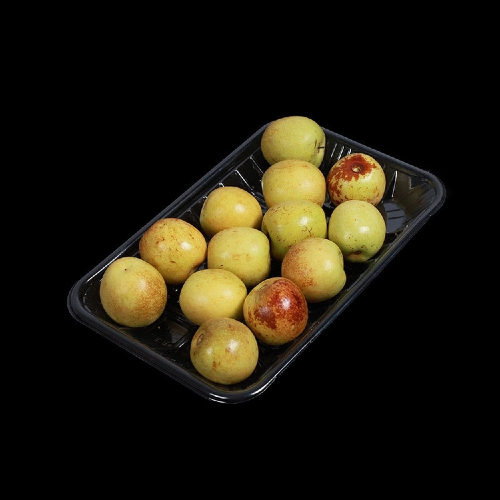
Trey plastic plays a vital role in product presentation and marketing. Transparent or clear tray designs allow consumers to visually inspect the product, showcasing:
The freshness and color of fruits and vegetables
The texture and quality of baked goods and confectionery
Ready-to-eat meals in an attractive, organized layout
An appealing visual presentation increases consumer confidence and encourages purchase decisions, directly impacting sales and brand reputation.
Plastic trays can be customized to include brand elements, providing both marketing and informational advantages:
Logos, color schemes, or patterns to reinforce brand identity
Space for labels with nutritional facts, expiration dates, and product information
Differentiation from competitors through unique packaging designs
Custom branding enhances consumer recognition, strengthens brand loyalty, and communicates product quality and safety standards.
Trey plastic packaging improves overall consumer experience by combining functionality with presentation:
Easy-to-open trays enhance convenience for consumers
Clean, organized packaging communicates hygiene and quality
Professional-looking packaging fosters trust and purchase confidence
By enhancing the sensory and practical experience, businesses can drive repeat purchases and establish long-term consumer relationships.
Modern trey plastic designs focus on reducing material usage while maintaining structural integrity. Benefits include:
Less consumption of raw materials such as polypropylene or PET
Lower shipping weight, reducing transportation energy and fuel consumption
Cost savings in production without compromising product protection
Material efficiency aligns operational goals with environmental responsibility, helping businesses minimize waste and reduce ecological impact.
Many trey plastics are either recyclable or manufactured with recycled content, supporting environmentally responsible practices:
Contributes to a circular economy by reducing landfill waste
Enables reuse of post-consumer or post-industrial materials
Aligns with consumer and regulatory demand for sustainable packaging
Recyclable designs help businesses meet sustainability goals and demonstrate corporate environmental responsibility.
Trey plastic offers financial advantages by:
Minimizing product damage and spoilage during transport and storage
Reducing labor requirements due to easy handling and stackable design
Lowering operational and transportation costs through lightweight and standardized trays
Table 2: Sustainability and Cost Benefits of Trey Plastic
Benefit | Description |
Material Efficiency | Reduces raw material use and transportation energy |
Recyclable Designs | Supports environmental responsibility and waste reduction |
Lower Operational Costs | Minimizes product damage, spoilage, and labor |
Extended Shelf Life | Reduces food waste, enhancing profitability |
Trey plastic remains a cornerstone in modern food packaging, combining protection, freshness preservation, hygiene, visual appeal, operational efficiency, and sustainability. Its versatile applications make it an essential choice for food retailers, distributors, and service providers who seek reliable, cost-effective, and environmentally responsible packaging solutions.
For businesses exploring high-quality and sustainable trey plastic solutions, Hangzhou Shiding Plastic Products Co., Ltd. provides a comprehensive range of products designed to meet diverse food packaging needs. Their expertly engineered trays ensure that food remains fresh, safe, and visually appealing while supporting operational efficiency and environmental sustainability. Contacting the company allows businesses to discover customized solutions that optimize logistics, reduce waste, and strengthen brand credibility in an increasingly eco-conscious market.
What types of food can be packaged with trey plastic?
Fresh produce, baked goods, ready-to-eat meals, dairy, seafood, snacks, and prepared foods.
How does trey plastic preserve food freshness?
By combining physical protection, moisture control, ventilation, and cold-chain compatibility.
Is trey plastic hygienic for food packaging?
Yes, it minimizes direct handling, reduces contamination risks, and meets food safety standards.
Can trey plastic be customized for branding?
Yes, trays can feature logos, labels, transparent designs, and color coding for enhanced marketing.
Are trey plastic trays environmentally friendly?
Recyclable or recycled-content designs reduce waste and material consumption, supporting sustainability.
What operational benefits does trey plastic offer?
Stackable, lightweight, and standardized trays improve handling, storage, inventory management, and reduce spoilage.
Can trey plastic help reduce packaging costs?
Yes, through lower labor, minimized product damage, reduced waste, and efficient transport.


