


Phone:
+86-138-0577-0261


Views: 0 Author: Site Editor Publish Time: 2025-11-16 Origin: Site


Packaging plays a crucial role in protecting and displaying products, especially in the food industry. For fruits, vegetables, and other perishable goods, the right packaging ensures that produce maintains its freshness, appearance, and safety throughout the supply chain. Among the most common packaging options are plastic boxes and paper boxes, each offering unique advantages and limitations.
While paper boxes are often praised for their eco-friendliness and cost-effectiveness, plastic boxes provide superior durability, hygiene, and customization options that are particularly beneficial for long-distance transport and delicate produce. Choosing the appropriate packaging can have a significant impact on product quality, consumer satisfaction, and operational efficiency.
In this article, we will compare plastic boxes and paper boxes in detail, explore their respective benefits and limitations, and provide guidance on selecting the most suitable packaging for your produce. The goal is to help businesses make informed decisions that balance performance, cost, and sustainability.
One of the main differences between plastic boxes and paper boxes lies in their material durability. Plastic boxes are made from materials such as PET, r-PET, and PP, which are resistant to cracks, moisture, and impact. This makes them ideal for protecting delicate fruits like berries, grapes, and cherries during storage and transportation.
In contrast, paper boxes are prone to damage when exposed to moisture or pressure. High humidity, water exposure, or heavy stacking can weaken paper packaging, leading to torn boxes and damaged produce. This limitation makes paper boxes less suitable for long-distance transport or for items that require extra protection.
Plastic boxes are designed for multiple uses. Food-grade PET or r-PET boxes can be washed, sterilized, and reused several times without losing structural integrity. This durability extends their lifespan, making them cost-effective over the long term despite higher upfront costs.
Paper boxes, on the other hand, are mostly single-use. Once they are damaged, wet, or deformed, they need to be replaced. While suitable for short-term storage or transportation, paper boxes may not offer the same efficiency and reliability as reusable plastic boxes.
Another key distinction is visibility. Plastic boxes are often transparent, allowing customers to see the quality and freshness of the produce without opening the packaging. This is particularly advantageous for retail environments, where visual appeal influences purchase decisions.
Paper boxes, in general, are opaque, which prevents consumers from directly viewing the contents. Although paper boxes can include printed images or windows, they cannot provide the same level of clarity as transparent plastic packaging.
Plastic boxes offer exceptional protection for fruits and vegetables. The rigid structure of plastic prevents bruising and crushing, even when boxes are stacked or handled roughly during transportation. For delicate produce such as strawberries, blueberries, or cherry tomatoes, plastic boxes with individual compartments or dividers reduce movement and prevent collisions between items.
Furthermore, plastic boxes are resistant to moisture, which protects produce from water damage and contamination. The combination of physical protection and moisture resistance makes plastic boxes a reliable solution for maintaining product quality from farm to retail shelf.
Food safety is a top priority in packaging. Plastic boxes are typically made from food-grade PET, r-PET, or PP, which meet international standards for hygiene and safety. These materials are non-toxic, odorless, and easy to clean.
Unlike paper boxes, which may require liners or coatings to prevent contamination, plastic boxes can be sterilized and reused without compromising hygiene. This makes them ideal for handling perishable goods where sanitation is critical, such as leafy greens, berries, or pre-packaged salads.
Plastic boxes offer unparalleled customization options. Businesses can tailor size, shape, compartments, and branding to meet specific needs. For example:
Single-compartment boxes for delicate berries
Multi-compartment boxes for apples, peaches, or mixed produce
Stackable trays for leafy greens or citrus fruits
Brands can also print logos, product information, or anti-fog coatings on the boxes. This enhances product presentation, strengthens brand recognition, and provides additional marketing opportunities, which paper boxes typically cannot match.
Paper boxes are biodegradable and decompose more quickly than plastic, making them an environmentally friendly option. For businesses prioritizing short-term eco-conscious solutions, paper boxes can reduce waste in landfills.
However, biodegradability comes with trade-offs. Paper boxes are less durable, less protective, and more prone to damage when exposed to moisture, limiting their application for certain types of produce or long-distance transportation.
Paper boxes are generally cheaper to produce than plastic boxes, especially for one-time use. They are lightweight, easy to fold, and convenient for short-term shipping. For bulk shipments over short distances or for seasonal items with limited storage needs, paper boxes can be a cost-effective choice.
Despite their eco-friendly image, paper boxes have several limitations:
Not moisture-resistant: Can weaken or collapse in humid conditions
Limited structural strength: Unable to protect fragile or heavy produce effectively
Opacity: Cannot showcase produce quality as transparently as plastic boxes
Single-use: Short lifespan increases long-term waste and replacement costs
For these reasons, businesses often prefer plastic boxes when durability, protection, and visibility are critical.
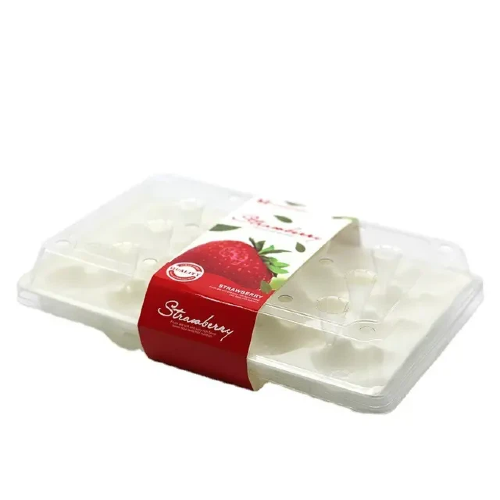
The fragility of your product is a key factor in choosing between plastic and paper packaging. Delicate fruits like berries, grapes, or cherry tomatoes require sturdy protection during transport. In such cases, plastic boxes with individual compartments or dividers are ideal. Harder fruits, like apples or oranges, may tolerate paper packaging for short-distance shipping, but plastic still provides better long-term protection.
The expected storage duration, transportation distance, and shelf life requirements should guide packaging selection. Plastic boxes are better suited for long-distance transport or products with extended shelf life due to their durability, moisture resistance, and protective design. Paper boxes may suffice for short trips or immediate consumption but may not prevent damage during extended logistics.
Businesses aiming for sustainability must balance environmental impact with product protection. r-PET plastic boxes combine recyclability with durability, offering a green alternative without compromising functionality. Paper boxes are inherently biodegradable, but their short lifespan and lack of reusability may offset environmental benefits over time.
Partnering with a reputable manufacturer is essential to ensure high-quality production, timely delivery, and access to customization. Companies like Hangzhou Shiding Plastic Products Co., Ltd. provide professional solutions, including food-grade materials, customizable sizes, compartments, and branding options, allowing businesses to meet specific requirements efficiently.
Feature | Plastic Box | Paper Box | Best Use Case |
Durability | High | Low | Long-distance transport, fragile produce |
Transparency | Clear | Usually opaque | Visual display and retail marketing |
Reusability | Yes | Limited | Multiple-use or short-term applications |
Food Safety | Food-grade PET/r-PET/PP | May require liner | Hygienic handling |
Customization | High | Moderate | Branding, compartments, and anti-fog coatings |
Environmental Impact | Recyclable (r-PET) | Biodegradable | Eco-conscious or single-use needs |
Cost | Moderate | Low | Budget-friendly, short-term shipments |
This table provides a quick overview of the strengths and limitations of plastic boxes compared to paper boxes, assisting businesses in making informed packaging decisions.
In conclusion, both plastic boxes and paper boxes have their respective roles in the packaging industry. Paper boxes are generally suitable for short-term use, cost-sensitive applications, or initiatives focused on biodegradability and eco-friendliness. They offer a lightweight and budget-friendly solution for transporting products over short distances or for items with a limited shelf life. However, plastic boxes clearly stand out when durability, hygiene, and customization are top priorities. They are particularly effective for protecting delicate fruits and vegetables, preventing damage during transport, extending shelf life, and enhancing product presentation on retail shelves.
For businesses, distributors, and brands looking to elevate their packaging solutions, reduce spoilage, and strengthen market competitiveness, exploring the professional offerings from Hangzhou Shiding Plastic Products Co., Ltd. is highly recommended. Their food-grade PET, r-PET, and PP plastic boxes can be fully customized in terms of size, compartments, and branding, providing practical, reusable, and sustainable packaging solutions. Companies are encouraged to reach out to discuss tailored options that align with their operational requirements and marketing goals.
Are plastic boxes better than paper boxes for fresh produce?
Plastic boxes generally outperform paper boxes in durability, hygiene, and long-distance transport, making them the preferred choice for delicate or perishable products.
Can plastic boxes be reused?
Yes, especially food-grade PET or r-PET boxes. They can be cleaned, sterilized, and reused multiple times, offering long-term cost efficiency.
Are paper boxes more eco-friendly than plastic boxes?
Paper boxes are biodegradable, but r-PET plastic boxes are recyclable, balancing sustainability with durability.
Which packaging is better for branding and visibility?
Plastic boxes are transparent and can be customized with logos, compartments, and anti-fog surfaces, enhancing product presentation and brand recognition.
How to decide between plastic and paper boxes?
Consider factors such as the fragility of produce, transportation distance, storage duration, sustainability goals, and budget when choosing the appropriate packaging type.


