


Phone:
+86-138-0577-0261


Views: 0 Author: Site Editor Publish Time: 2026-09-16 Origin: Site


Improper storage of PET (Polyethylene Terephthalate) containers introduces severe operational risks. Facility managers often face warped materials, micro-cracking, and compromised food safety compliance long before products reach the packing line. Balancing high-volume inventory storage with the strict environmental sensitivities of empty PET containers requires a precise approach. Heat, ultraviolet light, and improper stacking directly degrade polymer integrity. When a warped container enters a high-speed packing line, it causes mechanical jams. These jams lead to expensive downtime and wasted agricultural products. We will evaluate storage environments, handling protocols, and infrastructure investments required to maintain the structural and hygienic integrity of PET packaging. You will learn how to optimize warehouse layouts, manage thermal sensitivities, and enforce load limits to prevent material degradation before your inventory ever touches the production floor.
The molecular structure of PET dictates its physical behavior in the warehouse. The glass transition temperature (Tg) of PET sits around 153°F (67°C). However, under the physical load of stacked pallets, deformation begins at much lower temperatures, often between 85°F and 90°F. When warehouse temperatures rise during summer months, heat pools near the ceiling. Pallets stored on the top tier of selective racking absorb this heat continuously. The polymer chains gain mobility, and the plastic softens. Because the containers sit nested inside corrugated master cartons, the weight of the stack presses down. This downward force causes the bottom containers in each sleeve to warp permanently.
Once a container loses its dimensional stability, it becomes useless. Automated denesting machines rely on exact tolerances to separate containers at high speeds. A warped flange or a crushed corner will jam the machine instantly. You lose production time clearing the jam, and you risk damaging the equipment. On the opposite end of the spectrum, sub-freezing temperatures lock the polymer chains in place. The material loses its impact resistance entirely. If a forklift operator drops a cold pallet even a few inches, the plastic shatters. Micro-cracking occurs along the stress points, particularly around the corners and hinges, rendering the packaging unsafe for food contact.
Direct sunlight acts as a powerful catalyst for photo-oxidation in PET polymers. Ultraviolet radiation breaks the ester bonds holding the molecular chains together. This chemical breakdown manifests physically as yellowing and extreme brittleness. Warehouses often feature skylights or open loading dock doors that expose inventory to direct sunlight for hours each day. High-intensity discharge (HID) lighting and older fluorescent fixtures also emit UV radiation that degrades plastic over time.
You must block light from hitting the inventory to preserve its structural integrity. Opaque stretch film wrapped around the pallets provides an immediate and highly effective barrier. Black or dark green stretch wrap works best for long-term storage. You should also map out the warehouse and designate dark zones specifically for packaging storage. Keep these pallets far away from the loading docks and exterior windows. Replacing older warehouse lighting with low-UV LED fixtures offers a permanent infrastructure solution to protect long-term inventory.
When you store stainless steel vats or glass jars, ambient temperature and light hardly matter. Steel handles massive temperature swings without losing structural integrity. Glass ignores ultraviolet light completely. You can leave a pallet of glass jars in a hot, sunlit yard for months without damaging the containers. However, a Plastic Box demands strict environmental control to survive the storage phase.
Facilities transitioning from rigid metal or glass packaging to lightweight PET often fail to update their storage protocols. They treat the plastic like glass. This operational mistake leads to massive inventory loss. PET offers incredible advantages in freight weight, material clarity, and unit cost, but you have to respect its physical limits. You must control the climate, block the light, and manage the physical loads. Failing to adapt your warehouse handling protocols guarantees deformation and wasted capital.
Long-term storage requires a stable ambient temperature between 40°F and 85°F. You need to map the temperature gradients in your facility accurately. Heat rises, so the temperature at the floor level might read 70°F while the top rack hits 95°F. Install data loggers at various heights to monitor these microclimates and adjust your storage locations accordingly.
Humidity presents a secondary, yet equally destructive, threat. PET plastic does not absorb water. It acts as an excellent moisture barrier. The problem lies entirely with the corrugated master cartons holding the plastic containers. Cardboard absorbs ambient moisture rapidly. When relative humidity exceeds 60%, the corrugated flutes soften. The box loses its vertical column strength. A pallet stacked two high will start to lean. Eventually, the bottom boxes collapse under the weight. The collapsing cardboard transfers all the vertical weight directly onto the plastic containers inside, crushing them instantly.
The thermoforming process leaves a residual static charge on PET surfaces. This static acts like a magnet for airborne dust and particulates. If you store empty containers near a processing line, the plastic will attract organic dust, flour, or aerosolized grease. You must isolate the packaging storage area from the production floor completely.
Use physical walls to separate the zones. Install HVAC systems with high MERV-rated filters to scrub the air in the storage area. Maintain positive air pressure in the packaging room. When someone opens a door, the clean air should blow out into the facility, preventing contaminated dust from entering. Physical barriers and aggressive air filtration ensure empty containers remain pristine until production requires them.
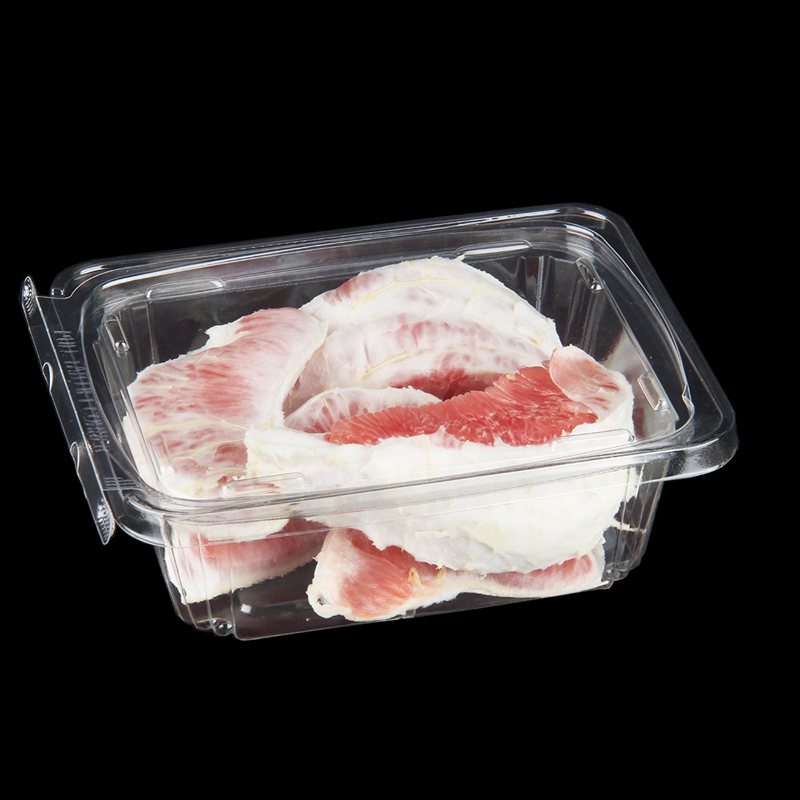
Fresh produce requires rapid cooling immediately after harvest to halt the ripening process. A recyclable fruit storage box incorporates specific ventilation slots and airflow channels into its design. These channels allow cold air to pass through the stacked containers in a forced-air cooling tunnel. If you stack the empty boxes incorrectly in the warehouse, you risk crushing these delicate ventilation structures.
A crushed vent restricts airflow. Restricted airflow means the fruit inside takes longer to cool, drastically reducing its shelf life on the retail display. You must distribute the storage weight evenly across the pallet. Use heavy-duty corner boards and corrugated tier sheets to transfer the load to the outer corners of the master cartons. This protects the center of the boxes where the ventilation channels are located.
Geometry dictates load-bearing capacity in packaging design. An octagonal fruit tray uses its angled corners to distribute top-load pressure highly efficiently. The eight-sided design offers better vertical crush resistance than a standard square tray. However, the nesting dynamics require careful attention during storage.
Thermoformed trays nest inside one another to save space on the pallet. Manufacturers design specific draft angles and denesting lugs to keep a small, precise gap between each tray. If you stack too much weight on a sleeve of octagonal trays, you force them past their designed nesting limits. This creates a vacuum lock. The trays stick together tightly. When you load them into a denester on the packing line, the machine pulls two or three trays at once, jamming the equipment and halting production.
Clamshells feature a lid and base connected by a flexible living hinge. They also use friction-fit button-locks to stay closed during transit. A strawberry clamshell box is highly vulnerable to vertical compression. If you place a heavy pallet directly on top of a clamshell pallet, the weight transfers down and flattens the living hinges on the bottom layers.
A flattened hinge loses its structural memory. When the automated closer tries to shut the lid on the packing line, the hinge resists, and the button-locks fail to align. The clamshell pops open down the line, spilling expensive fruit onto the floor. You must protect the hinge integrity at all costs. Never exceed the manufacturer's recommended stacking height, and train forklift operators to handle these specific pallets with extreme care.
You have to calculate maximum pallet heights based on the corrugated master carton's Edge Crush Test (ECT) rating, not just the plastic's mil-thickness. A standard plastic fruit box usually ships in 32 ECT or 44 ECT corrugated boxes. Column stacking—where boxes align perfectly on top of each other—provides the maximum vertical strength. Interlocking patterns, like a brick wall, stabilize the load during transit but reduce the overall crush resistance by up to 40%.
Selective pallet racking is the best option for storing empty PET containers. Racking supports each pallet individually. The weight of the top pallet rests on the steel load beams, not on the inventory below it. Floor stacking forces the bottom pallet to bear the entire cumulative load, which inevitably leads to crushed cartons. Install wire decking on the racks to prevent the master cartons from sagging between the beams.
Forklift handling requires specific training and equipment adjustments. Operators using clamp attachments must dial down the hydraulic pressure. High clamp pressure will crush a pallet of empty containers instantly, destroying thousands of units in seconds. Operators must also avoid drop-shocks. Setting a pallet down hard on a concrete floor can shatter cold-stored PET. Train your operators to handle empty packaging with the exact same care they apply to finished, loaded goods.
Moving inventory from a cold storage environment directly to a warm packing line causes immediate operational problems. Condensation forms on the cold plastic. This moisture causes the containers to stick together in the denester. Furthermore, cold plastic remains highly brittle and prone to shattering.
Regulatory bodies view empty food packaging as a direct extension of the food itself. You must store it under sanitary conditions prior to use. Good Manufacturing Practices (GMP) dictate that packaging storage areas must be clean, dry, and pest-free at all times. During a GFSI, SQF, or BRC audit, inspectors will scrutinize your packaging storage protocols heavily.
You need comprehensive documentation to pass these audits. Maintain daily temperature and humidity logs for all packaging storage areas. Keep detailed records of your cleaning schedules for the racking systems and floors. Track the lot codes of the empty packaging as it moves from the warehouse to the production floor. This ensures full traceability if a recall occurs. Compliance proves to auditors and clients that your packaging introduces no hazards to the food supply chain.
Warehouse structure dictates pest control success. Keep all pallets a minimum of 18 inches away from the walls. This perimeter gap allows inspectors to walk behind the inventory. It also provides necessary space for rodent traps and bait stations. Seal all dock doors and install heavy-duty weather stripping to block pests and dust from blowing inside. Never store packaging directly on the floor; always elevate it using standard pallets.
Inside the master cartons, poly-bag liners provide the final line of defense. These plastic bags seal the empty containers away from dust, moisture, and insects. Do not open the poly-bags until the containers are ready to go into the denester. Implement an integrated pest management (IPM) strategy specifically tailored for the packaging warehouse to maintain a sterile environment.
Installing a full HVAC system in a large warehouse requires heavy capital expenditure. Running it adds significant operational costs. However, you have to weigh this against the cost of inventory loss. If you operate in a region where summer temperatures regularly exceed 90°F, ambient storage will destroy your PET inventory rapidly.
Warped containers cause machine jams. Machine jams stop production. Stopped production means workers stand around doing nothing while fresh produce degrades on the floor. The cost of a single rejected shipment due to compromised packaging can easily exceed the monthly cost of running an air conditioner. You must evaluate your local climate extremes to make the right infrastructure choice.
| Storage Environment | Initial Infrastructure Cost | Inventory Loss Risk | Best Operational Use Case |
|---|---|---|---|
| Ambient (No HVAC) | Low | High (in summer months) | Temperate climates, fast turnover |
| Climate-Controlled | High | Very Low | Extreme climates, long-term storage |
| Ventilated (Fans Only) | Medium | Medium | Moderate climates, short-term staging |
Purchasing managers often over-order packaging to secure volume discounts. This strategy backfires with PET. The material degrades naturally over time. A 6-to-12-month storage period is the maximum safe lifespan for empty PET containers. Storing them longer invites brittleness and failure.
Implement a strict First-In, First-Out (FIFO) inventory system. Use barcode tracking and Warehouse Management Software (WMS) to automate the rotation process. When a forklift operator goes to pull a pallet, the WMS should direct them to the oldest stock first. Stale inventory accumulates dust, loses its structural flexibility, and becomes brittle. Regular inventory audits help identify aging stock so you can use it before it expires and turns into waste.
A: Empty PET containers maintain a safe shelf life of 6 to 12 months under optimal climate conditions. Storing them beyond a year increases polymer brittleness and static dust accumulation. You must rotate stock strictly using FIFO principles. Aging inventory loses impact resistance and frequently shatters during automated denesting.
A: Yes, but it requires strict handling protocols. PET withstands freezing, but sub-zero temperatures make the polymer highly brittle. You cannot move cold-stored packaging directly to a high-speed packing line. You must stage the pallets in a room-temperature environment for at least 24 hours to acclimate before mechanical handling.
A: No. Washing empty PET containers introduces unwanted moisture and microbial risks right before food contact. If you store the inventory correctly inside sealed poly-bags and corrugated master cartons within a clean facility, the containers remain pristine. Keep the poly-bags sealed until the exact moment of production.
A: Limit stacking to two pallets high. The exact limit depends on the Edge Crush Test (ECT) rating of the corrugated master carton, not the plastic itself. Exceeding two pallets usually crushes the bottom layer, which permanently flattens the delicate living hinges on the clamshells inside.
A: PET plastic acts as a moisture barrier and does not absorb humidity. However, high humidity destroys the corrugated master cartons holding the inventory. When cardboard absorbs moisture, it loses its vertical column strength. The boxes collapse, transferring the entire stack's weight onto the plastic containers, crushing them instantly.


