


Phone:
+86-138-0577-0261


Views: 0 Author: Site Editor Publish Time: 2026-09-16 Origin: Site


The demand for visually appealing, multi-compartment meal prep and takeout solutions drives the widespread adoption of transparent plastics. However, material safety remains the primary barrier to procurement and consumer trust. Buyers must balance the need for high-clarity presentation and strict food separation with rigorous health compliance. This means mitigating chemical leaching risks, understanding thermal degradation limits, and adhering to strict regulatory standards set by the FDA and EFSA. This guide breaks down the material science of Polyethylene Terephthalate (PET). We establish an evidence-based framework to evaluate whether a PET-based container meets the safety, operational, and scalability requirements for commercial food packaging. You will learn how to verify material compliance, assess thermal boundaries, and ensure that every component of your packaging setup maintains food integrity from the prep station to the consumer's hands.
Polyethylene Terephthalate (PET) is a highly stable thermoplastic polymer resin. Manufacturers synthesize it through the condensation of ethylene glycol and terephthalic acid. The resulting molecular structure provides exceptional tensile strength, impact resistance, and optical clarity. In the packaging industry, we primarily deal with Amorphous PET (APET) for cold food applications. APET cools rapidly during the manufacturing process, preventing crystallization and resulting in the glass-like transparency that makes it the global standard for water bottles and clear clamshell food container applications. Unlike porous materials, PET creates a highly effective moisture and gas barrier. This barrier prevents oxygen ingress, extending the shelf life of perishable items on retail shelves. The polymer chain remains completely inert under standard ambient conditions. This inertness prevents the plastic from interacting chemically with the food it holds, ensuring no transfer of plastic tastes or odors to the meal.
Strict regulatory frameworks govern the use of PET in direct food contact. In the United States, FDA regulation 21 CFR 177.1630 dictates the exact extraction limits for PET films and molded containers. The European Food Safety Authority (EFSA) enforces similar, often more stringent, migration testing protocols. These agencies require manufacturers to subject the plastic to rigorous solvent extraction tests. Laboratories use simulants like 3% acetic acid to mimic acidic foods and 10% ethanol to mimic aqueous foods, testing the material over extended periods at specific temperatures. Compliance requires certified commercial thermoforming or injection molding facilities. Unverified DIY methods or 3D-printed plastic solutions lack the necessary cleanroom environments and extrusion controls. Commercial facilities maintain strict temperature parameters during molding to prevent polymer degradation. If the extrusion temperature fluctuates, the polymer chains can break down, compromising both the structural integrity and the food safety profile of the final container.
Consumers frequently confuse PET with Polycarbonate or Polyvinyl Chloride (PVC). This confusion leads to unfounded fears regarding chemical contamination. Standard PET manufacturing does not utilize Bisphenol-A (BPA). BPA is a monomer used exclusively in polycarbonate plastics and epoxy resins to make them hard and shatterproof. PET does not need BPA. Furthermore, PET achieves its flexibility and structural integrity through its inherent molecular alignment, not through chemical additives. Therefore, manufacturers do not add plasticizing phthalates to PET. The material is also entirely free of Teflon-like chemicals (PFAS), often used in molded fiber bowls for grease resistance, and heavy metals like lead. Independent laboratory testing consistently verifies virgin PET as a clean, non-toxic polymer suitable for direct food contact. When you source virgin PET from a reputable supplier, you eliminate the primary chemical risks associated with legacy plastics.
Antimony trioxide serves as a catalyst during PET production to speed up the polymerization process. Trace amounts of antimony remain locked within the polymer matrix after manufacturing. Extensive migration studies analyze the risk of this antimony leaching into food. Data shows that migration rates depend heavily on time, temperature, and UV exposure. Under normal ambient or refrigerated conditions, antimony migration remains virtually undetectable. It stays well below the safety thresholds established by the World Health Organization and the EPA. A standard divider box used for daily meal prep, cold storage, or retail display poses zero toxicological risk. Hazardous leaching only occurs when PET undergoes extreme, prolonged heat exposure exceeding recommended use cases. For example, leaving a PET container in a hot car trunk at 150°F for several days will accelerate migration, but standard cold-chain logistics keep the material well within safe operational limits.
PET possesses a relatively low glass transition temperature, typically around 153°F (67°C). However, structural deformation begins at much lower temperatures. Exposing a PET container to temperatures exceeding 120°F (49°C) causes immediate warping, shrinking, and melting. You cannot use PET for hot foods straight off the grill or out of the fryer, and you must never place it in a microwave. Because PET offers zero thermal insulation, it relies entirely on the cold chain. Cold-stored foods require external temperature control, such as refrigeration or ice packs. This external cooling prevents rapid bacterial growth. This operational reality contrasts sharply with insulated thermal lunch containers designed for heat retention. Kitchen staff must understand that PET is a presentation and separation tool, not a temperature control device. Food must be fully chilled before packaging to prevent condensation and structural warping.
PET demonstrates exceptional chemical resistance to high-acid foods. You can safely pack citrus, tomatoes, and vinegar-based dressings in a fruit divider box without degrading the plastic. The polymer matrix does not break down or release monomers when exposed to low pH levels. Similarly, PET resists lipid penetration. High-fat contents from cheeses, cured meats, or heavy oils will not compromise the structural integrity of the container. Lower-grade plastics, like low-density polyethylene (LDPE), often suffer from flavor scalping, where the plastic absorbs odors and flavors from the food, or vice versa. PET maintains a neutral barrier. This barrier ensures that the food retains its original taste and aroma, and the container does not become permanently stained or odor-absorbent after a few hours of contact.
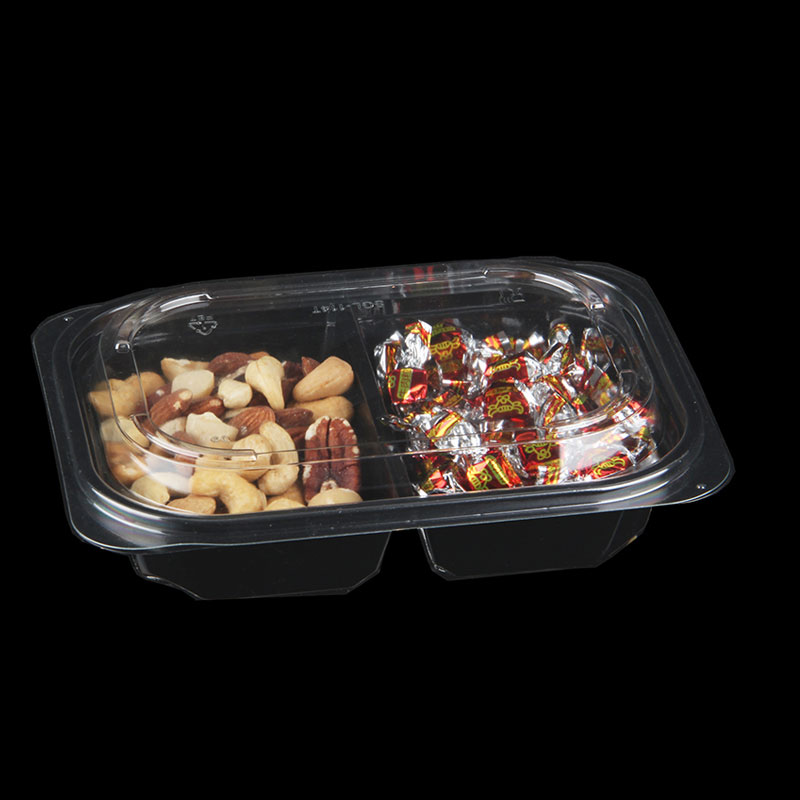
Polypropylene (PP) serves as the primary alternative to PET in the food packaging industry. The decision between the two hinges entirely on temperature requirements and visual presentation. PP offers excellent heat resistance, easily withstanding microwave use and hot-fill processes up to 250°F (121°C). However, PP is inherently translucent or hazy. You cannot achieve perfect glass-like clarity with PP. PET delivers that high-definition clarity, making it superior for retail displays where food visibility drives consumer purchasing. Use PET for cold-deli applications, salads, cut fruit, and sushi. Pivot to PP for hot takeout meals, soups, curries, and any application requiring microwave reheating by the end consumer.
Tritan and Polycarbonate dominate the premium, reusable container market. These materials offer extreme durability and dishwasher safety. They withstand repeated impacts, drops, and harsh commercial cleaning chemicals. However, they carry a significantly higher upfront cost, often ten to twenty times the price of a disposable PET unit. PET provides a highly cost-effective alternative for single-use or limited-reuse scaling. While not designed for years of high-heat dishwasher cycles, heavy-gauge PET offers sufficient durability for transport, retail display, and consumption. Commercial operators choose PET when scaling operations require low per-unit costs without sacrificing food safety, compartment separation, or visual clarity.
Food-grade stainless steel represents the pinnacle of durability and non-toxic premium perception. It lasts a lifetime, resists all chemical leaching, and withstands extreme temperatures from freezing to baking. The trade-offs include high unit cost, significant weight, and complete opacity. You cannot see the food inside a closed stainless steel box, which eliminates its utility for grab-and-go retail environments. PET offers a lightweight, transparent, and highly economical solution. For commercial takeout, high-volume meal prep, or catering, the cost and weight of stainless steel become prohibitive. PET fulfills the need for safe, visible, and easily transportable food separation at a fraction of the logistical cost.
Polylactic Acid (PLA) offers a plant-based alternative derived from fermented plant starch, usually corn or sugarcane. Brands often market PLA as a sustainable, compostable option. However, severe operational and sustainability trade-offs exist. PLA requires commercial industrial composting facilities to break down effectively; it will not degrade in a standard backyard compost bin or a landfill. Furthermore, PLA possesses even lower heat resistance than PET, often warping at temperatures as low as 105°F (40°C). PET benefits from a highly established, global mechanical recycling infrastructure (Resin Identification Code #1). When properly sorted, PET can be recycled multiple times into new packaging or textiles, offering a practical and scalable end-of-life solution compared to the highly limited industrial composting infrastructure required for PLA.
| Material | Max Temperature | Clarity | Recyclability / Disposal | Best Application |
|---|---|---|---|---|
| PET (Polyethylene Terephthalate) | 120°F (49°C) | High (Glass-like) | Excellent (RIC #1) | Cold deli, salads, fruit, sushi |
| PP (Polypropylene) | 250°F (121°C) | Translucent / Hazy | Good (RIC #5) | Hot takeout, microwaveable meals |
| Tritan | 212°F (100°C) | High | Reusable / Low recyclability | Premium reusable bento boxes |
| Stainless Steel | Extreme Heat | Opaque | Highly Recyclable / Reusable | Heavy-duty, long-term reuse |
| PLA (Polylactic Acid) | 105°F (40°C) | High | Industrial Composting Only | Short-term eco-friendly cold storage |
A common procurement blind spot involves assuming the entire container shares the same material properties as the base. While the main base of a compartment food container may be food-safe PET, the accompanying components often utilize different materials to achieve specific mechanical functions. Lids frequently use Oriented Polystyrene (OPS) or PP for different flexibility and snap-fit requirements. Inner removable compartments might use distinct polymer blends. Sealing gaskets rely on food-grade silicone or thermoplastic elastomers (TPE). You must ensure all distinct parts carry individual food-safe certifications. Request specific documentation for the lid, the base, and any internal seals to guarantee comprehensive compliance. A certified PET base paired with a non-compliant PVC lid renders the entire package unsafe for food contact.
Effective food separation requires precise engineering of the internal walls. Evaluate how flush the lid sits against the internal dividers. A microscopic gap allows liquids, dressings, or meat juices to migrate between compartments during transit. This cross-contamination ruins food presentation and compromises dietary restrictions, such as mixing allergens or cross-contaminating vegan items with animal products. Examine the snap-fit mechanisms. A secure perimeter seal prevents external leaks, while internal friction fits maintain compartment isolation. Test the closure mechanism for an audible snap. This sound confirms the seal is fully engaged and capable of withstanding transport vibrations in delivery vehicles. Look for plug-seal designs where the lid physically protrudes down into the compartment slightly to create a physical barrier against liquid movement.
The structural integrity of a thermoformed container depends on the gauge, or thickness, of the PET sheet and the physical design of the mold. Thicker mil gauges resist crushing but increase unit costs and environmental footprint. Engineers utilize ribbing, chamfered corners, and contoured sidewalls to maximize load-bearing capacity while minimizing material use. Evaluate the stacking lugs or nesting shoulders on the container design. These design elements allow filled containers to stack securely without collapsing the lid of the unit below. Proper stacking design prevents product damage during commercial transport and maximizes vertical space in retail display coolers. If the containers nest too tightly when empty, kitchen staff will struggle to separate them on a fast-paced prep line, slowing down operations.
High-transparency packaging directly influences consumer psychology. Crystal-clear PET showcases the vibrant colors and textures of fresh food, driving impulse purchases in retail environments. Cloudiness, haziness, or yellowing in the plastic signals poor manufacturing, improper cooling during extrusion, or the use of degraded recycled resins. Evaluate the optical purity of the container under standard retail lighting. Additionally, consider anti-fog treatments. When cold food enters a slightly warmer environment, condensation forms on the inside of the lid, obscuring the food. Anti-fog coatings use food-safe surfactants to lower the surface tension of the plastic. This causes water droplets to spread into a thin, invisible film rather than forming opaque beads, maintaining perfect visibility regardless of temperature fluctuations.
Securing safe PET packaging requires strict supplier verification. You must identify and demand critical documentation before procurement. Request a formal Declaration of Compliance (DoC) stating the material meets FDA or EFSA standards for direct food contact. Demand recent migration testing reports from accredited third-party laboratories. Highlight the risks associated with unverified imported plastics. Gray market suppliers sometimes introduce non-food-grade recycled materials or industrial scrap into the resin mix to lower costs. This contamination introduces unknown chemicals, heavy metals, and structural weaknesses into the packaging. Always audit the supply chain to ensure resin purity and manufacturing hygiene. Ask for ISO 9001 or BRCGS packaging certifications to verify the supplier maintains strict quality control and cleanroom standards.
Empty PET containers require specific warehouse storage protocols. The material's low heat resistance makes it vulnerable during storage and transit before it ever reaches the prep line. Avoid storing pallets in high-heat environments, such as unventilated warehouses during summer months or directly adjacent to heating vents. Prolonged exposure to temperatures above 100°F (38°C) can cause pre-use warping. Even slight deformation renders the lids unable to seal correctly, leading to massive inventory waste. Keep inventory away from direct sunlight, as intense UV exposure can degrade the polymer over time, causing brittleness and yellowing. Implement strict first-in, first-out (FIFO) inventory management to maintain optimal material performance and prevent long-term degradation in storage.
Address the reality of PET recyclability in your operational planning. PET is the most widely recycled plastic globally, supported by robust municipal infrastructure. However, the viability of using post-consumer recycled PET (rPET) for direct food contact requires careful navigation. The FDA issues Letters of No Objection (LNO) to recycling facilities that prove their super-cleaning processes remove all potential contaminants from rPET. If sourcing containers with rPET content, verify the supplier holds a valid LNO for the specific resin blend used. Communicate the recyclability of the virgin or rPET container to end-users. Clear labeling encourages proper disposal into the mechanical recycling stream, supporting circular economy initiatives and aligning with consumer demands for responsible packaging.
Polyethylene Terephthalate (PET) provides a highly safe, FDA-compliant material for bento and divider boxes. Its chemical stability ensures no harmful leaching of BPA, phthalates, or heavy metals into food. However, this safety profile relies entirely on proper application. PET is strictly limited to cold or ambient foods due to its low thermal resistance. Furthermore, comprehensive safety requires verifying that all accompanying components, including lids and gaskets, meet the same rigorous food-grade certifications.
When shortlisting materials, choose PET for superior visibility and cold storage applications like salads, sushi, and fresh fruit. Pivot to Polypropylene (PP) if your operational model requires microwaveability or hot-fill processes. For premium, highly durable, and reusable models, invest in food-grade stainless steel. Matching the material to the specific thermal and operational demands of your food product prevents structural failure and guarantees consumer safety.
A: No. PET possesses a low glass transition temperature and begins to warp, shrink, and melt at temperatures exceeding 120°F (49°C). Exposing PET to hot food compromises its structural integrity and can lead to leaks. For hot food applications, Polypropylene (PP) is the recommended food-safe alternative.
A: Virgin PET is inherently free of Bisphenol-A (BPA), heavy metals like lead, and Teflon-like chemicals (PFAS). The manufacturing process for PET does not utilize these chemicals. When sourced from certified manufacturers, PET is a clean, non-toxic polymer safe for direct food contact.
A: Not always. While the base may be PET, lids and inner gaskets often utilize different plastics like Polypropylene (PP), Oriented Polystyrene (OPS), or silicone for specific flexibility requirements. You must verify the individual food-safety certifications for all distinct parts of the container.
A: Absolutely not. Microwaving PET causes immediate structural failure, melting, and severe deformation. The heat generated by the food will destroy the container and potentially cause chemical migration. Always transfer food to a microwave-safe dish or use a PP container for reheating.
A: Prevention relies on precise structural engineering. The internal divider walls must align perfectly with the lid. A tight friction fit or flush seal between the lid and the compartment walls prevents juices, dressings, and allergens from migrating between sections during transport.
A: No. PET offers zero thermal insulation. It will not maintain internal temperatures on its own. To keep food cold and prevent bacterial growth, you must store the PET container in a refrigerator or pack it inside an insulated cooler bag with external ice packs.


