


Phone:
+86-138-0577-0261


Views: 0 Author: Site Editor Publish Time: 2026-07-16 Origin: Site


Fresh food retail presents a constant, high-stakes battle. You must display products beautifully to attract discerning shoppers. However, you also need to shield fragile items from rapid spoilage and transit damage. This delicate balancing act can make or break your retail margins. Standard packaging solutions often fall completely short. They lead to wasted inventory, crushed products, and lost profits. Polyethylene Terephthalate (PET) solves many of these pressing retail problems. It currently reigns as the industry standard for cold-to-ambient food applications. PET delivers glass-like clarity, exceptional shatter resistance, and powerful gas barrier properties. This guide gives procurement teams and packaging engineers a clear, actionable framework. You will learn exactly how to evaluate and configure a custom PET packaging box based on specific fresh food categories. We will thoroughly explore material specifications, structural designs, and critical vendor evaluation techniques to optimize your next packaging rollout.
Standardized packaging often severely damages brand profitability. Generic clamshells usually lack proper airflow mechanics. This critical flaw causes accelerated food spoilage. Poorly designed standard containers also lack structural support. This weakness leads to crushed products during transit. Furthermore, temperature shifts create fogging in cheap plastics. Foggy containers instantly ruin brand perception on the retail shelf. You lose valuable sales when shoppers cannot clearly see the food.
The physical properties of PET directly influence consumer buying behavior. The material offers exceptional structural rigidity. It protects delicate foods effectively during long transit routes. Its supreme transparency perfectly mimics actual glass. This high visibility directly boosts your retail conversion rates. Consumers naturally trust what they can clearly see. Better visual presentation translates to higher impulse sales. It also drastically reduces inventory shrink and daily food waste.
Custom molding always requires an upfront financial investment. You must pay for tooling and prototyping phases. However, standardizing a generic box often costs far more long-term. You lose significant money through constant food spoilage. Custom designs fit your specific products precisely. This tight fit drastically improves your freight density. You avoid shipping empty air across the country. The long-term return on investment quickly justifies those initial tooling fees.
| Feature | Standard PET Packaging | Custom Application-Specific PET |
|---|---|---|
| Airflow | Generic punch holes, often blocked during stacking. | Engineered ventilation slots tailored to respiration rates. |
| Structural Integrity | Basic flat walls prone to bowing under weight. | Ribbed sidewalls designed for specific pallet load stress. |
| Retail Display | High risk of condensation and fogging in cold cases. | Integrated anti-fog coatings and UV-blocking treatments. |
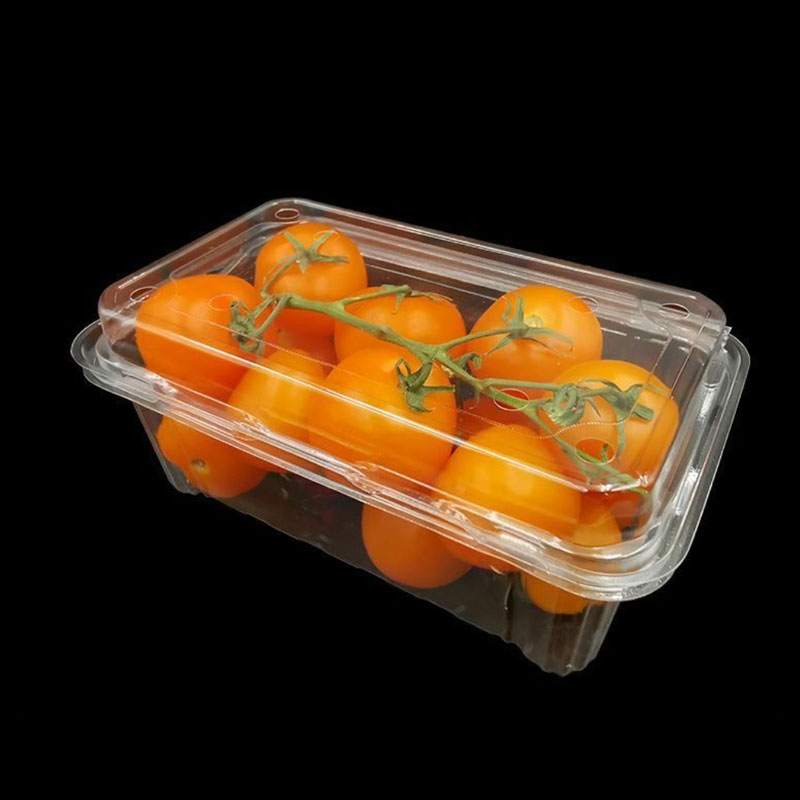
Fresh agricultural products present unique packaging challenges. High respiration rates require highly precise airflow management. Harvested fruits continuously release naturally occurring ethylene gas. Trapped gas accelerates ripening and causes premature rot. Proper ventilation prevents this costly deterioration.
Customization must address these biological realities directly. You need strategically slotted ventilation holes. Ribbed sidewalls provide necessary stacking strength for heavy pallets. You should also incorporate moisture-wicking base designs. Designing a proper customizable fruit box prevents premature molding. It easily withstands severe cold-chain condensation.
Prepared foods require entirely different packaging priorities. Spill prevention remains the absolute primary concern. Freshness retention dictates the entire structural design. These items do not respire like fresh berries do. Instead, they require robust barriers against outside air.
Engineers must focus on tight-fitting perimeter seals. Hinged clamshells need strong, reliable closure mechanisms. You should mandate tear-away tamper-evident bands for consumer safety. Multi-compartment inserts keep different ingredients cleanly separated. This separation stops soggy croutons and preserves salad crispness.
Baked goods demand flawless visual merchandising. Moisture barriers serve a dual purpose here. They keep moisture inside soft cakes to prevent staleness. They also keep ambient humidity away from crisp pastries. Aesthetic presentation heavily drives bakery sales.
You must specify ultra-high clarity material designs. Anti-fog coatings prove essential for refrigerated items like cheesecakes. Rigid dome lids protect delicate frosting and intricate decorations. A crushed cupcake guarantees a lost sale. Strong dome structures completely eliminate this risk.
Selecting the right technical specifications ensures optimal packaging performance. You must analyze several key metrics carefully. Do not rely entirely on vendor recommendations without independent verification. Always align the specifications with your actual operational workflows.
Always request blank material samples before commissioning mold designs. Test these samples in your actual refrigeration units. Measure condensation levels after twenty-four hours. This simple test reveals the true efficacy of anti-fog coatings. Never skip direct physical testing.
Excellent theoretical designs often fail on the factory floor. You must anticipate common operational bottlenecks early. Overlooking automation limits or storage realities destroys project ROI. Address these structural variables during the initial CAD design phase.
Custom designs must include proper denesting lugs. These small protrusions create tiny air gaps between stacked containers. A poorly designed PET plastic storage box will jam your automated lines. Suction prevents machines from pulling nested containers apart. Production downtime quickly erases any anticipated unit cost savings.
PET performs brilliantly in refrigerated environments. It maintains high impact resistance at very low temperatures. It resists shattering during cold storage handling. However, you must carefully heed one major temperature restriction. Standard PET warps significantly under high heat. It is never suitable for microwave or oven heating. You must clarify this limitation to consumers. Use CPET (Crystallized PET) instead for any hot-fill applications.
Analyze your overall volumetric efficiency carefully. Nested empty containers must maximize warehouse racking density. A steeper draft angle improves container nesting. However, steep angles slightly reduce the interior volume. Once filled, structural integrity matters most. Can the palletized containers survive cross-country transit? Evaluate corner crush resistance using standard transit simulation tests.
Many buyers ignore the difference between static and dynamic loads. A box might survive a static warehouse test perfectly. That same box may collapse under the dynamic vibrations of a moving truck. Always specify dynamic load testing protocols with your packaging engineers.
Choosing the right manufacturing partner dictates your ultimate success. Avoid suppliers who only compete on lowest unit price. Quality control and technical support matter far more. Use a structured approach to evaluate multiple vendor candidates.
Request facility audit reports from all shortlisted vendors. Look specifically at their cleanroom certifications. Food-grade packaging requires strict environmental controls during manufacturing. If a vendor hesitates to share audit results, eliminate them immediately.
Deploying a successful custom PET solution requires highly precise alignment. You must map material specifications directly to the food item. Consider biological respiration rates, total product weight, and the specific retail environment. Proper structural execution prevents food waste and drives higher sales.
Take concrete, measured steps before ordering mass production. Request detailed material spec sheets from every vendor. Order structural prototypes for aggressive physical testing in your facilities. Demand a comprehensive budget breakdown detailing tooling, freight, and expected defect ratios from prospective suppliers before committing to custom molds. Informed procurement decisions always yield superior packaging performance.
A: Tooling costs vary widely based on mold complexity. Initial vacuum-formed prototypes generally range from $1,000 to $5,000. Multi-cavity aluminum production molds cost significantly more. However, high-volume production runs quickly amortize this initial financial investment. Always factor mold lifespan and machine cavitation limits into your early budget planning.
A: No. Standard PET warps and deforms at higher temperatures. You must never use it for microwave heating or hot-fill processes. Instead, specify CPET (Crystallized PET) or PP (Polypropylene) materials. These specific alternatives possess the thermal stability required for hot food applications and consumer oven use.
A: Structural design separates them entirely. Fruit packaging includes engineered ventilation slots. These slots allow naturally occurring ethylene gas to escape, preventing premature rot. They also feature ribbed walls to handle agricultural stacking. Conversely, deli packaging focuses entirely on airtight, tamper-evident seals to prevent spills and retain freshness.
A: Generally, standard anti-fog coatings do not disrupt the PET recycling stream. They safely wash away during standard recycling facility processes. However, chemical additives can vary by manufacturer. Buyers must always require formal documentation from suppliers to ensure complete compliance with local material recovery facilities and recycling mandates.


