


Phone:
+86-138-0577-0261


Views: 0 Author: Site Editor Publish Time: 2026-07-29 Origin: Site


The surge in third-party delivery has transformed dessert takeout packaging entirely. It is no longer just a simple presentation tool. Today, packaging serves as a critical food safety and liability checkpoint for any modern bakery or restaurant. When delicate pastries leave your kitchen, your direct control ends, but your liability continues. Inadequate packaging introduces severe risks. Separated lids can easily lead to airborne contamination during transit. Loose containers invite driver tampering. Weak structures often collapse, ruining your beautifully crafted products and damaging your brand reputation.
You need a reliable, engineered solution to mitigate these delivery risks. The modern flip top container directly addresses these vulnerabilities. It balances operational efficiency in the kitchen, visible tamper deterrence for the customer, and strict food-safe material compliance. This article explores how upgrading your packaging strategy protects your delicate desserts, builds consumer trust, and ensures every slice arrives exactly as intended.
Once a dessert leaves your commercial kitchen, you lose total quality control. Independent drivers often manage multi-stop routes. They carry diverse food orders in shared, insulated bags. These shared spaces significantly increase your product's exposure to environmental contaminants. A spill from another restaurant's soup can introduce moisture and bacteria into the delivery bag. If your packaging lacks a secure seal, your dessert absorbs those ambient odors and pathogens.
Traditional two-piece containers compound this vulnerability. They frequently suffer from improper seals. Busy staff might quickly press down a separate lid without securing every single edge. This creates dangerous micro-gaps. These tiny openings allow outside air, moisture, and potential pathogens to enter the container. Your delicate frostings might dry out. Your crisp pastries might become soggy. More importantly, these gaps break the hygienic barrier.
Consumers now recognize these risks. They scrutinize food safety more closely than ever before. Rising consumer awareness means visible security is now a distinct competitive advantage. Customers inspect their delivery bags upon arrival. They look for intact seals and rigid structures. When bakeries and restaurants invest in visibly secure packaging, they reduce consumer skepticism. Trust directly drives repeat orders. If a customer questions the safety of their food, they will simply order from a competitor next time.
Packaging structure dictates food safety during transit. A unified flip top dessert container solves the biggest flaw of standard packaging: human error. This hinged continuity prevents staff from losing lids or matching the wrong lid to a base. When the base and lid connect permanently, you guarantee a manufacturer-engineered seal every single time. Staff simply fold the lid over. They do not have to guess if the seal aligns.
These designs also feature tamper-deterrent snap closures. Tight-locking tabs function as a strong physical barrier against outside elements. We do not always need expensive shrink-wrap to prove safety. A loud, locking snap signals a secure state. Your kitchen staff hear the click, confirming the seal. The customer feels the resistance when opening it. This design deters drivers from casual grazing. Opening the tabs requires deliberate effort, which makes tampering obvious.
Structural integrity extends to crush resistance. Delicate pastries need internal airspace to survive transit intact. A high-quality disposable dessert box utilizes reinforced sidewalls. These sturdy walls protect intricate frostings from structural collapse. Delivery bags get tossed around. Other items get stacked on top of desserts. Reinforced walls prevent the container ceiling from caving in. Consequently, the food never touches unsterilized outer wrappers or delivery bags. The internal airspace remains a safe, isolated micro-environment.
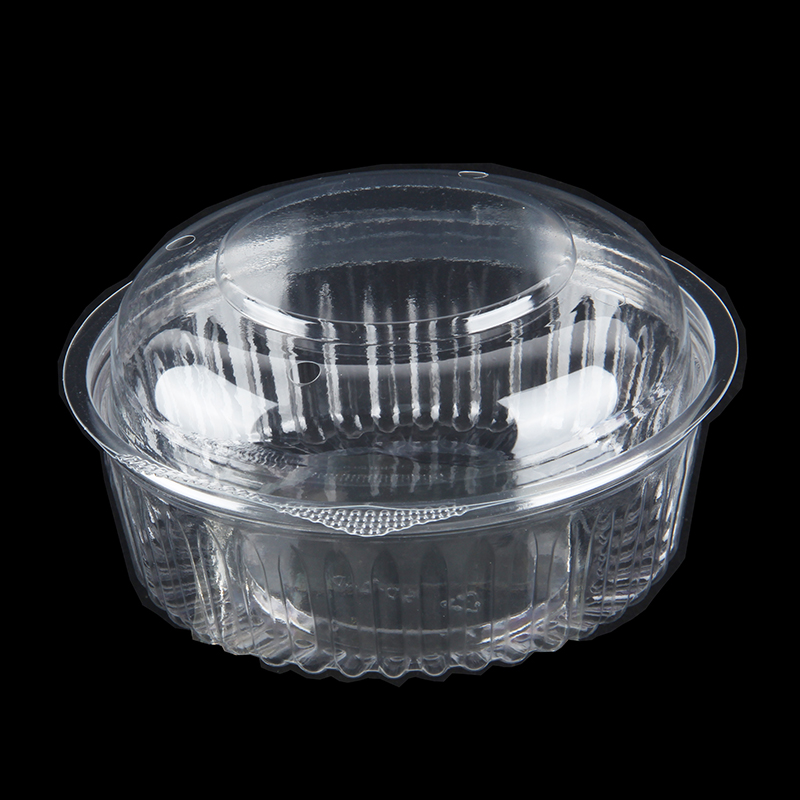
Food safety goes beyond physical structure. We must also evaluate chemical migration. Food-contact substances face strict regulatory realities. Not all clear plastics are graded equally for food safety. Low-grade plastics can leach harmful chemicals into food. This risk increases when oils or acidic ingredients touch the container surface.
This is why a PET dessert container stands as the industry standard. PET stands for Polyethylene Terephthalate. It handles cold and ambient foods exceptionally well. It features a completely non-porous surface. This dense structure blocks external odors from penetrating the plastic. It also stops bacteria from taking hold on the material surface. When a customer refrigerates leftover cake, the PET barrier keeps fridge odors away from the frosting.
However, building trust requires transparent limitations. PET is strictly designed for cold or room-temperature items. It is not microwave-safe. It is not oven-safe. Exposing PET to high temperatures causes the plastic to warp. High heat also triggers chemical leaching. Operators must outline clear temperature thresholds in their packaging protocols. Usually, PET should not endure temperatures above 120°F (49°C). Proving adherence to these limits reassures safety inspectors and educated consumers.
Furthermore, operators must demand BPA and PFAS compliance. You must verify your suppliers. Ensure they manufacture containers completely free of these harmful "forever chemicals." Endocrine disruptors have zero place in food packaging. Request material safety data sheets from your packaging distributor to confirm these safety claims.
Food safety begins on the prep counter. You must map your packaging workflow to identify contamination risks. Every time a prep cook touches a container, they introduce a potential bacterial transfer. A one-piece sealed dessert packaging solution drastically reduces these touchpoints. Compare this to two-piece alternatives. With two pieces, staff must fetch the base, plate the food, hunt for a matching lid, align it, and press down multiple edges. A one-piece solution requires just one grab and a quick snap. Fewer touches mean better operational hygiene.
Inventory cleanliness also improves with this design. Kitchens constantly circulate airborne particles like flour dust and grease. Nested, stackable flip-top containers protect themselves on your prep shelves. The nested design limits the exposed surface area. Only the very top unit touches the kitchen air. The interior of the lower containers remains completely shielded until the moment of use. This keeps the food-contact surface pristine.
Finally, we must evaluate the speed to seal. Time represents a critical safety metric in commercial kitchens. Faster packing means desserts spend less time sitting in the temperature danger zone. A quick flip and click gets the product off the counter immediately. It moves swiftly to the refrigeration unit or the delivery staging area. Speed protects the temperature integrity of chilled creams and mousses.
Selecting the right packaging requires strict evaluation. You cannot rely on aesthetics alone. Buyers must approach this process with a clear testing methodology. Request physical samples before committing to bulk orders. You need to physically handle the product to ensure it meets food safety standards.
First, conduct rigorous seal testing. Listen for the audible click when closing the tabs. Once closed, squeeze the container moderately. This simulates the pressure inside a crowded delivery bag. The lid should not pop open. The sides should not buckle.
Next, check the hinge durability. A weak hinge poses a major physical hazard. If the plastic hinge snaps during closure, it creates sharp plastic shards. It also destroys the hygienic seal entirely. You must perform a high-stress flex test.
| Evaluation Area | Testing Method | Pass Criteria |
|---|---|---|
| Hinge Flex Test | Rapidly open and close the lid 10 times in succession. | Hinge remains intact with no white stress lines or cracking. |
| Pressure Simulation | Apply moderate side-squeeze while container is sealed. | Lid stays firmly locked; sidewalls resist permanent denting. |
| Audible Feedback | Close the container tabs firmly. | A distinct "click" is heard and felt by the operator. |
Supplier certifications remain non-negotiable. Always list the compliance documents you need before signing a contract. Request FDA food-contact compliance letters. Ask for ISO-certified manufacturing facility records. These documents prove the supplier follows sanitary production guidelines.
Lastly, calculate your size-to-product ratio perfectly. Buying the exact size prevents internal movement. Too much internal airspace allows the dessert to slide around during transit. This increases the risk of the pastry breaking apart. Broken food compromises the visual appeal and disrupts the internal safety environment.
Upgrading your packaging strategy is not merely an aesthetic choice. It functions as a highly measurable risk-mitigation strategy for your business. The delivery landscape demands proactive safety measures to survive.
Do not wait for a negative customer review to change your protocols. We encourage operators to audit their current packaging failure rates immediately. Track how many deliveries arrive damaged. Then, contact a certified supplier to request a sample kit. Test the structural integrity and seal strength firsthand to secure your takeout operations.
A: No. Most clear flip top containers are made of PET, which can warp or leach chemicals if exposed to high heat. They are strictly designed for cold, chilled, or room-temperature desserts.
A: While PET is durable, commercial disposable containers are engineered for single-use food safety. Repeated washing in hot dishwashers can degrade the plastic and compromise the hygienic seal, though they are highly recyclable.
A: The tight friction-fit and overlapping edges of high-quality flip tops make it difficult to open the container silently or without visibly distorting the plastic tabs, acting as a strong deterrent against casual tampering.
A: Yes. Many manufacturers now offer rPET (recycled PET) containers. Ensure the supplier provides documentation that the rPET process meets FDA guidelines for direct food contact.


