


Phone:
+86-138-0577-0261


Views: 0 Author: Site Editor Publish Time: 2026-08-12 Origin: Site


Fresh cut salads are notoriously fragile and highly perishable. They demand careful handling to prevent rapid oxidation and physical damage. Delicate greens often succumb to bruising if you organize them improperly. To combat this spoilage, commercial food vendors and meal preppers increasingly turn to Polyethylene Terephthalate (PET) plastic. This specialized material sharply contrasts with generic storage plastics. Food-grade PET creates an ideal micro-environment tailored specifically for cold storage needs.
This article evaluates how switching to a standardized PET food container system solves critical moisture control and structural organization issues. You will learn the core science behind PET performance. We will explore key evaluation criteria for selecting reliable packaging. You will also discover best practices for maximizing freshness while staying compliant with strict food safety standards.
Fresh greens constantly respire after harvesting. They release natural ethylene gas and water vapor into their surroundings. Poorly designed storage solutions trap this moisture unevenly. Condensation quickly pools at the bottom of standard bins. This excess water accelerates bacterial growth and causes rapid wilting. Conversely, too much oxygen exposure dries out the leaves. They lose their crispness and nutritional value within hours. You need a precisely engineered barrier. This barrier must balance humidity while restricting excessive airflow. Without it, your salads face a guaranteed early expiration. This dual threat of trapped moisture and unchecked oxygen ruins countless prepped meals daily.
Kitchens and commercial refrigerators often suffer from logistical nightmares. Mismatched, non-modular containers waste valuable shelf space. You cannot stack odd-shaped bins safely. They wobble, shift, and inevitably collapse under pressure. When heavier items fall onto delicate salad packages, crushed ingredients are the direct result. Space inefficiency forces prep staff to play a frustrating game of spatial Tetris. It slows down loading times and creates hazardous storage environments. Predictable geometry matters. Uniform footprints allow you to maximize every square inch of cold storage. Relying on assorted, randomly sized containers actively undermines operational efficiency.
Opaque or heavily frosted containers create severe visual friction. You cannot easily see what is inside them. Staff members and consumers must repeatedly open lids just to check inventory. Every time you break a seal, you expose fragile greens to fresh oxygen. This accelerates spoilage exponentially. Furthermore, hidden ingredients get forgotten. Unseen salads inevitably expire at the back of the fridge. This leads directly to higher food waste. Clear visibility streamlines meal selection and speeds up inventory audits. You need immediate visual confirmation to manage high-turnover food environments effectively.
Polyethylene Terephthalate defines the modern standard for cold food packaging. Industry professionals recognize it by its prominent Recycling Code #1. This FDA-approved plastic boasts absolute food safety. It is entirely BPA-free and contains no harmful plasticizers. Most importantly, it features zero flavor-transfer properties. Your delicate vinaigrettes will never absorb a chemical taste. The molecular structure of PET acts as an exceptional gas barrier. It blocks oxygen better than standard polypropylene. This specific chemical makeup ensures maximum longevity for highly perishable ingredients. Understanding these material properties helps you make informed packaging decisions.
Consumers eat with their eyes first. A premium transparent plastic food box visually mimics the elegance of heavy glass. It drives massive consumer appeal on retail shelves. You get flawless visibility without the crushing weight of glass jars. You also eliminate dangerous shatter risks entirely. This pristine transparency allows rapid quality control inspections. Prep teams can spot a single bruised tomato instantly. Operational efficiency skyrockets when you eliminate the guesswork. High optical clarity directly correlates with increased perceived value. It proves essential for high-end meal prep delivery services.
Structural integrity separates professional packaging from amateur alternatives. Rigid PET walls shield delicate leafy greens from external pressure. They withstand significant physical impacts during transport. You can confidently stack these units high in commercial delivery vans. Dense stacking becomes entirely safe. The reinforced corners distribute weight evenly away from the center lid. This prevents the top-heavy collapse seen in flimsier plastics. Superior organization relies entirely on this mechanical strength. You protect your culinary investment by ensuring the structural perimeter holds firm under pressure.
| Feature | PET (Polyethylene Terephthalate) | Generic PP (Polypropylene) |
|---|---|---|
| Clarity | Glass-like, pristine transparency | Cloudy or heavily frosted |
| Oxygen Barrier | Excellent; slows oxidation significantly | Moderate; allows faster gas exchange |
| Impact Resistance | High; rigid walls protect against crushing | Flexible; prone to bending under weight |
| Best Use Case | Cold storage, retail display, fresh salads | Hot foods, microwave reheating |
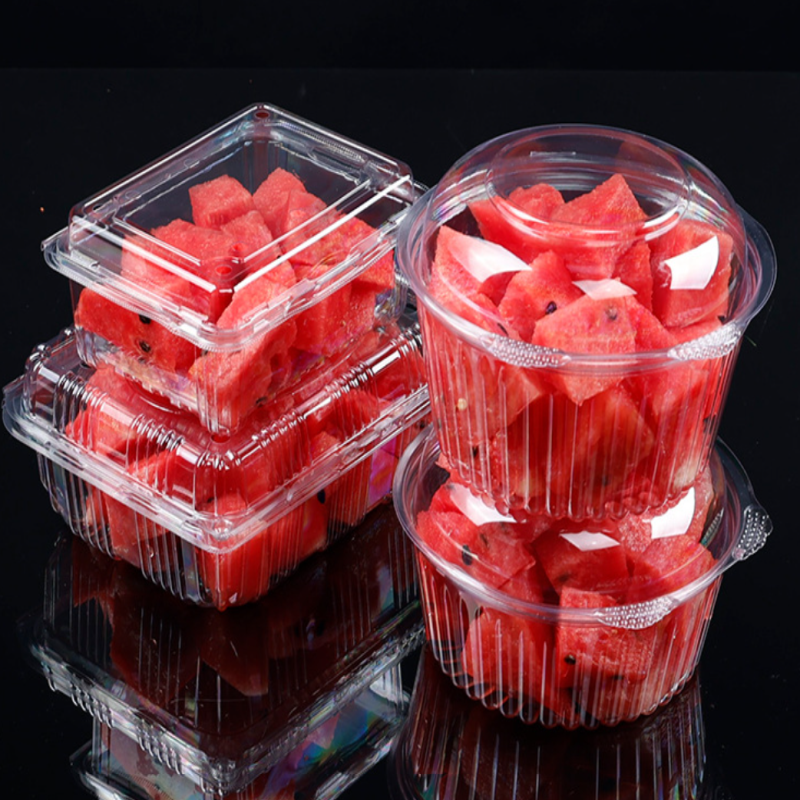
A reliable salad box with lid must establish a formidable defense against air intrusion. You must rigorously assess the primary closure mechanism. Snap-on lids require an audible click to confirm security. Hinged designs need robust locking tabs that resist accidental popping. Advanced designs incorporate micro-gasket seals to block microscopic leaks entirely. Leak resistance proves vital for oxidation prevention. If air enters, greens wilt. If liquids escape, cross-contamination ruins adjacent products. Never compromise on seal integrity. It dictates the total lifespan of your prepped ingredients.
Common Mistakes in Seal Evaluation:
Mixing wet and dry ingredients prematurely guarantees a soggy disaster. Multi-compartment designs are absolute necessities for advanced meal prep. You must physically isolate wet dressings and juicy tomatoes from crisp lettuce. Dedicated insert trays keep croutons crunchy until the exact moment of consumption. Compartmentalization controls moisture migration effectively. It elevates a basic salad into a premium culinary experience. Assess the internal dividers for flush fits against the top lid. If the divider leaves a gap, liquids will inevitably spill over during transit. Tight internal tolerances define quality.
Vertical storage optimization defines commercial kitchen efficiency. You must evaluate the exact footprint of your chosen packaging. Superior designs feature explicit lid-to-base nesting rings. The base of one unit locks securely into the lid of the unit below it. This interlocking prevents dangerous sliding during heavy vibration.
Steps to Evaluate Stackability:
Mastering these dimensional features maximizes vertical real estate in crowded home prep stations.
Fresh-cut fruits present unique chemical challenges. Citrus segments and pineapple chunks contain highly corrosive natural acids. You must confirm material stability when exposing packaging to these harsh environments. PET exhibits remarkable acid resistance over multi-day storage periods. It will not degrade, etch, or release harmful compounds when touching lemon juice. Generic plastics often turn cloudy or brittle after prolonged acid exposure. Maintaining structural integrity ensures the fruit remains safe for consumption. You rely on this chemical resilience to extend shelf life for acidic fruit medleys safely.
Cut fruits weep juices constantly. Managing this internal moisture is critical for texture preservation. A proper fruit cutting salad box integrates clever architectural features to handle liquids. Domed lids encourage condensation to roll down the sides rather than dripping onto the food. Built-in base ridges keep sensitive fruit pieces elevated. They sit safely above pooled juices at the bottom. This prevents the fruit from turning to mush. You must evaluate these liquid-management features closely. Proper drainage geometry separates premium fruit storage from subpar alternatives.
Strict portion control drives nutritional accuracy and inventory management. You achieve this through scaled-down PET inserts. These smaller, modular cups fit seamlessly inside larger primary enclosures. They allow you to maintain consistent sizing for high-calorie add-ins like nuts or cheese. Strict organization within a larger meal-prep system prevents chaotic plating. Modularity gives you total control over the exact macronutrient profile of every single meal. You easily swap out components without redesigning the entire packaging strategy. This flexibility proves invaluable for customized dietary requests.
You must respect the strict thermal boundaries of this material. This acts as a vital trustworthiness check for any food operator. PET is absolutely not microwave-safe. It begins to warp and structurally fail at temperatures exceeding 120°F (49°C). High heat permanently compromises the polymer chains. You must establish rigid "cold-use only" protocols in your kitchen. Never pour hot grilled chicken directly onto a PET base. Allow all cooked proteins to chill completely before assembly. Educating your staff on these limitations prevents disastrous melting incidents. It guarantees consumer safety and preserves your packaging investment.
Navigating local recycling infrastructures requires due diligence. You must verify local municipal guidelines. Fortunately, recycling centers widely accept curbside #1 PET worldwide. It remains one of the most successfully recycled plastics globally. Post-consumer PET often finds new life as clothing fibers or recycled packaging. You should highlight this recyclability to environmentally conscious consumers. Ensure your supplier clearly stamps the recycling code on the base of every unit. Compliance with local environmental regulations prevents fines. It also boosts your brand reputation regarding sustainable operating practices.
Choosing the right supplier demands a methodical approach. Do not commit to massive bulk orders blindly. You must request sample runs first. Use these samples to test critical operational metrics.
Vendor Testing Checklist:
Thorough physical testing prevents costly packaging failures. It ensures the final product aligns perfectly with your logistical workflow.
The correct PET container expertly bridges the gap between stunning aesthetic presentation and necessary functional longevity. Food-grade Polyethylene Terephthalate easily outperforms generic storage solutions by offering superior clarity, exceptional oxygen barriers, and rigid physical protection. Successful fresh prep organization relies entirely on utilizing standardized, modular, and tightly sealed systems.
You must actively audit your current storage failures to identify specific wilting rates and wasted shelf space. We highly recommend ordering a small pilot batch of modular PET containers. Test them rigorously within your daily operational workflow. You will quickly notice immediate improvements in ingredient crispness, visual inventory speed, and overall structural reliability.
A: Yes, for personal meal prep, they can be hand-washed gently with lukewarm soapy water. However, commercial dishwashers will severely warp the plastic due to the high heat cycles. You must air-dry them completely to prevent interior water spots.
A: PET offers vastly superior transparency and strong oxygen barrier properties. This makes it ideal for cold salads. PP appears cloudy but is completely microwave-safe. You should use PP for hot meals and PET exclusively for cold storage.
A: While a tightly sealed airtight lid significantly slows down oxidation, no container stops it entirely. Best practice involves packing all greens completely dry. You should also minimize empty headspace in the container to reduce trapped oxygen.


