


Phone:
+86-138-0577-0261


Views: 0 Author: Site Editor Publish Time: 2026-07-01 Origin: Site


Food brands and agriculture suppliers face a pressing challenge today. They must urgently adopt sustainable packaging to satisfy mounting regulatory pressure and rising consumer demand. However, they cannot afford to compromise on product shelf life, safety, or profit margins. Navigating these strict requirements often feels overwhelming for supply chain teams. Legacy multi-layer plastics simply no longer cut it. They strongly resist modern recycling processes and increasingly attract steep environmental penalties.
Transitioning to Polyethylene Terephthalate (PET) provides a proven, scalable pathway. It aligns perfectly with global circular economy mandates while maintaining product integrity. This article analyzes how you can confidently make this strategic material shift. We will assess core material performance, unpack complex compliance realities, and detail an operational transition framework for food-grade packaging. You will discover exactly how to source, test, and deploy these intelligent packaging solutions effectively.
Single-use, multi-layer plastics pose severe business risks. They notoriously fail within local recycling streams. Municipal facilities cannot easily separate bonded polymer layers. Consequently, waste managers incinerate or landfill these materials. Brands now face aggressive extended producer responsibility (EPR) taxes globally. Regulators actively penalize non-recyclable packaging. You need a smarter, future-proof strategy.
Transitioning to a recyclable PET container delivers a highly compelling business case. To justify this switch, you must define strict success criteria. First, procurement demands long-term price stability. Second, QA teams require absolute preservation of product shelf life. Third, marketing needs verifiable, honest environmental claims. Mono-material PET perfectly addresses these core demands.
Its uniform polymer structure streamlines sorting at local facilities. This design inherently supports true circular economy mandates. It actively moves your brand away from unreliable, "greenwashed" alternatives. You effectively abandon linear waste models. Instead, you integrate into verifiable, closed-loop material recovery systems.
Best Practice: Always align your packaging choices with regional recycling infrastructure capabilities.
Common Mistake: Assuming a recyclable label guarantees actual recycling without verifying local MRF sorting capabilities.
Packaging primarily exists to protect perishables. We must rigorously evaluate moisture and oxygen transmission rates. PET consistently outperforms many early-generation bioplastics in these crucial areas. It forms an excellent gas barrier. This barrier drastically slows spoilage and extends perishable food lifespans. Optical clarity also builds essential consumer trust. Shoppers strongly prefer viewing their food before purchasing. High structural rigidity guarantees safe transit across turbulent logistics networks.
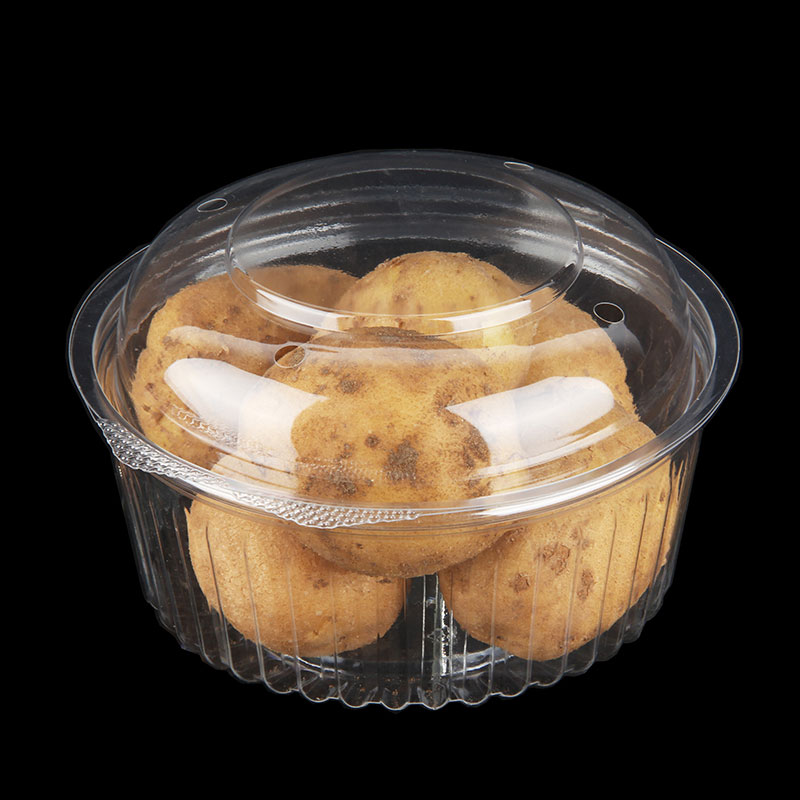
Different retail environments demand highly specific engineering. In the agriculture sector, fresh produce requires precise ventilation. An eco friendly fruit box must masterfully balance airflow, stackability, and impact absorption. Lacking proper impact resistance, fragile berries easily crush during transit. Retail and deli environments present contrasting challenges. A standard PET material box frequently encounters varying thermal environments. It must maintain secure sealing capabilities under diverse refrigeration conditions.
Procurement teams must strictly enforce evidence-oriented sourcing. You should actively request Life Cycle Assessment (LCA) data from every vendor. This critical data helps you compare carbon footprints accurately. You can directly measure the environmental impact of virgin PET against PCR-blended variants.
| Performance Metric | Mono-Material PET | Early-Gen Bioplastics | Multi-Layer Plastics |
|---|---|---|---|
| Oxygen Barrier | High | Low to Medium | High |
| Optical Clarity | Excellent | Often Cloudy | Variable |
| Recycling Infrastructure | Widely Available | Requires Industrial Composting | Extremely Limited |
Using recycled resins for direct food contact introduces complex technical realities. You must proactively eliminate all potential contamination risks. Global regulatory frameworks strictly govern these sensitive applications. In the United States, you must secure FDA "Letters of No Objection" (LNO). European markets require strict adherence to EFSA standards. These agencies heavily regulate both mechanical and chemical recycling processes.
Achieving the "safely used" standard relies entirely on modern decontamination technologies. Recyclers employ advanced super-cleaning processes for PET flakes. These rigorous methods actively strip away hazardous volatile organic compounds (VOCs). The intense heat and vacuum stages ensure absolute chemical purity. This guarantees zero migration of dangerous substances into your food products.
Evaluating vendor transparency remains a non-negotiable task. You must demand comprehensive documentation from your manufacturing partners.
Best Practice: Schedule comprehensive annual audits of your vendor’s compliance certificates.
Common Mistake: Believing standard industrial PET recyclers can automatically supply food-grade resins.
True sustainability requires successful processing at Materials Recovery Facilities (MRFs). You must strictly implement Design for Recycling (DfR) guidelines across your entire portfolio. Brands frequently ruin perfectly good packaging. They mistakenly incorporate harmful additives. Opaque colorants confuse near-infrared (NIR) optical sorters at recycling plants. Sorters reject these items into landfill streams. Incompatible adhesives stick aggressively to processing equipment. These simple errors render a technically recyclable item completely un-recyclable in reality.
You must mandate wash-off labels for your production lines. Compatible inks also protect high-yield recycling streams. Labels must detach cleanly during the hot caustic wash phase. Otherwise, residual glue heavily contaminates the entire PET flake batch.
Form factor adaptability offers designers incredible freedom. Modern thermoforming allows for highly specialized, custom shapes. You can engineer a precision-molded recyclable fruit tray effortlessly. This specific shaping process preserves the crucial monomaterial classification. You achieve protective, rigid, and highly marketable designs. Simultaneously, you guarantee straightforward end-of-life processing for municipal recyclers.
Transitioning to a new material demands careful strategic planning. Successful adoption relies on a highly structured, phased rollout. This methodical approach directly mitigates potential supply chain disruptions.
Best Practice: Include line operators early during Phase 1 testing. They provide invaluable feedback on material handling nuances.
Standardizing on recyclable PET solutions delivers immense strategic value. It provides critical regulatory resilience against emerging global plastic taxes. It also drives substantial operational efficiency across your manufacturing lines. Implementing sustainable packaging represents far more than a simple material swap. It requires a comprehensive supply chain integration process. You must carefully align your material choices. They must directly match local recycling realities and modern consumer expectations.
We strongly encourage procurement and sustainability officers to act today. Initiate deep vendor discussions immediately. Request updated compliance documentation for all food-contact resins. Finally, request physical material samples quickly. Your engineering team can begin essential structural testing right away. This proactive approach guarantees a smooth, profitable transition.
A: Standard PET thermal limits typically sit around 160°F (70°C). It handles ambient and refrigerated environments perfectly. However, it is not suitable for microwave heating or high-heat applications. You must use explicitly engineered CPET (Crystallized PET) if your product requires oven or microwave exposure.
A: Yes, producing packaging with 100% PCR is technically possible. However, brands frequently utilize 30% to 50% blends instead. This ratio perfectly balances structural integrity, optical clarity, and material cost. High PCR content can sometimes introduce slight yellowing. Blending ensures the packaging remains highly attractive and durable.
A: Biodegradable materials often require specialized industrial composting facilities. Unfortunately, these facilities remain scarce globally. If placed in normal landfills, biodegradables perform poorly. Conversely, PET utilizes highly established, scalable mechanical recycling infrastructure. This global network makes PET a much more reliable and verifiable end-of-life cycle choice.
A: Yes, PET features exceptionally high chemical resistance. It remains highly stable when holding acidic foods. You can safely package citrus fruits, cut tomatoes, and vinegar-based dressings. The material prevents any risk of chemical leaching, preserving both food flavor and rigorous safety standards.


