


Phone:
+86-138-0577-0261


Views: 0 Author: Site Editor Publish Time: 2026-07-28 Origin: Site


Post-harvest mechanical damage directly impacts your bottom line in the fresh produce industry. Bruising acts as a primary driver of supply chain shrink. It reliably triggers costly retailer rejections and rapidly erodes your profit margins. Transit naturally introduces a harsh, unpredictable environment for delicate fruit. Severe vibration, extreme pallet compression, and constant thermal fluctuations inside reefer transport continuously threaten your shipments. Every journey tests the physical limits of your logistics network. We provide supply chain managers and packhouse operators with a detailed technical evaluation. You will learn exactly how purposeful packaging design proactively mitigates transport damage. This article breaks down the engineering principles behind successful fruit protection. We explore essential structural requirements, distinct material choices, and critical ventilation needs. You will discover practical strategies to safeguard your harvest from the farm to the retail shelf. Protecting your berries ultimately means protecting your core revenue.
Bruising occurs via three primary mechanisms during transit: vibration (friction), impact (drops), and static compression (stacking).
A true shockproof strawberry box relies on structural engineering—such as ribbed sidewalls and suspended bases—rather than just material thickness.
Choosing between materials (like PET clamshell strawberry packaging vs. molded fiber) requires balancing moisture management, visibility, and shock absorption.
Ventilation design is inextricably linked to damage prevention; proper airflow maintains cell wall rigidity, naturally resisting bruises.
Commercial berry transport operates on razor-thin margins. You must define acceptable loss thresholds early in your procurement process. Losing even a small percentage of a load destroys trip profitability. Berries possess highly sensitive cell walls. They succumb easily to external pressures. We must understand exactly how these forces interact with your packaging during a typical transit cycle.
Vibration damage represents a relentless threat. Industry experts call this the "roller effect." Berries constantly rub against each other during prolonged truck transit. They also rub against the packaging walls. This continuous friction slowly degrades the outer epidermis of the fruit. The resulting surface damage causes fluid loss. It invites rapid fungal growth before the product ever reaches a supermarket display.
Compression damage occurs strictly from vertical pressure. Palletization creates massive weight loads. A standard transport pallet stacks multiple tiers high. Bottom-tier boxes carry the cumulative weight of the entire load above them. Weak packaging bows outward under this stress. When side walls fail, the lid presses down directly onto the berries. This crushes the fruit inside, rendering whole layers unsellable.
Impact damage happens through sudden kinetic shocks. Handling realities expose shipments to frequent jolts. Forklifts strike pallets. Workers drop master cartons during manual loading. Conveyor belts jam and collide. These impacts transfer shockwaves directly into the fruit. Retail shelf placement introduces further drops. Effective containers must absorb these abrupt energy spikes before they reach the delicate cargo.
Common Mistake: Relying solely on a master carton for protection. Inner clamshells must independently absorb micro-vibrations and localized impacts.
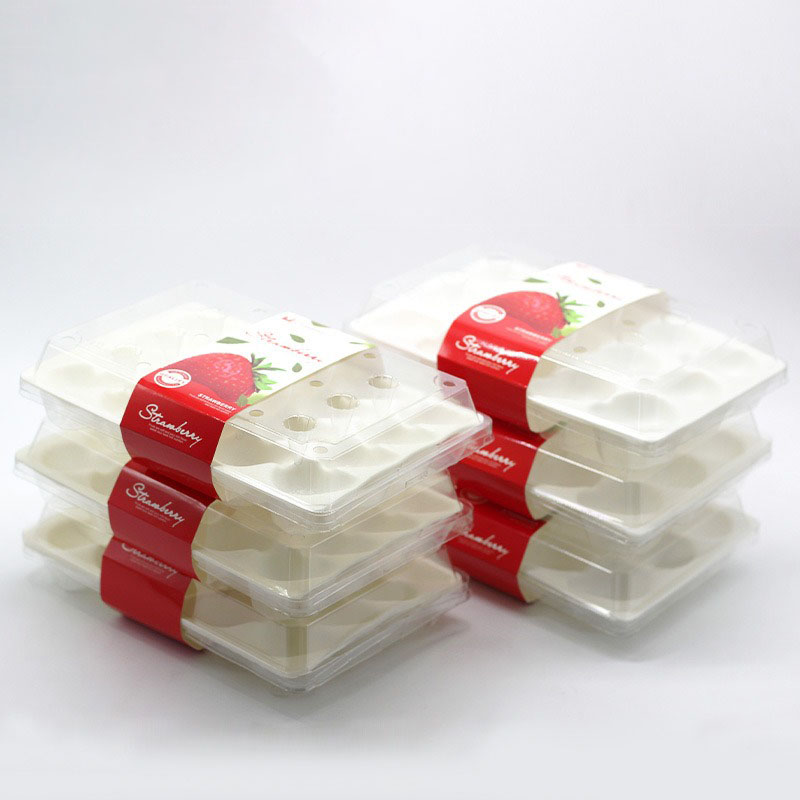
Evaluating your packaging requires a features-to-outcomes mindset. We must detail the physical mechanisms neutralizing transit threats. You cannot simply increase plastic thickness and expect better results. Heavy, poorly designed containers still crush fruit. True protection requires smart geometry. A reliable shockproof strawberry box utilizes specific engineering principles to shield its contents.
The base design dictates how fruit rests inside the container. Flat bottoms spell disaster for delicate berries. Advanced designs utilize molded divots and false bottoms. These features elevate the fruit slightly above the resting surface. This suspension isolates the berries from direct impacts when a worker drops the box. Energy disperses through the plastic base rather than through the soft fruit tissue.
Sidewalls carry the vertical load. Smooth walls collapse under pressure. Smart designs incorporate distinct corner posts. These posts act like pillars in a building. Vertical ribbing along the flat edges provides additional stiffness. This geometry prevents box collapse during high-tier pallet stacking. The ribs channel compressive forces downward, completely bypassing the internal cavity.
Lids must remain tightly shut during transit. Weak hinges allow lids to pop open under vibration. Spilled fruit creates immediate loss. Heavy-duty button locks secure the container firmly. They keep the lid anchored even when the box flexes. This mechanism keeps the fruit safely restrained. Restrained berries move less, which directly reduces friction bruising.
You must compare solution categories using an evidence-based approach. The industry relies heavily on two primary materials. Both offer distinct advantages and specific vulnerabilities. Your selection depends entirely on your transit duration and specific cooling infrastructure. Let us examine the performance characteristics of both options.
Best Practice: Always test materials under your specific cold chain conditions. Never rely on dry-room specifications alone.
Evaluation Metric | PET Clamshell Packaging | Molded Fiber/Pulp |
|---|---|---|
Shock Absorption | Low inherent dampening; relies on structure. | High natural cushioning against friction. |
Moisture Resistance | Excellent; maintains rigidity when wet. | Poor; absorbs moisture and loses strength. |
Retail Visibility | Optimal; allows clear fruit inspection. | Zero transparency; blocks consumer view. |
Stacking Strength | High; ribbing supports heavy vertical loads. | Moderate; weakens significantly in humidity. |
PET clamshell strawberry packaging dominates the commercial market. It offers remarkably high tensile strength. Buyers demand optimal retail visibility. Clear plastic delivers exactly that. It also boasts excellent resistance to moisture breakdown. High-humidity cold chains never soften PET. However, it presents a harder contact surface. This limits inherent shock absorption. Manufacturers must require precise structural ribbing to compensate for this rigidity.
Molded fiber provides a natural alternative. It offers excellent natural cushioning properties. Fiber dampens vibrations beautifully. It is highly effective at preventing friction bruising. However, molded pulp absorbs ambient moisture readily. Temperature-fluctuating environments create condensation. This moisture quickly compromises the structural stacking strength of the pulp. Collapsed fiber boxes lead directly to crushed fruit.
Marketing departments often push for high consumer conversion via novelty packaging. You must balance these requests against strict protection metrics. Unique shapes attract retail buyers. They command premium price points during holidays. Yet, these shapes frequently abandon standard load-bearing geometries. Engineering teams must adapt these novelty designs to survive brutal transit networks.
Consider the structural integrity of non-standard shapes. The heart shaped fruit box proves highly popular for Valentine’s Day promotions. However, its curved edges lack traditional corner posts. This creates massive structural vulnerabilities. You must demand reinforced hinges for these specialty containers. Furthermore, you need customized outer master-cartons. Standard rectangular trays will not hold heart shapes securely. Loose fits cause awkward load distribution on pallets. This inevitably leads to transit failure.
Transparency also drives consumer conversion. Buyers demand clear visibility. They want to inspect the bottom layer for hidden bruising. Poor quality plastics turn cloudy. Scratch-prone surfaces obscure the fruit. Anti-fog coatings ensure the plastic remains clear inside cold cases. Scratch-resistant materials survive the friction of the supply chain. These remain critical evaluation points when sourcing any transparent container.
System integration determines your success. You must evaluate how the strawberry box interacts with the cold chain. Reefer van logistics require specific packaging adaptations. Warm berries remain highly susceptible to damage. Their tissue feels soft and pliable. Rapid forced-air cooling solves this issue. Cold temperatures harden the cell walls. Firm berries naturally resist bruising.
Vent placement dictates cooling speed. Side and bottom ventilation holes must align perfectly. They need to match the venting gaps in your outer master cartons. Misaligned vents block airflow entirely. Uninterrupted airflow pulls field heat out of the berries quickly. However, you must cut vents carefully. Too many holes compromise structural strength. Engineers carefully calculate the open-area ratio to maximize airflow without weakening the sidewalls.
Temperature shifts inevitably cause condensation. Trapped moisture acts as an accelerant for decay. Water settles into tiny micro-bruises. This initiates rapid botrytis rot. Packaging must efficiently release trapped vapor. Proper ventilation allows this moisture to escape the micro-environment. Evaluate every container design based on its specific vapor-release efficiency. A dry berry survives the journey. A wet berry rots in transit.
Selecting the right manufacturing partner requires diligent evaluation. You need more than just favorable pricing. You need reliable performance criteria. Supply chain managers should follow concrete next-step actions. Evaluating packaging manufacturers rigorously protects your eventual harvest.
Demand a Sample Testing Protocol: Never buy a new design blindly. Request product samples. Run physical vibration table tests. Execute drop tests on fully loaded master cartons. Simulate the exact rigors of your distribution network before authorizing bulk purchasing.
Verify Compliance and Safety: Check all food-contact safety certifications. Insist on FDA or EFSA compliance documents. Verify BPA-free status strictly. Review regional recyclability mandates to ensure your packaging avoids incoming retail bans.
Assess Scalability and Automation: Manual packing wastes labor. Ensure your chosen container dispenses reliably on automated packhouse lines. Poorly designed flanges cause machines to jam. Machine jams destroy operational throughput and damage empty containers.
Common Mistake: Approving a container based on hand-packing tests alone. Automated denesters frequently fail on containers lacking proper separation lugs.
Preventing transport bruising requires a fundamental shift in perspective. You must view your packaging as an active structural asset, not just a passive container. Intelligent geometry directly neutralizes transit threats. Rigid ribbing, suspended bases, and secure closures work together to shield fragile cell walls from destruction.
We advise buyers to align packaging specifications directly with their furthest distribution point. Evaluate your local cooling protocols carefully. High humidity demands different material tolerances than dry routes. Custom shapes require customized master carton support.
Take action immediately. Review your current acceptable loss thresholds. Request sample containers from your suppliers today. Perform physical transport simulations under real-world conditions. Data-driven packaging procurement ultimately safeguards your product and secures your profitability.
A: A shockproof box focuses heavily on structural engineering. It features heavy vertical ribbing, specialized secure hinges, and energy-absorbing base designs. Generic molding just holds fruit, whereas shockproof designs actively disperse kinetic energy away from the berries during drops and vibrations.
A: Yes, it performs exceptionally well on long routes. It must feature high-tier stacking strength to survive pallet compression. It also needs precisely engineered ventilation channels. These channels allow rapid forced-air cooling, which keeps berry tissue firm and resistant to friction bruising.
A: They can be safe, but they require strict engineering modifications. Novelty shapes lack natural load-bearing corners. They require reinforced hinges and completely custom master cartons. These custom outers prevent awkward load shifting and compression failures during transit.
A: Engineers carefully balance this ratio. You must maximize airflow for rapid field-heat removal. However, cutting too many vents undermines the structural rigidity. Proper design places vents strategically along low-stress areas, ensuring moisture escapes without sacrificing the vertical strength needed to prevent pallet crush.


