


Phone:
+86-138-0577-0261


Views: 0 Author: Site Editor Publish Time: 2026-06-29 Origin: Site


Berries represent one of the highest-shrinkage inventory categories in fresh produce logistics. Supply chain handlers constantly battle intense vibration, severe compression, and rapid cold-chain temperature shifts. Modern distribution networks demand packaging capable of surviving these daily threats. Today, consumer sentiment heavily favors plastic reduction and zero-waste initiatives. However, soft, fragile fruits require rigid physical protection. This creates a logistical reality distributors simply cannot ignore. Our article breaks down the precise protective mechanisms of a commercial clamshell fruit box. We will provide supply chain managers and buyers with a concrete evaluation framework. You will learn how to assess structural performance, analyze material compliance, and maximize return on investment accurately. Let us explore how engineered packaging design directly safeguards delicate inventory from the farm directly to the retail shelf.
Structural Integrity: Thermoformed ribbing and rigid walls absorb impact, preventing crushing during palletization.
Ventilation Management: Precise venting ratios mitigate condensation and ethylene buildup, directly extending shelf life.
Compliance & Material: Evaluating RPET or alternative materials requires balancing the 2025 recyclability mandates with transit durability.
Procurement Criteria: High-volume buyers must evaluate locking mechanisms, automation compatibility, and gauge thickness before shortlisting suppliers.
Physical design actively prevents mechanical damage during grueling transit cycles. Produce travels thousands of miles on varying road surfaces. Palletizing causes intense downward pressure. Packaging must resist these forces.
Engineers design corrugated-style ridges directly into the plastic mold. You often see this applied to a high-quality blister fruit box. These thermoformed ribs act like architectural pillars. They distribute downward pressure away from the fruit during high-pallet stacking. The weight transfers into the structural corners rather than resting on the soft berries below. This geometry prevents catastrophic collapsing in the bottom layers of a master carton.
Truck transport generates continuous lateral shock and vibration. A rigid perimeter acts as a critical buffer. When boxes shift inside corrugated master trays, the rigid edges absorb the kinetic energy. They deflect impact forces away from the interior cavity. This structural defense mechanism drastically reduces friction bruising. Soft skins remain intact despite rough road conditions.
Modern packaging designs feature engineered headspace. This is the calculated empty zone between the top layer of berries and the sealed lid. Headspace prevents direct friction. When handlers compress boxes during loading, the lid flexes slightly downward. The clearance zone ensures the plastic never touches the top fruit layer. This prevents pressure bruising and maintains premium visual appeal.
Test packaging under fully loaded master carton weights.
Simulate forklift drop shocks to measure perimeter resilience.
Check the headspace after simulated transit to ensure it remains intact.
Atmospheric control prevents rapid biological degradation. Spoilage and mold thrive in stagnant, humid environments. Effective airflow engineering stops these threats early.
Side and bottom vents serve a vital operational purpose. They facilitate rapid forced-air cooling immediately after harvest. Field temperatures run high. Cooling tunnels push chilled air through these specific vents. This pulls down the core temperature of the fruit fast. Rapid cooling pauses the respiration cycle. It delays ripening and preserves firmness.
Berries undergo multiple environmental shifts. They move from a cold truck to a warm dock, then back to a chilled warehouse. This cold-chain transfer triggers condensation. The physics of temperature exchange causes water droplets to form. Without venting, water pools on delicate berry skins. Prolonged moisture causes rapid mold blooming. Strategically placed vents let trapped moisture escape into the ambient air.
Continuous airflow prevents the trapped-gas effect. As berries ripen, they naturally emit ethylene gas. If a package lacks adequate ventilation, ethylene accumulates inside the dome. High ethylene concentrations accelerate over-ripening rapidly. Vents flush out this gas. They maintain a balanced internal atmosphere. This directly extends the viable retail shelf life of the product.
Blocking side vents with oversized product labels.
Using master cartons lacking corresponding alignment holes.
Ignoring the vent-to-surface-area ratio during procurement.
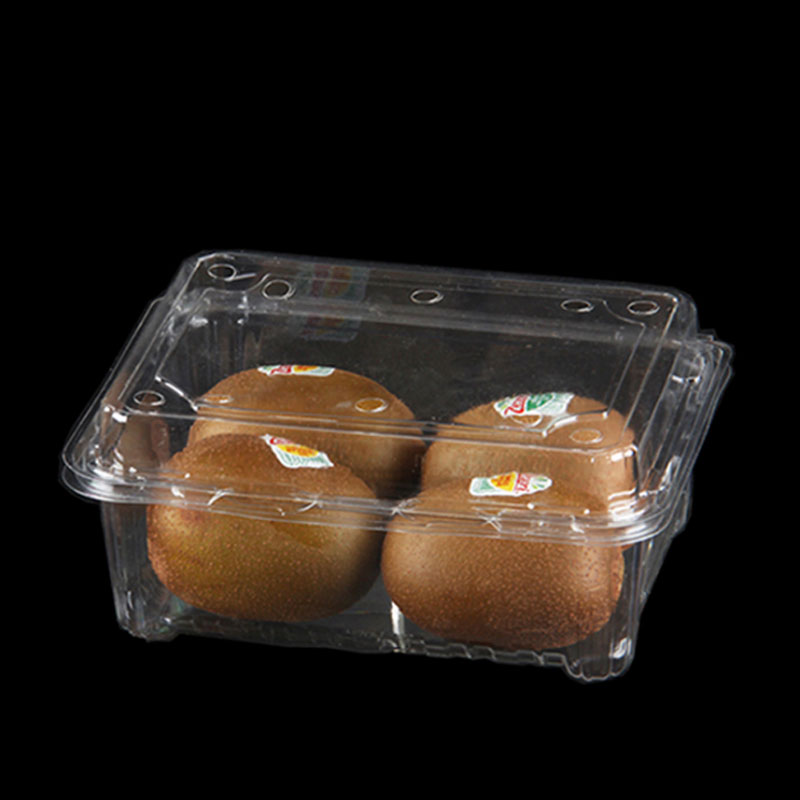
Material clarity directly impacts rejection rates at receiving docks and retail shelves. Distributors need to see what they are buying. Poor visibility hides spoilage and leads to expensive mass rejections.
High-clarity plastics allow extensive quality assurance. Operators use virgin PET or high-grade RPET for maximum transparency. Distributors conduct rapid visual inspections without opening the package. They quickly spot mold, juice pooling, or crushing. This eliminates unnecessary handling. Less handling means less physical damage. Fast, accurate inspections keep supply chains moving efficiently.
This high-visibility standard goes beyond berries. Procurement teams frequently scale this standard to encompass other produce items. They use these parameters to source a reliable transparent vegetable container. Farm operators use them for cherry tomatoes, snap peas, or delicate microgreens. A unified, clear packaging strategy streamlines purchasing. It also provides a consistent, premium look across the entire fresh produce aisle.
Visual integrity maintains supply chain security. Clear shrink-bands and intact labels assure consumers. If a container pops open during transit, clear plastic makes it instantly obvious. Handlers immediately remove compromised units. Consumers demand untouched, safe food. Tamper-evident features combined with crystal-clear visibility build high consumer trust.
Corporate sustainability goals frequently clash with harsh logistical realities. The friction between environmental targets and product protection requires careful navigation.
We must acknowledge growing end-user frustration. Consumers actively push back against single-use plastics. Many advocate for zero-waste alternatives. C-suite executives face pressure to adopt fully sustainable packaging. However, transition strategies must respect the physics of fruit transportation. Compromising rigidity leads to massive food waste. Food waste generates a heavier carbon footprint than the plastic itself.
Procurement teams must compare standard PET, post-consumer recycled PET (RPET), and emerging compostable bioplastics. Each option carries distinct logistical trade-offs.
Material Type | Compression Strength | Clarity & Visibility | Sustainability Profile |
|---|---|---|---|
Virgin PET | Excellent. High pallet stacking capacity. | Maximum clarity for retail QA. | Recyclable, but uses new fossil fuels. High consumer pushback. |
High-Grade RPET | Strong. Matches virgin PET in modern formulas. | Very high. Minor tint variations possible. | Promotes circular economy. Meets 2025 mandates. |
Bioplastics (PLA) | Weak. Prone to cracking under heavy loads. | Good clarity when dry. Fogs easily. | Compostable industrially. *High risk of cold-chain failure. |
Assumption Check: Bioplastics sound ideal in boardroom presentations. However, they often fail in reality. They lack the rigidity required for high-pallet stacking. Furthermore, PLA breaks down in high-humidity cold chains. They turn brittle or warp. This results in crushed berries and unacceptable inventory loss.
Material Recovery Facilities (MRFs) need predictable inputs. Standardizing polymer types aligns a berry packaging box with upcoming 2025 regulatory requirements. Using 100% RPET ensures true circularity. The packaging goes from the shelf, to the bin, back to the processing plant. It becomes new packaging again. This meets regulatory mandates while providing the transit durability necessary for fragile fruit.
Bottom-of-the-funnel (BOFU) procurement requires actionable criteria. Procurement teams must use strict parameters in their Request for Proposals (RFPs). Do not rely solely on unit price.
Evaluate button-locks versus perimeter seals meticulously. A weak lock fails during turbulent transit. Failures here result in spilled product directly on the warehouse floor. Perimeter seals offer continuous closure. Button-locks provide an audible snap. Ensure the lock holds under pressure but opens smoothly for the end consumer. Test this mechanism repeatedly during the sampling phase.
You must balance material cost against necessary crush resistance. Thicker walls improve durability. However, they increase freight weight and material spend. Look for suppliers who optimize strength through smart engineering rather than merely adding plastic. Ask for gauge specifications. Request compression test data. Find the sweet spot where structural ribbing compensates for a slightly lighter gauge.
Packaging must integrate with modern packing houses. Ensure the hinges withstand rapid mechanical closing. Check the denesting features closely. Automated lines use suction machinery to pull individual trays from tightly nested stacks. If trays stick together, machinery jams. This causes massive operational downtime. Your supplier must guarantee smooth denesting lugs for automated filling and labeling equipment.
Provide data on denesting failure rates.
Supply third-party crush-test certificates.
Confirm RPET percentage and sourcing transparency.
Provide hinge fatigue test results.
Effective berry protection requires a careful synthesis of structural rigidity, precise ventilation, and supply chain compatibility. You cannot sacrifice physical strength for material trends. Produce must survive palletization, severe shock, and cold-chain humidity variations. Proper vent placement ensures atmospheric control, while high-clarity designs reduce handling damage at the retail level.
Next Steps for Buyers:
Request detailed sample runs from shortlisted suppliers.
Conduct rigorous transit testing, including vibration tables and drop simulations.
Execute shelf-life stress tests in actual cold-chain environments.
Verify automation compatibility on your specific filling lines before committing to an annual contract.
A: Yes, up to a point. While thicker walls improve crush resistance during palletization, they increase freight weight and unit cost. The optimal approach is often better ribbing design rather than just thicker plastic.
A: If poorly placed, vents can create weak points that collapse under pressure. High-quality designs place vents on the transitional curves or reinforce them with raised ridges.
A: Generally, yes. Modern high-grade RPET maintains comparable tensile strength and clarity, making it the current standard for balancing logistics protection with environmental compliance.


