


Phone:
+86-138-0577-0261


Views: 0 Author: Site Editor Publish Time: 2026-07-17 Origin: Site


Visual merchandising directly controls how shoppers perceive food freshness. It heavily influences retail pricing power on the grocery shelf. When packaging fails, you see immediate negative results. Ingredients mix prematurely during long transit routes. Moisture transfers rapidly between different food profiles. Produce displays quickly become soggy and unappealing. This visual degradation directly increases your daily food waste. For commercial food prep facilities, supermarkets, and specialty grocers, keeping fresh ingredients separated is a major operational priority. Achieving this separation without sacrificing product visibility drives higher sales conversion rates. Standard opaque packaging completely hides the underlying product quality. Single-cavity options force delicate ingredients into damaging physical contact. Both traditional approaches fall short in modern, fast-paced retail environments. A compartmentalized structural approach solves these lingering display issues effectively. We will explore how smart packaging design prevents flavor crossover while maintaining crisp, premium aesthetics. You will learn the exact material advantages of polyethylene terephthalate over inferior plastic polymers. Finally, we will break down essential procurement considerations to help you select the ideal structural packaging for your specific grocery application.
Modern shoppers experience severe decision fatigue as they scan busy grocery aisles. Buyers evaluate food freshness in mere seconds. They rarely read nutritional labels first. They look directly at the physical product. An unobstructed view removes hidden barriers to purchase. Shoppers inherently trust what they can see clearly. You do not need excessive, cluttered labeling when the food speaks for itself. Using a high-quality transparent PET container establishes immediate product trust. Consumers can verify the quality of the nuts and the crispness of the fruit simultaneously.
Compartmentalization allows clever visual merchandising techniques. Packers strategically place high-contrast items side-by-side. Imagine bright red berries sitting immediately next to vibrant green grapes. This intentional color contrast visually anchors the product. It aggressively captures consumer attention on overwhelmingly crowded retail shelves. It elevates a basic produce commodity into a premium retail offering.
Furthermore, you must carefully consider ambient anti-fog properties. Refrigerated supermarket displays inevitably create heavy condensation. Standard untreated plastic fogs up almost instantly. This moisture layer masks your carefully arranged food presentation. Shoppers walk right past clouded, unappealing boxes. Evaluate containers treated specifically for advanced anti-fog performance. These specialized surface coatings disperse tiny water droplets rapidly. They force internal moisture into a thin, completely invisible film. This critical feature ensures the glass-like finish remains perfectly intact inside cold display cases. Your fresh product stays visible, vibrant, and highly appealing to impulse buyers.
Mixing ingredients introduces severe, irreversible cross-contamination risks. Foods naturally possess varying water activities. Food scientists refer to this specific metric as Aw. When a high-Aw food touches a low-Aw food, moisture inevitably migrates. It constantly seeks biological equilibrium. This unavoidable natural process causes soggy textures. Spoilage accelerates rapidly due to the constant moisture exchange. Your pristine retail presentation can completely degrade within just a few hours.
Consider a popular grab-and-go snack box. It pairs juicy pineapple chunks next to dry pretzel snaps. Without a rigid structural partition, the pretzel snaps absorb ambient moisture from the pineapple rapidly. They turn mushy and completely inedible. The consumer's eating experience is ruined.
Structural division serves as the most reliable defense mechanism against moisture migration. A properly molded PET divider box acts as a strict physical barrier. It physically isolates weeping ingredients. Cut melons, juicy tomatoes, and heavily dressed salads stay contained. It keeps them far away from dry or highly reactive snack components. Nuts, aged artisan cheeses, toasted crackers, and delicate dips remain crisp. They retain their intended crunch and savory flavor profiles.
However, you must carefully evaluate internal seal integrity. Not all internal dividers perform equally well under harsh transit conditions. Delivery trucks bounce and sway, shifting liquid contents constantly.
Only raised dividers provide a true, dependable barrier against liquid spillover. They firmly lock specific flavors in their respective zones. This guarantees your consumers experience the exact taste profile you originally designed.
Retail buyers often express valid skepticism regarding generic plastic performance. Common, cheaper plastic polymers routinely absorb fats. They easily become cloudy, permanently warped, or badly discolored under retail lighting. Polyethylene terephthalate behaves fundamentally differently. It maintains exceptionally strict chemical resistance. It stubbornly refuses to absorb grease from heavy oil-based salad dressings. It rejects lipid transfer from rich deli cheeses. Consequently, your outer structural packaging stays completely pristine.
However, you must clearly understand specific temperature limitations. Material science dictates exactly where this rigid polymer thrives. It cannot do everything.
Institutional environmental, social, and governance requirements continue to tighten globally. Modern wholesale buyers demand sustainable, traceable solutions. Standard PET aligns perfectly with these strict green procurement mandates. Municipal recycling facilities universally accept it. It proudly carries the globally recognized Recycling Code #1. Furthermore, it strictly adheres to modern FDA compliance standards for direct, prolonged food contact. Reliable manufacturers produce it entirely without using harmful phthalates or dangerous chemical plasticizers.
Here is a practical comparison chart outlining common packaging polymers utilized for cold food presentation:
| Material Type | Visual Clarity | Grease & Fat Resistance | Ideal Display Temperature Range |
|---|---|---|---|
| PET (Polyethylene Terephthalate) | Excellent (Provides high-end glass-like transparency) | Extremely High | -20°C to 60°C |
| PS (Polystyrene) | Good (But highly prone to minor surface scratching) | Low (Often clouds upon fat contact) | 4°C to 70°C |
| PP (Polypropylene) | Hazy / Semi-opaque appearance | Moderate | 0°C to 120°C (Microwave safe) |
Different fresh produce types demand distinctly different packaging architectures. You cannot use a lazy, universal approach. Delicate raspberries require ample air ventilation to prevent rapid mold growth. Sturdy citrus fruits need highly rigid side walls to prevent costly transit bruising. Utilizing a purposefully customized fruit vegetable packaging box neatly accommodates these wildly varying shelf success criteria.
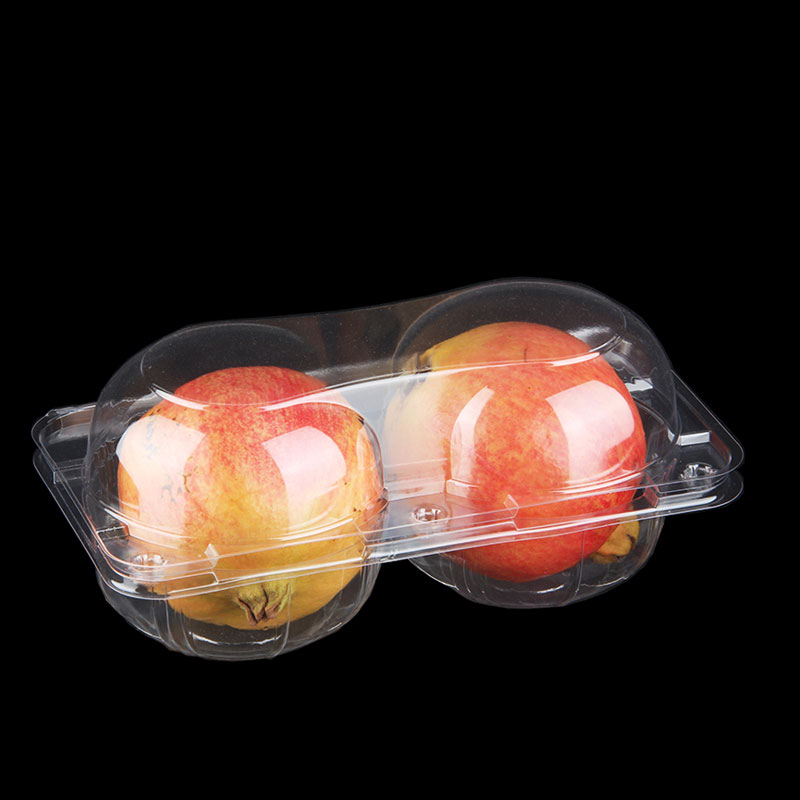
Supermarkets heavily rely on strategic cross-merchandising. Pre-packaged food combos drive higher ring values at the checkout register. The popular two separate fruit box model represents a major operational retail innovation. It intelligently groups complementary but chemically incompatible fruits together. For example, packing facilities place highly acidic sliced citrus immediately next to delicate, thin-skinned berries. The solid physical barrier prevents the harsh citric acid from aggressively degrading the fragile berry skins. This clever strategic separation prolongs overall display shelf life significantly. It also reliably offers a premium, ready-to-eat convenience for increasingly busy consumers.
Pre-molded internal compartments also rigidly enforce strict, profitable portion control. They naturally standardize fill weights automatically directly on the busy packing line. Assembly line workers avoid accidental over-portioning errors. As a direct result, you maintain highly consistent profit margins across thousands of packaged units. Simultaneously, the specialized curved cavities create a visually abundant, overflowing look right on the store shelf. The fresh product looks generous and appealing without sacrificing actual product yield.
Upgrading your active packaging line requires careful, diligent procurement analysis. You absolutely cannot judge a heavy-duty two compartment PET box purely by its empty aesthetics. Real-world structural engineering matters deeply when moving volume.
Evaluate the molded base ribbing design carefully. Poorly engineered plastic boxes inevitably buckle under heavy wooden pallet load weight. When bottom-tier grocery products crush during long warehouse transit, you lose unsellable inventory. Robust, mathematically designed structural wall ribbing prevents this costly, cascading failure.
Next, systematically compare hinged lids versus detached separate lids. Hinged lids dramatically streamline complex warehouse inventory management. They accomplish this by physically reducing distinct part SKUs on the floor. However, they occasionally complicate high-speed automated machine filling lines. If you deliberately choose hinged options, verify the closure mechanism. Ensure the snap-lock design provides a loud, distinct audible click. This undeniable physical feedback guarantees full rim closure. It securely locks in volatile food freshness and thoroughly prevents accidental store spills.
Finally, consider severe cold storage brittleness. Thinner gauge plastics become dangerously fragile at deep freezing temperatures. Warn your internal procurement team to rigorously test initial sample runs. Place them directly in your specific commercial refrigeration environments. Ensure the plastic wall gauge remains thick enough. It must comfortably survive minor dropping impacts without shattering or cracking under pressure.
Upgrading to compartmentalized PET is far more than a simple aesthetic choice. It acts as a powerful operational safeguard. It fiercely protects against rapid food degradation and subsequent retail margin loss. By physically isolating delicate ingredients, you extend crucial visual appeal. You also significantly prolong measurable product shelf life.
Retail buyers should aggressively prioritize transparent, technical supplier data. Demand detailed engineering spec sheets. These technical documents must outline exact plastic gauges and rigorous structural load testing results. Insist heavily on proven, verifiable anti-fog capabilities for cold storage.
Your next proactive step remains straightforward. Request bulk physical samples directly from your shortlisted manufacturing partners. Conduct a rigorous, real-world 48-hour cold storage test. Use your actual raw food items during the trial. Verify lid seals, structural crush resistance, and optical display clarity. Complete these essential checks before committing to any high-volume commercial purchase orders.
A: No. Standard PET distorts at temperatures above 60°C (140°F). For hot food, CPET or PP containers are required.
A: It depends on the lid seal. If the divider sits flush with a tight-fitting lid, it creates an effective barrier against moderate liquid movement, though it is not pressure-sealed for heavy liquids like soup.
A: Yes, PET (Polyethylene Terephthalate) is highly recycled globally. Ensure your local facilities accept food-grade PET and advise consumers to rinse before recycling.
A: While durable, high-friction transit can cause micro-scratches. Opting for boxes with reinforced, ribbed bases minimizes direct surface contact and preserves clarity.


