


Phone:
+86-138-0577-0261


Views: 0 Author: Site Editor Publish Time: 2025-12-10 Origin: Site


Transporting fresh fruits from farms to markets or retail stores is a complex challenge. Fruits are highly perishable and susceptible to damage from pressure, collisions, temperature fluctuations, and humidity changes during transit. Selecting the right packaging plays a crucial role in maintaining quality, minimizing loss, and ensuring consumer satisfaction. Among the most effective solutions, transparent fruit boxes have become the preferred choice for producers, distributors, and retailers.
A transparent fruit box is more than just a container; it serves multiple purposes. It protects fruits during handling and transportation, preserves freshness, facilitates stacking and storage, and provides a clear visual display of the fruit inside. Transparency allows retailers and consumers to assess fruit quality without opening the packaging, while thoughtful structural design keeps fruits secure and intact throughout logistics.
Manufacturers specializing in high-quality transparent fruit boxes use food-grade materials such as PET and r-PET. Years of expertise in design and production enable them to offer fully customizable solutions that meet modern market demands for durability, sustainability, and presentation. This article examines how transparent fruit boxes safeguard fruits during transport, focusing on material selection, structural design, manufacturing techniques, and practical benefits, while offering guidance on choosing the most suitable packaging solutions.
Transporting fresh fruits is a process filled with risks. Without proper packaging, fruits are prone to damage that reduces quality, increases waste, and affects brand reputation.
Physical Damage
Fruits are delicate and easily bruised or crushed. During transit, vibrations, collisions, and uneven stacking can lead to visible damage, rendering fruits unsellable.
Temperature and Humidity Fluctuations
Inconsistent temperatures and high humidity can accelerate ripening, spoilage, and microbial growth. Packaging must help stabilize these environmental factors.
Stacking Pressure
Boxes are often stacked during transport. Without adequate structural support, weight from upper layers can crush fruits at the bottom.
Extended Transport Times
Long-distance transport increases exposure to adverse conditions, making protective packaging even more critical.
Increased fruit waste due to bruising and spoilage.
Loss of revenue and increased logistical costs.
Negative impact on brand image due to damaged products reaching consumers.
Challenges in retail display because damaged fruits cannot be showcased effectively.
Properly designed transparent fruit boxes address these risks, offering durability, stability, and visual inspection capabilities that help minimize losses and maintain fruit quality.
The material used in a transparent fruit box determines its ability to protect fruits from physical damage, moisture, and environmental stress.
PET is the most widely used material for premium transparent fruit boxes. Its benefits include:
High Transparency: Ensures full visibility of the fruit, enhancing shelf appeal.
Durability and Strength: Resistant to impact, crushing, and repeated handling.
Lightweight: Reduces shipping costs without compromising protection.
Food Safety: Non-toxic and compliant with international food contact regulations.
PET’s properties make it ideal for fruits that are delicate, heavy, or prone to bruising, such as apples, pears, and berries.
r-PET is made from post-consumer recycled PET materials and is gaining popularity due to environmental concerns:
Sustainability: Reduces plastic waste and carbon footprint.
Comparable Strength: Maintains durability similar to virgin PET.
Transparency: Provides clear visibility for retail display.
Brand Image: Using recycled materials enhances a company’s eco-friendly reputation.
While PET and r-PET dominate, other plastics like PP (polypropylene) or PS (polystyrene) are occasionally used:
PP: Offers heat resistance and structural rigidity but slightly lower transparency.
PS: Lightweight and cost-effective but less durable under pressure.
A well-chosen material absorbs shocks, distributes weight, and prevents deformation. PET and r-PET are particularly effective because they combine transparency, strength, and lightweight characteristics, providing the first layer of protection for fruits during transit.
Comparison Table: Material Features
Material | Transparency | Strength | Sustainability | Cost | Ideal Use Case |
PET | Excellent | High | Medium | Moderate | Premium fruit packaging |
r-PET | Excellent | High | High | Moderate | Eco-conscious brands |
PP | Medium | High | Medium | Low | Heat-resistant or functional packaging |
PS | Medium | Medium | Low | Low | Lightweight, low-cost solutions |
While the choice of materials is fundamental, the structural design of a transparent fruit box plays an equally critical role in protecting fruits during transport. Thoughtful design elements help prevent physical damage, enhance stability during stacking, and facilitate proper airflow to maintain freshness.
Compartments or dividers are designed to separate individual fruits, preventing them from colliding with one another during handling or transit. This feature is particularly important for delicate fruits such as berries, grapes, and soft fruits, which are highly prone to bruising. By keeping each fruit in its own section, compartments reduce physical damage and help maintain the fruit’s integrity, ensuring that it arrives in excellent condition at its destination.
Reinforced trays and sturdy bottom structures prevent the box from bending or collapsing under the weight of stacked boxes. This design is especially crucial for heavier fruits like apples, oranges, and pears. A reinforced base distributes weight evenly, ensuring that pressure from upper layers does not crush the fruits below, and it provides greater stability during transport, handling, and storage.
Ventilation holes are integrated to allow air circulation, controlling humidity and temperature inside the box. This is essential for fruits that are sensitive to moisture or heat, as it helps reduce mold formation, condensation, and premature spoilage.
When combined with strong materials like PET or r-PET, these structural features maximize protection: compartments distribute pressure evenly, reinforcements prevent deformation, and ventilation maintains freshness while reducing microbial growth. Together, these elements ensure that fruits remain safe, fresh, and visually appealing throughout transportation.
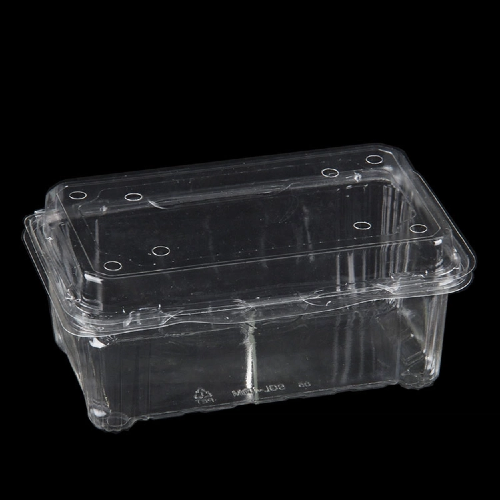
The production process determines the final box’s performance. Advanced techniques ensure boxes are precise, durable, and fit for transport.
Process: Heated sheets of PET or r-PET are molded using vacuum pressure.
Benefits: Allows precise shapes, custom designs, and consistent wall thickness.
Impact on Transport Protection: Ensures uniform strength and prevents weak points that could crush fruits.
Injection Molding: Produces high-precision boxes with enhanced structural integrity.
Thermoforming: Lightweight yet durable trays for delicate fruits.
Benefit: Both methods create boxes that withstand stacking, vibration, and handling stress.
Size and Shape: Tailored to different fruit types for optimal protection.
Compartments and Inserts: Reduce movement and collision inside the box.
Surface Treatments: Anti-fog or anti-condensation coatings maintain clarity and freshness.
Transparent fruit boxes offer multiple advantages, from damage reduction to operational efficiency.
High-strength materials absorb shocks and prevent crushing.
Structural design minimizes bruising and maintains fruit appearance.
Maintains freshness, color, and texture throughout the supply chain.
Reduces spoilage, ensuring consumers receive premium-quality fruits.
Lightweight design lowers transportation costs.
Stackable structures maximize warehouse space and ease handling.
Transparent boxes display premium fruits, enhancing retail appeal.
Use of r-PET and recyclable materials aligns with sustainability initiatives and eco-conscious branding.
Comparison Table: Benefits Summary
Benefit | Description |
Damage Reduction | Prevents bruising and crushing through material strength and design |
Freshness Preservation | Maintains moisture, color, and texture during transit |
Logistics Efficiency | Lightweight and stackable for cost-effective transport |
Branding & Sustainability | Transparent display and recyclable materials enhance brand image |
Selecting the most suitable box depends on fruit type, transport conditions, and storage requirements.
Fruit Type and Fragility: Delicate fruits need compartments; heavier fruits need reinforced bases.
Weight and Stacking Needs: Determine structural strength and material thickness.
Transportation Conditions: Long-distance shipping may require anti-fog surfaces and additional reinforcements.
Display Requirements: Transparency, branding, and aesthetic appeal for retail presentation.
Manufacturers like Hangzhou Shiding offer tailored solutions:
Custom dimensions, inserts, and dividers for specific fruits.
Anti-fog and moisture-resistant treatments for long-distance transport.
Stackable designs that optimize space and reduce handling damage.
High-quality transparent fruit boxes play a vital role in protecting fruits during transport, preserving freshness, and maintaining a strong brand reputation. By combining durable, food-grade materials such as PET or r-PET with carefully engineered designs and advanced manufacturing techniques, these boxes ensure both reliable protection and attractive presentation. For businesses aiming to enhance transport safety, reduce waste, and improve retail display, Hangzhou Shiding Plastic Products Co., Ltd. offers fully customizable transparent fruit boxes designed to meet a variety of logistical and market requirements. Companies looking for tailored packaging solutions that safeguard fruits, showcase product quality, and support sustainability efforts can reach out to Hangzhou Shiding’s team to explore options, discuss customization, and find the best packaging solutions to elevate their operations and brand image.
How does a transparent fruit box protect fruits during shipping?
Through strong materials, compartmentalized design, reinforced bases, and airflow management.
Which materials are most suitable for transporting fruits?
PET and r-PET are preferred for their strength, transparency, and food safety compliance.
Can boxes be customized for different types of fruits?
Yes, including size, internal dividers, and optional surface treatments.
Do transparent fruit boxes help maintain fruit freshness?
Yes, they reduce bruising, moisture loss, and spoilage during transport.
Are these boxes eco-friendly?
r-PET and recyclable PET boxes support sustainability and reduce environmental impact.


