


Phone:
+86-138-0577-0261


Views: 225 Author: Site Editor Publish Time: 2026-03-30 Origin: Site


As we move through 2026, the global food supply chain faces a dual challenge: reducing food waste while eliminating environmental pollutants. The fresh fruit packing container is at the center of this transition. For years, the industry relied on single-use plastics that provided excellent protection but left a heavy carbon footprint. Today, the "Expert Insight" focuses on a circular economy where packaging must be as healthy as the produce it holds.
Sustainable solutions are no longer just "nice to have"; they are a market requirement. Retailers and consumers alike demand a fresh fruit packing container that balances shelf-life extension with end-of-life responsibility. In this guide, we explore the latest innovations in Transparent PET, Biodegradable polymers, and smart design features like Anti-fog technology. By the end of this article, you will understand how 2026 standards are redefining what it means to pack fruit responsibly.
For a long time, the word "Plastic" was treated as a villain in sustainability circles. However, in 2026, the industry has pivoted toward high-grade, 100% recycled Transparent PET (rPET). This material remains the gold standard for visibility and protection. If a consumer cannot see the quality of the berries or grapes inside, they simply won't buy them.
A fresh fruit packing container made from Transparent PET allows for immediate quality assessment. This reduces the "handling" of fruit in stores, which in turn lowers the rate of bruising and spoilage. From a sustainability perspective, rPET is highly valuable because it is infinitely recyclable within existing infrastructure. We are seeing a shift where the "virgin" Plastic content in containers is being phased out in favor of "closed-loop" recycled materials.
Modern engineering allows us to create a fresh fruit packing container that uses 20% less raw material while maintaining the same strength. This "lightweighting" strategy reduces transportation emissions significantly. When you multiply those savings across millions of units, the environmental impact is massive. It proves that an Eco-friendly approach can also be a cost-saving one for large-scale distributors.
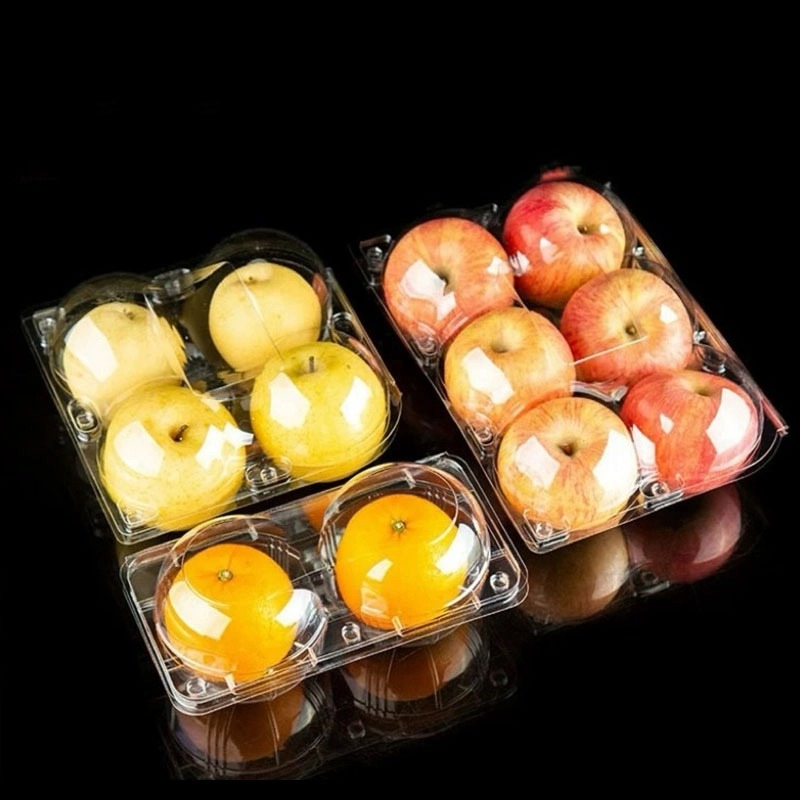
For specific fruit types—like hardy stone fruits or citrus—the industry is moving toward Biodegradable materials derived from plant starches or cellulose. These containers are designed to break down in industrial composting facilities, leaving no microplastics behind.
We are seeing a surge in PLA (Polylactic Acid) and molded fiber solutions. A Biodegradable fresh fruit packing container is ideal for organic brands that want their packaging to match their "pesticide-free" message. While these materials were once brittle and opaque, new 2026 formulations have improved their clarity and impact resistance, making them a viable competitor to traditional Plastic.
The biggest challenge for a Biodegradable fresh fruit packing container is consumer education. We must ensure these boxes end up in the compost bin rather than the recycling bin, as they can contaminate the PET recycling stream.
Pros: Zero long-term waste, renewable resources, lower toxic emissions during production.
Cons: Requires specific disposal infrastructure, generally higher unit cost than rPET.
Sustainability isn't just about the box; it’s about the fruit inside. If a fresh fruit packing container fogs up due to temperature changes, moisture gets trapped. This leads to mold and premature rot. This is why Anti-fog coatings have become a standard "Expert Insight" for 2026.
When a container stays clear, the shelf life of the fruit can be extended by 2 to 4 days (estimated data, needs verification for specific fruit types). By preventing condensation, an Anti-fog fresh fruit packing container maintains the "micro-climate" necessary for delicate items like strawberries. Every day added to the shelf life represents a massive reduction in global food waste.
A foggy container looks "old" to a shopper. By using a High-quality Anti-fog treatment on a Transparent PET surface, the fruit looks fresh and appetizing. It creates a "premium" feel that justifies the shift toward more Eco-friendly packaging solutions. It is a perfect example of how technical features directly support environmental goals.
Oxygen and carbon dioxide exchange is the "breathing" of the fruit. An expert-level fresh fruit packing container must be engineered with precise ventilation holes to prevent anaerobic respiration, which makes fruit taste fermented.
In 2026, we use software to simulate airflow for different fruit shapes. A fresh fruit packing container for blueberries needs different venting than one for peaches.
Macro-perforations: Large holes for high-respiration fruits.
Micro-perforations: Tiny, laser-cut holes for moisture control in leafy greens or small berries.
The holes must be placed strategically so they don't weaken the corners of the box. A Durable fresh fruit packing container must be stackable without collapsing. If the bottom box in a pallet crushes, the entire shipment might be lost. Sustainable design means ensuring the fruit arrives in perfect condition, every single time.
Traditionally, many fruit packs required a plastic "shrink band" or a sticker to keep them closed. In 2026, the best fresh fruit packing container designs incorporate "Self-Locking" mechanisms that eliminate the need for secondary adhesives.
By creating a "click-lock" system within the Transparent PET mold, we make the entire unit a single-material product. This makes recycling much easier because there is no glue or paper residue to strip away. It is an Eco-friendly design choice that simplifies the waste management process for the end-user.
For high-end fruits like cherries, a fresh fruit packing container now features "breakable" tabs. This provides security for the consumer, proving that no one has touched the fruit since it left the farm. It offers peace of mind without requiring the heavy Plastic wrap common in the previous decade.
To help procurement officers make the best choice, we have compared the leading sustainable options for a fresh fruit packing container.
| Material Type | Sustainability Score | Clarity | Best Fruit Match | Cost Efficiency |
| Recycled PET | High (Circular) | Excellent | Berries, Grapes | High |
| Biodegradable PLA | Very High | Good | Organic Stone Fruit | Medium |
| Molded Fiber | High (Compostable) | None | Apples, Pears | High |
| Virgin Plastic | Low | Excellent | Not Recommended | Medium |
As we move toward a more transparent supply chain, the fresh fruit packing container is becoming a data carrier.
Many Eco-friendly containers now feature laser-etched QR codes. Consumers can scan the fresh fruit packing container to see the farm's location and the harvest date. This builds "Trustworthiness" (the 'T' in EEAT) and connects the shopper to the origin of their food.
Standard stickers use glue that can interfere with the recycling of Transparent PET. Laser etching the code directly onto the fresh fruit packing container is a much more Eco-friendly solution. It uses no ink and no adhesives.
Some high-end containers are experimenting with "smart labels" that change color based on the pH or ethylene levels inside the box. While still expensive in 2026, these are the future of the fresh fruit packing container, helping retailers move stock before it spoils.

When you are buying a fresh fruit packing container in bulk, you must look beyond the price. You need to verify the "Expertise" of your supplier.
FSC Certification: For any fiber-based components.
GRAS (Generally Recognized as Safe): Ensuring the Plastic or Biodegradable material is food-grade.
Supply Chain Transparency: Does the factory use renewable energy to manufacture the fresh fruit packing container?
The future of the fresh fruit packing container is clear: it must be high-performance and low-impact. By utilizing Transparent PET with Anti-fog coatings or switching to Biodegradable alternatives where appropriate, we can protect our produce and our planet simultaneously. The innovations of 2026 prove that we don't have to choose between a Durable box and an Eco-friendly one. We can have both.
Q1: Is a Biodegradable fresh fruit packing container always better than Plastic?
Not necessarily. If your local area doesn't have industrial composting, a Biodegradable box might end up in a landfill where it won't break down properly. In that case, a 100% recyclable Transparent PET box is often the more sustainable choice.
Q2: Does Anti-fog coating affect the recyclability of the container?
No. Most modern Anti-fog treatments are applied in such thin layers that they do not interfere with the washing and pelletizing process of recycled Plastic.
Q3: Can I get a custom fresh fruit packing container for specific brand needs?
Yes. Modern factories can create Custom molds that include your logo and specific ventilation patterns to match your fruit's respiration rate.
Our company operates a world-class manufacturing facility equipped with the latest high-precision vacuum forming and injection molding technology. We don't just make boxes; we engineer advanced fresh fruit packing container solutions that meet the rigorous standards of 2026.
Our strength lies in our deep vertical integration. From sourcing premium Transparent PET and Biodegradable resins to applying state-of-the-art Anti-fog treatments, we control every step of the process. Our factory is certified for food safety and environmental management, ensuring that every fresh fruit packing container we ship is as Eco-friendly as it is Durable. We pride ourselves on our B2B capabilities, supporting global distributors with high-volume, high-quality production that never compromises on sustainability. When you work with us, you are partnering with a team that has the "Expert Insight" and the industrial muscle to power your supply chain.


