


Phone:
+86-138-0577-0261


Views: 0 Author: Site Editor Publish Time: 2026-07-21 Origin: Site


Bakery packaging faces a constant, critical conflict. You want maximum visual appeal to drive sales and elevate event presentations. You also need uncompromising structural integrity to guarantee food safety. Finding the perfect balance often feels impossible. Opaque packaging hides your hard work. Customers frequently open traditional boxes to inspect the design. This behavior introduces severe hygiene risks and often damages delicate icing.
A clear solution exists. However, not all clear options perform equally. This guide provides a strictly functional, material-based evaluation of transparent display boxes. It helps buyers match packaging specs directly to real-world operational needs. We evaluate options for retail displays, secure transport, and high-volume wholesale. We cover essential material differences and examine structural types. We also explore hidden operational factors, including storage footprints and assembly times. Read on to make informed, profitable packaging decisions.
Traditional opaque boxes create immediate barriers. They obscure the product entirely. Customers must lift the lid to see the design inside. This frequent opening creates obvious hygiene issues in bustling retail settings. It also risks catastrophic damage to intricate decorations. Airflow dries out delicate sponges. Errant fingers easily smudge buttercream. A premium dessert packaging box eliminates these problems instantly.
A successful transparent display must meet strict criteria. It needs to offer absolute 360-degree visibility. Customers should admire the craftsmanship from every angle. The material must resist fogging in cold commercial environments. Furthermore, it must structurally protect delicate toppings during bumpy transit. You cannot sacrifice safety for aesthetics.
Business owners must evaluate the return on investment carefully. Clear displays often carry a higher unit cost. However, they directly drive higher sales. In retail environments, complete visibility sparks immediate impulse buys. Customers buy with their eyes first. For custom gifting and weddings, clear materials dramatically increase the perceived value. Clients gladly pay premium prices for elegant presentation. The visual impact easily justifies the slight increase in packaging expenses.
Material selection defines the success of your packaging. You must choose food-safe, durable plastics. The industry relies heavily on a few key materials. However, only one truly delivers consistent results.
PET dominates the modern packaging landscape. Experts universally recommend the PET cake box for professional use. It provides FDA-compliant, direct food-contact safety. PET offers superior optical clarity. It mimics the pristine look of actual glass. The material boasts incredible tensile strength. It resists tearing and puncturing during transport.
Furthermore, PET appeals strongly to eco-conscious consumers. It is highly recyclable. Bakeries can proudly market their sustainable packaging choices. This material balances premium aesthetics with environmental responsibility.
Buyers often encounter cheaper alternatives. You must exercise extreme caution. PVC (Polyvinyl Chloride) presents significant risks. It emits noticeable chemical odors. These odors easily transfer to sensitive baked goods. PVC also suffers from lower clarity. It yellows unattractively over time. Crucially, many PVC options lack certification for direct food contact. Avoid using them.
Polystyrene (PS) presents structural issues. It feels highly brittle. The material cracks easily under minimal pressure. PS fails completely when holding heavy baked goods. A minor bump during transit shatters the plastic.
Premium PET materials arrive with a specific quirk. Manufacturers apply a thin, anti-scratch film on both sides. This film protects the plastic during shipping. You must peel it off before assembly. Failure to remove this film ranks as the number one cause of "cloudy box" complaints. Always train your staff to remove these protective layers.
| Material Type | Food Safety | Optical Clarity | Structural Strength | Recyclability |
|---|---|---|---|---|
| PET | FDA-Compliant | High (Glass-like) | Excellent / Flexible | Highly Recyclable |
| PVC | Often Non-Compliant | Medium (Prone to yellowing) | Moderate | Difficult to recycle |
| Polystyrene (PS) | Safe (if certified) | Medium to High | Poor / Highly Brittle | Varies by municipality |
Selecting the right structural design impacts your daily operations. The two primary formats serve completely different business needs. You must align the box structure with your specific product types.
These complex structures define high-end bakery packaging. They typically consist of three separate components. You assemble a sturdy base, fold clear sidewalls, and attach a top lid.
Best for: Custom cakes, tall or tiered designs, and premium gifting.
Pros: They deliver the ultimate premium look. You can remove the sidewalls without ever lifting the pastry out. This design feature entirely prevents icing damage. It makes serving incredibly easy for the end customer.
Cons: They carry a higher unit cost. The design requires manual folding. This adds significant assembly time. They often require an external ribbon to secure the lid to the base. This adds another step to your fulfillment process.
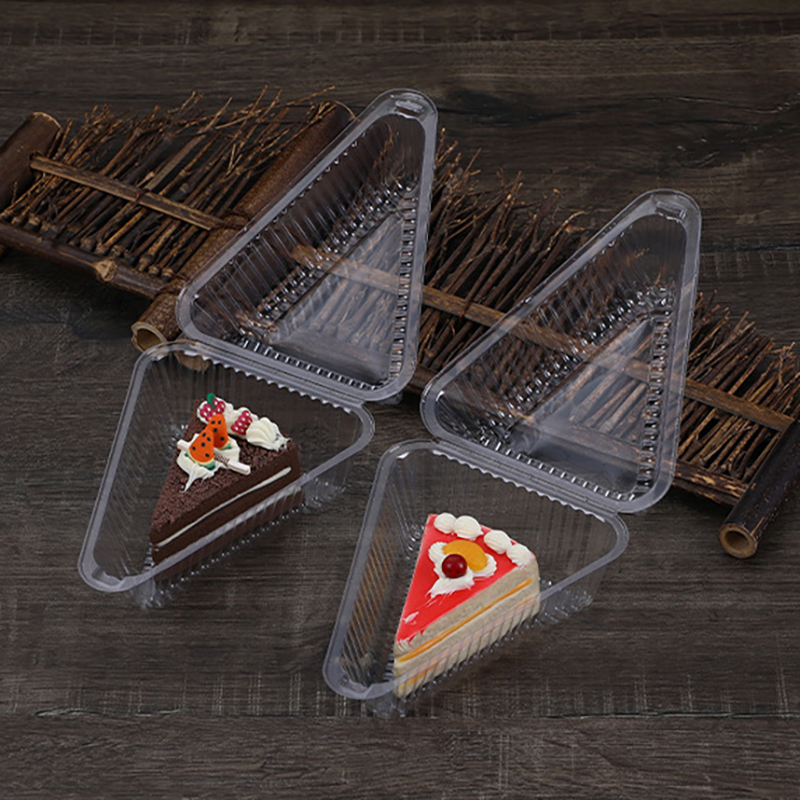
This design prioritizes pure speed. The hinged, one-piece format streamlines high-volume service. You grab a cake clamshell box, drop the product inside, and snap it shut.
Best for: Sliced cakes, Swiss rolls, high-volume bakery counters, and grab-and-go retail.
Pros: Assembly happens instantly. They stack beautifully in commercial display cases. Secure snap-closures keep products fresh. They offer a very low unit cost. This maximizes profit margins on single-serve items.
Cons: Fixed heights severely limit versatility. You cannot fit tall custom toppers inside. They project a slightly less "premium" aesthetic for high-end events.
| Feature | Multi-Piece Box | Clamshell Box |
|---|---|---|
| Assembly Speed | Slow (30-60 seconds) | Instant (1-3 seconds) |
| Aesthetic Value | Premium / High-End | Functional / Retail Standard |
| Ideal Product | Tiered Wedding Cakes | Single Slices / Swiss Rolls |
| Space Efficiency | High (Stores flat) | Moderate (Nests together) |
Choosing the right packaging requires careful evaluation. You must look beyond simple aesthetics. True performance relies on physical specifications. Follow these critical criteria when shortlisting your options.
A standard transparent cake box uses flexible walls. Assess whether the package includes a rigid, grease-proof cardboard or plastic base. The clear sidewalls should never bear the weight of the baked goods. The base board handles all load-bearing duties. A weak base causes the entire structure to collapse during transit. Always prioritize heavy-duty base materials.
Measuring inaccurately ruins delicate borders. You must calculate internal clearance precisely. Follow these numbered steps to guarantee a perfect fit:
Evaluate how the structure seals shut. Does it feature interlocking tabs? Check for snap-tight seals. Some elegant designs strictly rely on external tying. You must use sturdy ribbons or twine for structural stability. A loose lid allows air circulation. This drastically reduces freshness. Test the closure mechanism before buying in bulk.
Cold storage introduces unique challenges. Discuss condensation risks with your supplier. How does the plastic perform when moving from a commercial refrigerator to room temperature? Sudden temperature changes create fog. Look for specialized anti-fog coatings if your specific retail case requires them. Ensure the cake box handles varying climates without buckling or clouding.
Implementing new packaging changes your daily workflow. You must calculate hidden operational factors. Overlooking these realities creates significant bottlenecks during peak service hours.
Labor costs add up quickly. Calculate the hidden cost of folding flat-packed units. Multi-piece designs demand meticulous handling. You must remove protective films. You have to crease the plastic edges sharply. You must thread and tie ribbons. This adds 30 to 60 seconds per order. During a busy holiday rush, this extra minute causes massive delays. Train your team to pre-assemble components during slow shifts.
Warehouse space remains expensive. Assess your shelving capacity. Flat-packed PET structures require minimal shelf space. You can store hundreds of units in a single drawer. However, they require dedicated prep stations for assembly. Nested clamshells take up considerably more vertical room. You must balance storage limitations against your need for instant assembly.
Procurement strategies differ based on your business size. You must source materials smartly to maintain profit margins.
Never assume all batches are identical. Randomly test one unit from every new shipment. Check the crease lines for easy folding. Verify the base board thickness. Reject batches showing signs of yellowing or brittleness. Protecting your brand reputation means rejecting substandard supplies immediately.
Mastering bakery packaging requires a highly functional approach. Choose PET materials to guarantee food safety and unmatched optical clarity. Select clamshell designs for high-volume, single-serve retail environments. Utilize multi-piece structures for premium, custom presentations. Always calculate the hidden labor costs of manual folding. Evaluate your storage capacity before ordering.
Your next step requires physical testing. Advise your purchasing team to request physical samples immediately. Test these samples with your specific base boards. Place them inside your commercial refrigeration units to monitor condensation. Conduct a mock transit run to verify structural integrity. Commit to bulk wholesale orders only after you validate real-world performance.
A: Manufacturers apply a dual-sided protective film during production. This anti-scratch layer keeps the plastic pristine during shipping. You must peel it off both the inside and outside panels prior to assembly. Once removed, the material will display crystal-clear visibility.
A: Yes, food-grade PET performs exceptionally well in cold commercial storage. It maintains structural integrity without turning brittle. However, sudden moves from a cold fridge to a warm room may cause temporary surface condensation. This fogging typically dissipates quickly as temperatures equalize.
A: The clear plastic walls do not hold the weight at all. The structural integrity relies entirely on the rigid thickness of the base board and the secure tying of the exterior ribbons. You must always lift heavy items strictly from the bottom base.
A: "Korean-style" typically refers to a minimalist, tall, multi-piece clear design. It often features a stark white base and a matching opaque lid. Bakers tie them securely with an elegant ribbon. Social media heavily popularized this aesthetic for premium gifting and custom presentations.


