


Phone:
+86-138-0577-0261


Views: 0 Author: Site Editor Publish Time: 2026-07-27 Origin: Site


Stale pastries quickly destroy bakery profits. You lose repeat customers when delicate goods dry out or suffer damage in transit. Every compromised batch chips away at your bottom line. Many containers look appealing on the display shelf. Yet, very few deliver the structural integrity needed for commercial food preservation. A flimsy box lets dry air seep in. This ruins carefully crafted textures and freshness in mere hours. You need a highly reliable solution to protect your hard work. This article provides a strictly criteria-based framework. We will help you evaluate and select the perfect dessert box for your needs. We focus on critical metrics like seal quality, material compliance, and operational efficiency. You will learn exactly how to match packaging features to your specific baked goods. Let's explore how the right container protects your product and defends your profit margin.
Airtight seals do much more than keep bugs away from your display counter. They actively prevent moisture migration within the container. Staling occurs when starches crystallize and lose moisture to the surrounding air. A tight seal halts this rapid moisture loss. This extends your operational shelf life significantly. You can keep vanilla sponges moist and chocolate chip cookies crispy for an additional 24 to 48 hours. This extension directly reduces your daily waste percentage. You sell more products. You throw away less inventory at closing time.
Multi-unit transit poses another massive financial risk. You must rigorously evaluate crush resistance and structural rigidity. A flimsy box quickly collapses under the weight of stacked delivery orders. When you conduct a stack test in your kitchen, you simulate real-world delivery pressures. Place a heavy weight on an empty container. Does the lid bow inward? If the plastic buckles, it will crush your intricate decorations. Sturdy containers feature reinforced ribbed corners. These engineered corners distribute weight evenly. They protect delicate pie crusts and soft breads during bumpy vehicle transit. Damage reduction immediately boosts your profit margins. You eliminate costly refunds and replacement requests.
Finally, you must consider consumer perception. Buyers unconsciously link a secure bakery storage box to rigorous food safety. A tight, reliable seal signals high quality. It reassures wary customers. They trust your hygiene standards. They believe in your careful preparation methods. This strong psychological link turns first-time buyers into loyal regulars. A premium container tells the customer your food is worth protecting.
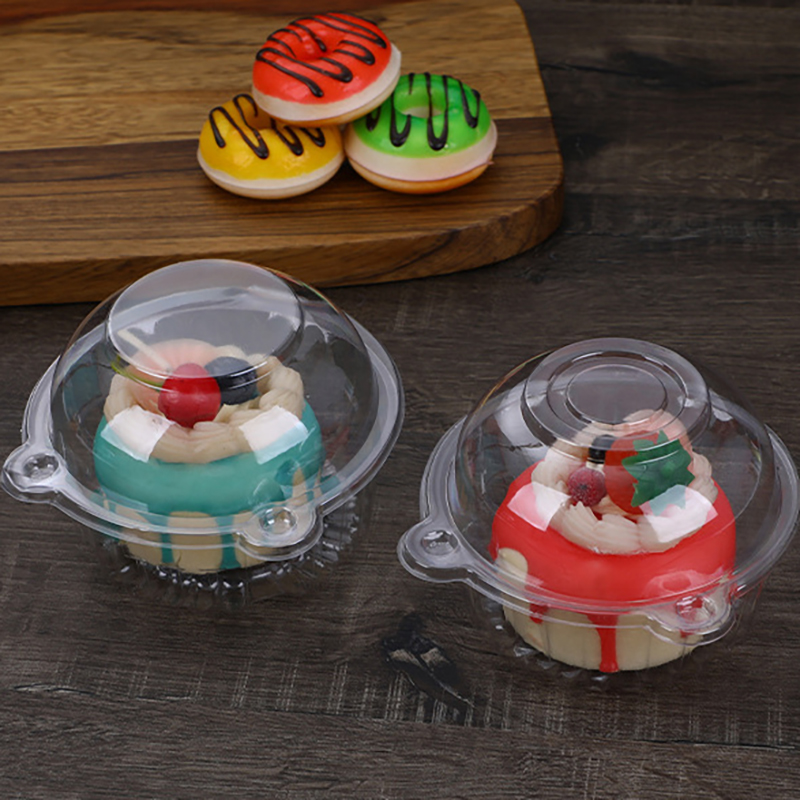
Selecting the appropriate packaging material dictates your long-term success. You must balance visibility, structural durability, and moisture control. Not all plastics behave the same way under bakery conditions.
| Material Type | Clarity Level | Moisture Barrier | Ideal Bakery Application |
|---|---|---|---|
| PET (Polyethylene Terephthalate) | Crystal Clear | Excellent | Ambient display, cold storage, frosted cakes |
| PP (Polypropylene) | Cloudy / Translucent | Moderate | Microwaveable items, warm savory pastries |
| Paperboard (Unlined) | Opaque | Poor | Crusty breads, immediate consumption |
| Kraft with PLA Lining | Opaque / Windowed | Good | Eco-conscious branding, dry cookies |
Fatty and acidic foods react differently to various plastics. High-fat buttercreams or acidic fruit tarts can degrade cheap, unlined paperboard quickly. The oils soak through the paper, leaving an ugly grease stain. PET resists both fats and acids beautifully. It maintains its structural integrity and visual clarity regardless of what you put inside.
Food-grade compliance remains completely non-negotiable for commercial operators. Always verify FDA compliance or your equivalent regional standards. Look specifically for strict BPA-free certifications. Chemical leaching risks increase dramatically if you use substandard plastics. Reputable packaging manufacturers readily provide documentation. They prove their containers are safe for direct and prolonged food contact. You should request these migration test certificates before ordering.
This brings us to the accepted industry standard. A sealed PET dessert box consistently outperforms alternative materials. PET provides an exceptional, reliable moisture barrier. It blocks outside humidity from turning delicate macarons soggy. It prevents dry refrigerator air from turning premium cake slices stale overnight. It dominates commercial retail displays for a simple reason. It protects complex flavor profiles while offering crystal-clear product visibility. Refrigerated environments demand this specific material performance.
The precise anatomy of a reliable seal determines your product safety. Let's compare the most common structural designs available today. Friction-fit lids often slip off when handled quickly. Snap-tight lids offer better overall security. However, they usually require two hands to close properly. Hinge designs provide the most reliable, consistent closure mechanism. A strong, flexible hinge keeps the lid perfectly aligned with the base.
Operational efficiency relies heavily on this specific design feature. High-volume production lines demand incredible packing speed. A flip top dessert container reduces manual assembly time by up to 30%. Your staff grabs one single piece instead of fumbling with two. They snap the lid shut in one fluid motion. Think about your peak holiday rushes. Every second counts when a long line forms out the door. A simplified closure mechanism removes friction from your service workflow. You stop dropping separate pieces on the floor. This critical labor metric drastically improves your daily kitchen output.
Security and tamper evidence also improve with hinged closures. You must carefully assess hinge durability. A weak hinge snaps off during transit. High-quality flip-top boxes survive rough handling easily. You can also quickly apply secondary sealing options. A custom branded sticker placed across the front opening serves a dual purpose. It reinforces the closure and proves the box remains unopened.
Inventory management becomes effortlessly simple. Two-piece systems constantly create back-of-house nightmares. You always end up with extra lids or missing bases at the end of the month. One-piece hinged designs eliminate this frustrating risk entirely. You never face mismatched base-to-lid ratios again. You order one SKU and track one SKU.
Visual merchandising directly drives spontaneous impulse purchases. The well-known "eat with your eyes" concept delivers real, measurable ROI. A fully transparent dessert container acts as your silent salesperson. It perfectly showcases vibrant fruit toppings and intricate piping details. High visual clarity actively justifies your premium pricing strategy. Customers willingly pay more when they see exactly what they will get. Proper retail displays use light to their advantage. A crystal-clear box catches the ambient lighting in your pastry case. It makes glazes shine and highlights the porous texture of fresh breads.
Retail footprint matters immensely in busy grab-and-go environments. You need highly efficient vertical stackability. Look closely for interlocking base-and-lid designs. These intelligent structures allow safe vertical stacking on narrow shelves. The base of the top container locks seamlessly into the recessed lid below it. When you stack these interlocking units, you create an attractive, organized wall of product. This maximizes vertical shelf space without crushing the bottom unit. It also prevents tall stacks from tipping over when customers browse.
Condensation management remains a critical, unbreakable rule of bakery cooling. Never pack warm baked goods in clear plastic packaging. The heat immediately generates internal steam. This trapped steam guarantees severe fogging. It ruins your beautiful visual presentation completely. Worse, the trapped moisture eventually cools and drips back down. It turns flaky crusts mushy and destroys the texture of your pastries. Always cool items fully to room temperature before sealing them.
Packaging mistakes cost serious money and ruin hard-earned brand reputations. You must proactively avoid these common structural failures. Implementing a new packaging strategy requires careful testing and observation. Keep these specific risks in mind when evaluating your options.
You now understand how specific packaging choices influence your bakery's operational success. The right container extends freshness, reduces labor, and increases sales. Use the following logic to shortlist your optimal packaging options:
Take immediate action today. Audit your current pastry staling rates to identify major problem areas. Request physical product samples from various suppliers. Test the seal integrity, hinge strength, and stackability firsthand. Do this before you commit to large, expensive bulk orders.
A: Yes, PET plastic handles freezing temperatures remarkably well without cracking or shattering. However, freezer burn remains a serious risk if the container seal is not 100% airtight. Always ensure a tight mechanical closure. For long-term frozen storage, consider wrapping the baked goods in an extra layer of food-safe plastic wrap inside the box.
A: You must implement a strict operational protocol to cool baked items entirely to ambient room temperature prior to sealing. Trapped heat creates immediate moisture. If you absolutely must package slightly warm goods, choose micro-perforated container options. These tiny, engineered holes allow slight venting to release trapped steam while maintaining a physical barrier.
A: Most commercial flip-top designs are highly leak-resistant and incredibly effective at blocking ambient air exchange. However, they are not hermetically sealed. They significantly extend your product shelf life for standard retail timelines, usually by several days. Do not expect them to function exactly like vacuum-sealed bags designed for long-term food preservation.
A: Cottage bakers should carefully balance per-unit cost, minimum order quantities (MOQs), and premium presentation value. Standard clear PET clamshells offer the best middle ground for small operations. They provide commercial-grade retail display value at much lower unit costs. Bulk ordering small batches from reliable wholesale distributors keeps your initial capital investments highly manageable.


