


Phone:
+86-138-0577-0261


Views: 0 Author: Site Editor Publish Time: 2026-07-14 Origin: Site


For fresh-cut produce, packaging is never just a simple container. It functions as an active shelf-life management tool every single day. Poorly chosen packaging leads to rapid oxidation, soggy greens, and ultimately, lost retail margins. The standard PET packaging box remains the industry default because it delivers excellent clarity and physical strength. However, selecting the exact configuration truly matters. Specific choices around lid type, ventilation, and surface coating dictate your success. These details determine whether cut fruit and leafy salads remain crisp for 48 hours or degrade prematurely on the shelf. This guide breaks down the core technical criteria. We evaluate and select the right PET containers for wet, highly perishable produce. You will learn how to match packaging specifications directly to your specific operational workflows and demanding retail environments.
Once workers cut fruit or wash greens, cellular respiration rates spike immediately. The produce starts fighting to survive. The wrong packaging accelerates moisture loss rapidly. It also encourages dangerous microbial growth. This failure directly impacts your shrink rate. Shrink rate translates to avoidable food waste and lost revenue.
Every compromised salad bowl represents a direct hit to your retail margins. We must control the internal atmosphere of the package. We achieve this by selecting appropriate materials. Unlike polystyrene or PP (Polypropylene), PET (Polyethylene Terephthalate) stands out. It offers a superior oxygen barrier. It also provides excellent cold-temperature impact resistance. This makes it ideal for harsh refrigerated supply chains.
PET does not crack easily when dropped in a 4°C cooler. Polystyrene often splinters under similar conditions. Polypropylene becomes cloudy at low temperatures. PET maintains glass-like clarity. However, significant implementation risks exist. Using generic, untreated PET boxes for high-moisture foods causes problems. It leads to immediate fogging during cold-chain transitions.
Condensation blocks the view of the food. It renders the product visually unappealing to consumers. Shoppers buy with their eyes. They simply bypass cloudy containers on the shelf. We must treat the packaging surface to prevent this issue. Selecting the proper container configuration solves these visual and structural challenges.
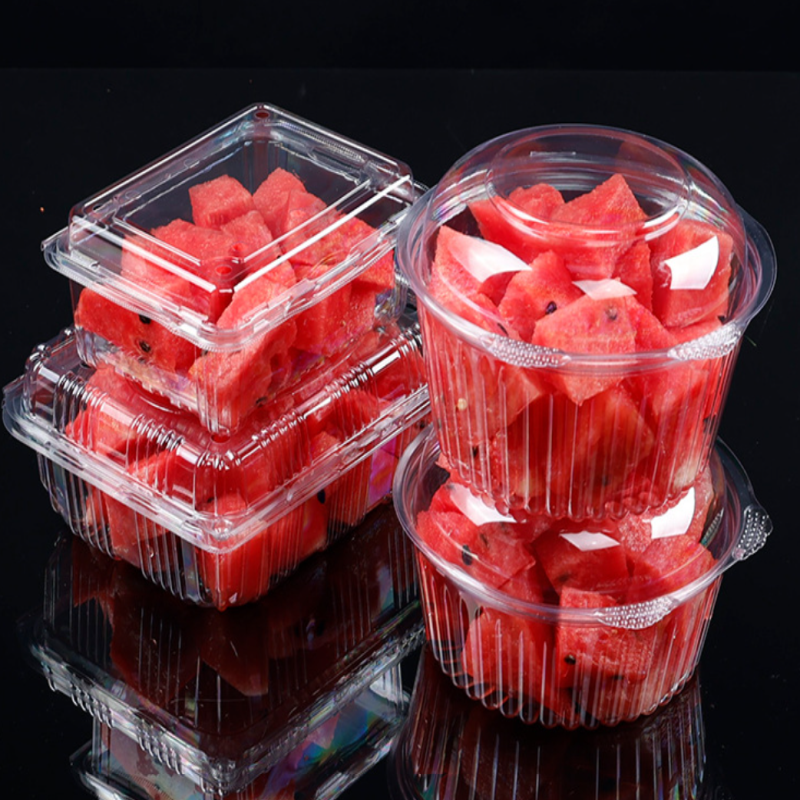
Evaluating a PET salad box requires looking beyond basic dimensions. You must analyze specific technical features. These features dictate shelf-life performance and visual merchandising success.
Anti-fog technology is essential for any clear container. Cold storage environments create extreme temperature differentials. Moisture from wet produce evaporates. It then hits the cold plastic lid. Without treatment, thousands of tiny water droplets form. This creates a thick fog.
You must evaluate how the supplier applies this anti-fog treatment. Some manufacturers integrate surfactants directly into the polymer film. Others apply a surface coating after molding. Integrated solutions usually perform better over longer periods.
Different foods demand completely different atmospheric conditions. You cannot use the exact same box for everything.
Your packaging must survive physical stress. Evaluate the denesting capabilities first. Denesting refers to how easily boxes separate from a nested stack. Fast-paced packing lines require smooth separation. Sticky containers slow down workers and increase labor expenses.
Next, assess crush resistance. Look for reinforced corner ribbing. Palletization puts immense weight on the bottom tiers. Retailers also stack containers high on display shelves. Weak boxes collapse, crushing the delicate produce inside.
| Produce Category | Respiration Rate | Seal Requirement | Primary Spoilage Risk |
|---|---|---|---|
| Leafy Greens / Salad Mixes | Low to Medium | Airtight / Hermetic | Moisture loss (Wilting) |
| Cut Melons & Pineapples | High | Vented / Micro-perforated | Fermentation (Mushiness) |
| Mixed Berries | Medium | Lightly Vented | Fungal growth (Mold) |
Choosing the correct physical shape impacts your daily operations. The ideal fruit cutting salad box aligns with your specific packing workflow. It must also match your brand positioning.
Hinged clamshells feature an attached lid. They fold over and snap shut.
Best for: High-volume, fast-paced manual packing. Supermarket delis and local farm shops rely on them heavily.
Pros/Cons: Workers close them very quickly. You only manage one inventory item. However, the hinge mechanism creates a structural weak point. It can compromise the hermetic seal. Clamshells often leak liquids if tipped sideways during transit.
These systems feature a base bowl and a completely detached lid.
Best for: Premium salads and automated sealing lines. They also excel at multi-compartment needs.
Pros/Cons: They offer a much higher perceived value. Consumers associate them with premium brands. They provide superior leak resistance because the seal applies evenly 360 degrees around the rim. The main drawback involves inventory. You must manage and store two separate SKUs.
Modern consumers expect customized eating experiences. You must evaluate the necessity of suspended inserts. These small plastic trays sit inside the main bowl.
They keep wet, acidic fruit juices safely away from sensitive leafy greens. They also keep croutons and nuts perfectly crunchy until consumption. While inserts increase packaging expenses slightly, they drastically extend the visual shelf life of complex salads.
| Feature | Hinged Clamshells | Two-Piece Systems |
|---|---|---|
| Packing Speed (Manual) | Very Fast | Moderate |
| Leak Resistance | Moderate | Excellent |
| Inventory Management | Simple (1 SKU) | Complex (2 SKUs) |
| Premium Aesthetic | Standard | High |
We cannot ignore public sentiment regarding packaging materials. The growing end-consumer resistance to single-use plastics represents a major business reality. Shoppers voice these concerns loudly in community forums. They leave negative feedback about excessive plastic usage.
You must actively defend your material choices. PET is actually the most widely recycled plastic globally. It carries the #1 recycling code. We must clarify an important distinction for consumers. Highly recyclable single-material PET differs vastly from multi-layer plastics. Multi-layer materials combine different polymers. Recycling facilities cannot separate them. They end up in landfills. Pure PET melts down cleanly. It re-enters the manufacturing stream easily.
Sourcing boxes made with post-consumer recycled PET (rPET) shows corporate responsibility. rPET utilizes plastic bottles diverted from oceans and landfills. Transitioning to rPET demonstrates a tangible commitment to the circular economy. Consumers respond positively to packaging that clearly states "Made from 100% Recycled Plastic."
Using recycled materials requires strict safety oversight. You must ensure your supplier provides verifiable compliance documentation. Look for FDA (Food and Drug Administration) or EFSA (European Food Safety Authority) certifications.
These agencies mandate rigorous super-cleaning processes for recycled plastics. The documentation must specifically clear the recycled material for direct food contact. It must also approve the material for use with wet and highly acidic foods, like citrus fruits or vinaigrettes.
Never buy pallet volumes based solely on a supplier catalog. You must validate the packaging in your real-world environment. Follow these exact steps to run a statistically significant trial.
Next-Step Action: Request sample sleeves from suppliers. Do not accept just one or two single units. You need enough volume to run a statistically significant 50-unit packing trial. Test these 50 units rigorously before committing to purchasing full pallet volumes.
Choosing the correct packaging setup requires careful technical consideration. The ideal PET container balances exceptional material clarity, specific lid mechanics, and pressing environmental realities. We must remember there is no universal container. A high-moisture fruit mix demands different venting and structural properties than a dry, leafy green salad.
Your operations depend on making the right match. Prioritize suppliers who offer integrated anti-fog treatments and clear recyclability messaging. Always demand food-safe rPET options. Implementing these standards protects your fragile product shelf-life. Ultimately, it also protects your long-term brand reputation.
A: PET extends visual and structural freshness by providing a superior oxygen barrier. It dramatically outperforms polystyrene in retaining moisture. However, actual shelf-life depends heavily on unbroken cold-chain management. It also depends on the specific respiration rate of the produce inside. Even the best PET cannot save produce left in warm temperatures.
A: While clear PET allows UV light exposure, it rarely ruins the product. The rapid turnover of fresh-cut produce typically limits shelf time to 2-5 days. During this short window, light degradation is rarely the primary cause of spoilage. Temperature fluctuations or extreme oxygen exposure cause damage much faster than store lighting.
A: PET becomes brittle at freezing temperatures. Engineers design it specifically for refrigeration environments around 3°C to 5°C. If you place standard PET in a commercial freezer, the plastic may crack upon impact. For freezing applications, you must require materials like PP (Polypropylene), which remain flexible at sub-zero temperatures.
A: No. Standard PET deforms and melts under high heat. It lacks the thermal stability required for microwave use. If a consumer needs to heat a specific component, like a cooked chicken protein topping, they must remove it from the PET container first. Always place microwavable items on a separate, heat-safe dish.


