


Phone:
+86-138-0577-0261


Views: 0 Author: Site Editor Publish Time: 2026-08-19 Origin: Site


In the high-volume takeaway and catering sector, packaging choices directly impact operational speed, food integrity, and customer perception. You need reliable solutions to keep service running smoothly. While paper, foam, and two-piece options exist, the clear plastic clamshell remains a dominant standard. We see it utilized heavily across bakeries, delis, and quick-service restaurants.
Evaluating this packaging requires looking well beyond just the initial unit cost. You must assess its broader influence on your daily workflow. How does it improve labor efficiency? Does it increase merchandising returns? Will it provide transport security? Our guide breaks down exactly why this container format dominates cold food service. You will learn about structural benefits, material limitations, and smart vendor selection strategies. Ultimately, choosing a reliable clear plastic clamshell food container protects your food presentation and elevates your brand reputation.
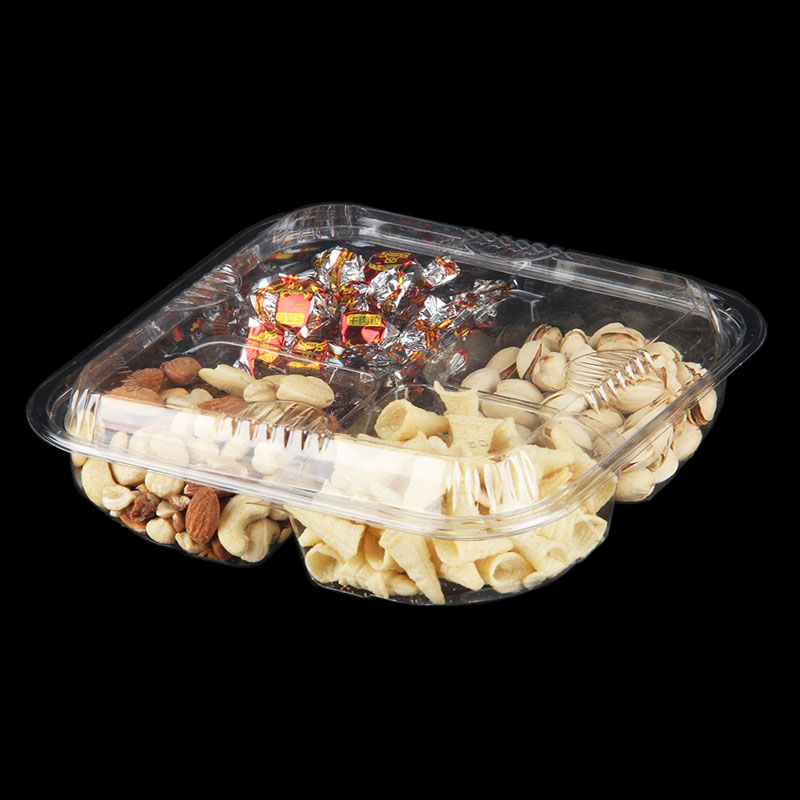
Clear packaging acts as a highly effective silent salesperson. It transforms standard cold cases into attractive visual displays. Salads, delicate baked goods, and colorful sushi look highly appealing when showcased properly. Transparency correlates directly to higher impulse buy rates. Customers buy what looks fresh and appetizing. When they can see the exact texture and quality of the ingredients, their purchase hesitation drops significantly. This visual merchandising strategy boosts daily revenue without requiring extra marketing spend.
Order accuracy directly affects your bottom line. Kitchen staff and delivery drivers face immense pressure during peak service hours. They must visually verify order contents quickly. Clear packaging allows them to check food presentation instantly. They never have to physically open the food container to confirm specific items. This seamless visual check drastically reduces refund rates for missing or incorrect items. It saves time and prevents costly customer service disputes.
Modern consumers show increasing skepticism regarding food safety. They prefer inspecting food freshness before completing a purchase. Opaque packaging hides potential issues and creates unnecessary doubt. Clear material builds immediate consumer trust. Shoppers can confidently verify portion sizes and ingredient quality. They feel reassured knowing exactly what they are taking home to eat. This transparency builds long-term loyalty for your catering or takeaway brand.
Inventory management often creates headaches for restaurant operators. Hinged containers simplify this process completely. You benefit from single-SKU inventory management. You never order, track, or run out of separate lids again. This reduces administrative ordering time and simplifies stockroom organization. However, a minor trade-off exists. Hinged containers require slightly more vertical storage space. They sit on the kitchen prep line differently than tightly nested two-piece alternatives. Operators must plan shelving heights accordingly to accommodate these dimensions.
Labor and prep speed define profitability in quick-service environments. Staff members close hinged containers using just one hand. This ergonomic capability significantly reduces packing seconds per individual order. Over hundreds of daily orders, this small time reduction translates directly into measurable labor savings. Your line moves faster. Customers receive their food quicker. The workflow feels much smoother for kitchen employees handling rush hours.
Lid integrity remains a critical failure point for many takeaway programs. Two-piece systems often suffer from mismatched lids. Sometimes thermal expansion causes separate lids to warp slightly. Warped lids pop off easily during transit. This ruins the food and frustrates the customer. A hinged design entirely eliminates the risk of lost lids. The base and top remain permanently attached. This structural unity ensures a secure journey from your kitchen counter to the customer's dining table.
| Efficiency Metric | Clear Clamshell Container | Two-Piece Container System |
|---|---|---|
| Inventory Tracking | Single SKU (Base and lid attached) | Multiple SKUs (Separate bases and lids) |
| Prep Speed | Fast (One-handed closure possible) | Slower (Requires two hands to align lid) |
| Lid Security | High (Hinge prevents lid separation) | Variable (Lids can warp or pop off) |
| Storage Profile | Moderate nesting depth | Highly dense nesting profile |
Polyethylene Terephthalate (PET) provides exceptional physical characteristics. It delivers high tensile strength and outstanding crack resistance. Staff can handle it roughly without shattering the plastic. PET offers premium, glass-like clarity. Polystyrene (PS) simply cannot compete on visual quality. PS often looks brittle or slightly cloudy over time. Upgrading to a premium PET plastic container elevates the perceived value of your culinary creations immediately.
You must respect strict temperature limitations when using PET. This material strictly suits cold, ambient, or slightly warm foods. We recommend limiting exposure temperatures to 120°F (49°C). Do not use PET for hot foods. Do not place it under heat lamps. It will warp quickly. You cannot microwave it safely. Melting plastic ruins food and creates severe health hazards. Train your kitchen staff explicitly regarding these thermal boundaries.
Sustainability regulations matter heavily in today's market. PET is highly recyclable. It carries the universal Resin Identification Code #1. Municipal recycling streams accept it widely across different regions. This offers your business a verifiable eco-narrative against non-recyclable foams or mixed plastics. You can proudly promote your packaging recyclability. Furthermore, BPA-free compliance comes standard across most PET products today. This addresses ongoing consumer health skepticism. Diners feel safer eating from certified BPA-free containers.
Choosing the correct takeaway packaging box requires examining specific engineering features. You must weigh security against accessibility. Different menu items demand different functional priorities. Follow these critical steps to evaluate your options systematically.
Stackability demands strong structural integrity. Look for ribbed sidewalls. Ribbing provides vertical strength without adding heavy plastic weight. Flat, recessed lids are mandatory criteria. They allow multiple containers to nest securely on top of each other. This prevents crushing when delivery drivers stack heavy bags in their vehicles. Domed lids look nice but fail miserably during stacked transport.
Anti-fog technology proves essential for refrigerated display cases. Temperature changes cause standard plastics to sweat. Condensation quickly obscures the product view entirely. Anti-fog coatings change the surface tension inside the container. Moisture forms a clear microscopic film instead of large opaque drops. Your food remains perfectly visible to passing customers.
Volume and freight economics require careful mathematical calculation. A clear plastic clamshell is inherently bulky. It ships filled mostly with empty air. You must calculate your true landed cost accurately. Factor in freight volume charges and warehousing space costs. Never rely solely on the listed per-unit price. Cheap containers shipped inefficiently cost more overall.
Transitioning from foam or paper brings immediate operational challenges. Anticipate necessary adjustments in portion sizing. Rigid clear plastics do not stretch. They do not give or flex like paper boxes do. If you overstuff a clear hinge box, it simply will not close. Your kitchen staff might need retraining on exact plating volumes to prevent structural package failure.
Vendor shortlisting requires strict testing logic. Always demand physical samples before placing bulk orders. A container looking great online might fail in your kitchen. Conduct rigorous real-world tests to ensure quality.
The clear plastic clamshell container serves as a highly specialized, purpose-built solution. It heavily benefits operations prioritizing visual appeal, rapid assembly, and single-SKU simplicity. It dominates cold and ambient food service for very good reasons. By showcasing product freshness safely, it drives revenue while keeping kitchen operations lean.
To move forward effectively, operators should immediately audit their current takeaway menus for temperature compatibility. Measure your existing prep-station storage limits to ensure hinged footprints fit comfortably. Finally, request varied vendor samples to test lock strength against your specific food weights before committing to a long-term supply contract.
A: No. Most clear clamshells are made from PET plastic, which warps and melts under high heat. Microwavable options require Polypropylene (PP) plastics, which are typically cloudy or opaque, not clear.
A: It depends on the lock design. While standard button-lock clamshells are not entirely leak-proof for thin liquids, models with full perimeter seals offer high leak resistance suitable for heavy sauces and dressings.
A: PET is generally more cost-effective and structurally durable than compostable PLA or molded fiber. However, the exact price gap fluctuates based on order volume and local distributor pricing.
A: Yes. The most cost-effective and flexible method is applying custom tamper-evident stickers or branded labels to the flat top surface, though high-volume orders can support embossed lids directly from the manufacturer.


