


Phone:
+86-138-0577-0261


Views: 0 Author: Site Editor Publish Time: 2026-09-18 Origin: Site


Food safety requirements, extended shelf-life demands, and tightening global regulations on single-use packaging create a complex tension for food brands. You must balance product protection with environmental responsibility. Sourcing a packaging solution that meets operational performance metrics is challenging. You need excellent gas barrier properties, physical durability during transit, and reliable seal integrity on the production line. At the same time, you must satisfy consumer and regulatory demands for verifiable end-of-life recyclability. A theoretical recycling designation is no longer sufficient for compliance or brand reputation. We must shift focus from theoretical recyclability to practical, facility-level recovery. Polyethylene Terephthalate (PET) recovery involves strict technical realities at the sorting level. You will learn how to evaluate suppliers for true circularity, navigate material science constraints, and optimize your packaging procurement strategy for maximum recovery.
Polyethylene Terephthalate carries the Resin Identification Code #1. It remains the industry standard for food packaging due to its exceptional clarity, tensile strength, and moisture barrier properties. A clean recycling stream requires packaging that can be easily sorted, washed, and remelted without chemical degradation. Any deviation from pure PET introduces contamination into the recycling stream. When we evaluate a plastic tray for recovery, we look at the entire structural composition, not just the base polymer.
Multi-layer films incorporate materials like Ethylene Vinyl Alcohol (EVOH) to extend product shelf life. These layers block oxygen transmission effectively, preventing spoilage in sensitive proteins and dairy. However, EVOH disrupts the PET recycling stream. When multi-layer trays enter the melt phase at a recycling facility, the different polymers react poorly together. This causes discoloration, structural weakness, and a drop in the quality of the resulting recycled resin. You must evaluate mono-material PET alternatives. Advanced manufacturing techniques now allow single-polymer structures to achieve adequate gas and moisture barriers. High-density mono-PET can often replace complex laminates without compromising food safety. This switch immediately elevates the tray from unrecyclable to highly recoverable.
| Structure Type | Oxygen Barrier | Moisture Barrier | MRF Compatibility |
|---|---|---|---|
| Mono-PET | Moderate to High | Excellent | Highly Recyclable |
| PET/EVOH/PE | Exceptional | Excellent | Unrecyclable (Contaminant) |
| PET with Silicon Oxide (SiOx) | High | Excellent | Recyclable (Washes off) |
Secondary packaging components play a massive role in recovery rates. A perfectly designed tray becomes unrecyclable if covered in the wrong adhesive. Standard pressure-sensitive labels often use adhesives that do not dissolve during the MRF washing process. These adhesives bind paper or incompatible plastics to the PET flakes, ruining the batch. You must specify wash-off adhesives for all labeling. Compatible label materials, such as those approved by the Association of Plastic Recyclers (APR), ensure the label separates cleanly in a hot water caustic bath. Inks should not bleed into the wash water. Proper label specification ensures your packaging yields high-quality rPET flakes for future manufacturing.
Lidding film applications directly impact the recyclability of the tray flange. Heat sealing melts the lidding film directly into the PET structure. If the lidding film contains Polyethylene (PE), this process permanently bonds an incompatible polymer to the tray. Ultrasonic welding presents similar cross-contamination risks if dissimilar materials are used. Clean-peel lidding films are required. When a consumer removes the film, no residue should remain on the flange. This prevents polymer cross-contamination during the grinding and washing phases. Specify sealants that fail cleanly at the adhesive layer rather than tearing the film or leaving a permanent polymer ring behind.
Different food sectors face unique procurement challenges based on end-use realities. You cannot apply a universal packaging strategy across diverse product lines. Each application introduces specific contamination risks, temperature requirements, and consumer behaviors that dictate the actual recovery rate.
Frozen applications require extreme structural resilience. A frozen food PET tray must withstand blast freezing temperatures without becoming brittle. It must also survive microwave or conventional oven heating without melting or leaching chemicals into the food. You must choose between Amorphous PET (APET) and Crystallized PET (CPET). APET offers excellent clarity but deforms under high heat. CPET undergoes a crystallization process that drastically improves heat tolerance, making it oven-safe. However, this crystallization turns the plastic opaque. Optical sorters at recycling facilities often struggle to identify CPET accurately. It frequently gets misidentified and diverted to landfill streams. You must work closely with suppliers to ensure your CPET formulations remain detectable by modern sorting equipment.
Takeout and delivery applications introduce severe contamination risks. Grease, oils, and organic matter cling stubbornly to plastic surfaces. A heavily soiled food delivery tray will be rejected by most recycling facilities. Food residue contaminates the wash water and degrades the quality of the recycled resin. Consumer behavior drives the actual recycling rate here. If consumers fail to rinse the container, it ends up in a landfill. You can mitigate this through intelligent packaging design. Incorporate smooth internal corners to allow easy wiping and rinsing. Avoid deep, narrow ribbing where food particles can become trapped. Add clear consumer education prompts directly on the lid, instructing users to rinse before recycling.
The retail sector is currently undergoing a massive material shift. Historically, meat and poultry were packaged in black plastic. Brands are now transitioning to clear PET. Traditional black plastic uses carbon black pigments. Near-Infrared (NIR) optical sorters cannot detect carbon black. The dark pigment absorbs the infrared light, making the tray invisible to the sorting machinery. Consequently, traditional black trays are effectively unrecyclable. A clear supermarket fresh tray solves the detection problem. However, it introduces a new complication: absorbent soaker pads. These pads manage excess moisture and blood. They act as severe physical contaminants in the recycling stream. Consumers must remove these pads prior to disposal. Clear on-pack messaging is essential to ensure the pad goes to the trash while the clean tray goes to the recycling bin.
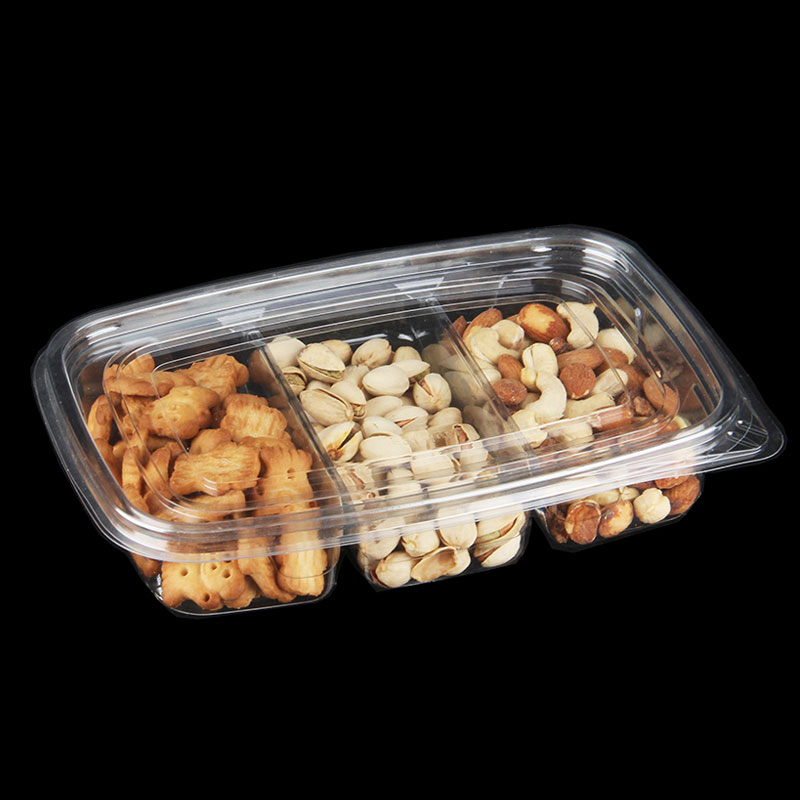
You must ground procurement decisions in the reality of waste management. Understanding how a MRF operates allows you to design packaging that actually survives the sorting process. Theoretical recyclability means nothing if the local facility cannot process the physical item.
MRFs use Near-Infrared (NIR) optical sorters to identify and separate different polymers. These machines scan items on a fast-moving conveyor belt. They shoot a beam of light at the plastic and read the reflected signature. Thermoformed PET trays share a chemical signature with PET bottles, but they behave differently on the sorting line. The "look-alike" problem causes significant sorting failures. Certain PET trays look identical to Polystyrene (OPS) or Polyvinyl Chloride (PVC) containers. If the NIR scanner misreads the item due to label interference or structural angles, it misdirects the tray. Proper tray design, avoiding full-wrap shrink sleeves, and using detectable pigments mitigate these sorting failures.
Bottle-grade PET and tray-grade PET possess different molecular weights. This is measured as Intrinsic Viscosity (IV). Bottles require a higher IV to withstand carbonation pressure. Thermoformed trays have a lower IV. When MRFs mix trays and bottles, the lower IV of the trays can degrade the overall quality of the recycled batch. Historically, facilities preferred bottles over trays for this reason. However, emerging infrastructure now supports tray-to-tray recycling. Dedicated thermoform recycling lines are scaling up globally. These lines process trays separately, maintaining the appropriate IV for new thermoformed products. When tray-to-tray recycling is unavailable, the material is often downcycled into polyester strapping or textile fibers.
| Property | Bottle-Grade PET | Tray-Grade PET |
|---|---|---|
| Intrinsic Viscosity (IV) | 0.75 - 0.85 dL/g | 0.60 - 0.70 dL/g |
| Melt Strength | High (withstands pressure) | Lower (optimized for thermoforming) |
| MRF Preference | Highly Desired | Accepted, but often separated |
Packaging engineers and procurement managers need a structured approach to audit potential suppliers. You must evaluate features based on end-of-life outcomes. Selecting the right material requires balancing performance, clarity, and verifiable recovery.
PET is rarely the only option on the table. You must benchmark it against Polypropylene (PP), Aluminum, Molded Fiber, and Polylactic Acid (PLA). Each material offers distinct operational advantages and recovery challenges.
| Material | Barrier Properties | Clarity | Recycling Infrastructure |
|---|---|---|---|
| PET | Excellent moisture and gas barrier. | High transparency. | Widely accepted; robust sorting technology. |
| Polypropylene (PP) | Good moisture barrier, poor gas barrier. | Hazy or translucent. | Growing acceptance, but lags behind PET. |
| Aluminum | Absolute barrier to light, gas, moisture. | Opaque. | Highly recyclable, but energy-intensive. |
| Molded Fiber | Poor without chemical coatings. | Opaque. | Compostable if uncoated; recycling is complex. |
| Polylactic Acid (PLA) | Moderate moisture barrier. | High transparency. | Requires industrial composting; contaminates PET streams. |
PET often wins on the balance of moisture barrier, clarity, and established recycling infrastructure. It provides the visual appeal consumers demand while fitting into existing MRF capabilities.
You cannot rely on verbal assurances of recyclability. You must demand mandatory industry-standard evaluation lenses. Look for compliance with the Association of Plastic Recyclers (APR) Design Guide or RecyClass certifications. Use this 5-point checklist when auditing tray manufacturers:
Procurement teams must analyze the conceptual trade-offs between virgin PET, rPET, and alternative materials. Virgin PET often presents a lower upfront unit cost. However, utilizing virgin plastics exposes your organization to significant regulatory risks and consumer backlash. You must evaluate the overall value and financial implications of your packaging choices. Non-recyclable packaging often incurs heavy financial penalties under modern environmental legislation. Investing in a highly recyclable tray or one with high rPET content may carry a slight premium upfront. Yet, this premium frequently offsets the impending tax liabilities and compliance fees associated with unrecyclable laminates.
Macro-environmental factors are forcing the transition to recyclable PET. Scalability and compliance are no longer optional. Governments worldwide are shifting the financial burden of waste management directly onto the producers of the packaging.
Current and impending legislation dictate packaging strategy. The UK Plastic Packaging Tax levies charges on packaging manufactured in or imported into the UK that contains less than 30% recycled plastic. The EU Packaging and Packaging Waste Regulation (PPWR) mandates strict recyclability targets and minimum PCR content levels by 2030. US state-level EPR laws are rapidly rolling out, requiring brands to fund the recycling infrastructure for the materials they put into the market. Verifiable recyclability and post-consumer recycled content directly impact your bottom-line tax liabilities. If your tray fails sorting at the MRF, you will pay higher EPR fees. Transitioning to mono-material PET with certified PCR content shields your operations from these escalating regulatory costs.
Even the most perfectly designed tray requires consumer cooperation. Standardized labeling ensures the end-user correctly prepares and disposes of the packaging. Ambiguous chasing arrows confuse consumers and lead to wish-cycling. Implement standardized systems like How2Recycle in the US or OPRL in the UK. These systems provide clear, component-specific instructions. They tell the consumer to rinse the tray, remove the film, and discard the absorbent pad. Clear communication directly increases the yield of high-quality material returning to the recycling stream.
You must take actionable steps to phase out unrecyclable laminates and carbon-black trays immediately. Audit your current SKUs and identify any packaging utilizing EVOH layers or non-wash-off adhesives. Initiate transition timelines with your suppliers to replace these with high-barrier mono-PET solutions. Securing reliable streams of food-grade rPET is critical amidst global supply shortages. Build long-term contracts with suppliers who have vertically integrated recycling capabilities. Ensure they can validate the food-safety compliance of their super-cleaned post-consumer resin. Proactive procurement guarantees your supply chain remains resilient as mandates tighten.
A: Traditional black PET trays are generally not recyclable. They use carbon black pigments that absorb Near-Infrared (NIR) light, making them invisible to optical sorters at recycling facilities. Brands are transitioning to clear PET or utilizing specialized, detectable dark pigments that NIR scanners can accurately identify.
A: APET (Amorphous PET) is clear and easily sorted by MRFs. CPET (Crystallized PET) is crystallized to withstand oven temperatures, which turns it opaque. This opacity often confuses optical sorters, leading to CPET trays being misidentified and rejected from the standard PET recycling stream.
A: Heavy food residue contaminates the recycling process. While MRFs have washing facilities, excessive organic matter degrades the wash water and the final recycled resin. Consumers must rinse the tray to remove significant food debris before placing it in the recycling bin.
A: PET bottles have a higher Intrinsic Viscosity (IV), meaning higher molecular weight and strength. Thermoformed trays have a lower IV. Mixing them can degrade the quality of recycled bottle resin. However, dedicated tray-to-tray recycling infrastructure is currently expanding to solve this issue.
A: It depends on the adhesive and film material. If the lidding film leaves a permanent Polyethylene (PE) or EVOH ring on the tray flange, it introduces contamination. Clean-peel films that leave no polymer residue ensure the tray remains fully recyclable.
A: Yes, if left inside the tray. Absorbent pads are made of mixed materials and act as severe physical contaminants in the PET recycling stream. Consumers must manually remove and discard the pad in the trash before recycling the clear PET tray.


