


Phone:
+86-138-0577-0261


Views: 0 Author: Site Editor Publish Time: 2026-09-13 Origin: Site


Packaging lines frequently fail to hit target throughput rates. This bottleneck rarely stems from machine limitations. Instead, it occurs because of poor tray-to-film compatibility. Operators struggle with frequent machine jams, excessive film waste, compromised seal integrity, and increased labor for manual rework. These compounding operational inefficiencies disrupt production schedules and generate massive material waste.
Selecting the foundational container is a critical engineering decision. The right container geometry, material rigidity, and surface energy directly optimize automated flow wrappers and stretch-wrapping equipment. When you align these variables, packaging lines run seamlessly. You eliminate unexpected downtime and ensure consistent seal quality across every batch.
We will evaluate tray geometry, material rigidity, and surface energy to optimize automated flow wrappers and stretch-wrapping equipment. You will learn how to evaluate material compatibility, engineer solutions for specific retail environments, and mitigate implementation risks on your wrapping lines.
A machine-ready container must meet strict physical criteria before it enters an automated wrapping line. Rigid corners, uniform flange width, and consistent denesting behavior define this readiness. If a container lacks these attributes, it disrupts the entire packaging sequence. Automated wrappers rely on precise mechanical timing. Any structural deviation forces the machinery out of sync, leading to immediate line stoppages and product damage.
Micro-variations in container dimensions cause immediate sensor faults. High-speed flow wrappers use optical photo-eyes to track product positioning on the infeed conveyor. When a plastic tray varies even slightly in length or width, these sensors misread the alignment. The machine then feeds the film at the wrong time, causing the cross-seal jaws to clamp down directly on the container rather than the film web. This leads to tracking errors, misaligned seals, and inevitable machine jams. Operators must then halt production, open the safety guards, clear the crushed materials, and reset the calibration.
Standardized footprints minimize tooling changeovers. When you standardize container dimensions across your facility, production teams adapt quickly to market demands. They run a wide variety of depths through the same wrapper without adjusting guide rails, forming tubes, or sensor positions. This uniformity keeps the line moving. It allows facilities to switch between different product runs efficiently, maximizing overall equipment effectiveness and reducing shift downtime.
Consistent denesting is equally critical for continuous operation. Automated denesters use vacuum cups or mechanical fingers to pull containers from a tightly packed magazine. If the stacking lugs are poorly designed or the draft angles are too steep, containers lock together. The denester then pulls multiple units onto the conveyor simultaneously, or fails to pull one at all. Precision molding ensures each unit separates cleanly, maintaining the exact spacing required for the wrapping sequence.
Tray lip architecture directly influences film stretchability and seal integrity. The flange provides the primary surface for the film to grip during the wrapping process. In stretch wrappers, elevator platforms push the container up into the film web while side grippers pull the film down and under the base. If the flange is too narrow, the film slips off the edge. If it is uneven, the heat pad cannot create a hermetic seal. A properly engineered flange creates a continuous, flat contact point, allowing the film to stretch uniformly across the top surface without tearing.
Tight stretch-wrapping applies significant compressive force to the container's sidewalls. The container must withstand this tension without bowing or cracking. Structural integrity ensures a taut, wrinkle-free presentation on the retail shelf. Weak sidewalls collapse inward under the film's memory pull, resulting in a loose wrap that looks unprofessional and fails to protect the contents. Reinforced corners and vertical ribbing distribute this compressive force evenly, maintaining the container's original shape even under maximum web tension.
Refrigerated products require a delicate operational balance regarding film tension. You must achieve a wrap tight enough for load stability while ensuring the structure leaves adequate room for breathability. Tighter wraps that cover the entire load leave less room for air circulation inside the package. This traps moisture and accelerates spoilage for fresh produce. Engineered venting channels along the flange allow trapped gases to escape while maintaining a secure film seal around the perimeter.
Different polymer bases interact uniquely with standard wrapping films. Shrink, stretch, and flow wrap films require specific surface energies to adhere properly. Understanding these chemical and thermal interactions prevents sealing failures and optimizes shelf-life performance. You must match the physical properties of the film with the thermal characteristics of the container to achieve a reliable seal.
| Material Type | Optimal Film Pairing | Seal Jaw Temperature Range | Blade Wear Impact | Structural Rigidity under Tension |
|---|---|---|---|---|
| PET (Polyethylene Terephthalate) | Top-seal, Perforated Shrink | 130°C - 150°C | High (Requires hardened steel blades) | Excellent |
| PP (Polypropylene) | Flow wrap, Stretch film | 160°C - 180°C | Moderate | Good (Slight flex under high tension) |
| EPS (Expanded Polystyrene) | PVC Cling (Legacy) | 80°C - 100°C | Low | Poor (Easily crushed by film memory) |
PET offers high clarity and exceptional rigidity, making it the preferred choice for fresh produce packaging. However, PET demands specific heat-sealing requirements. Its surface energy and melting point differ significantly from legacy materials like EPS foam. When pairing PET with top-seal or shrink films, operators must precisely calibrate heater block temperatures and dwell times. If the temperature is too low, the seal fails to bond. If the temperature is too high, or the dwell time too long, the PET flange warps and distorts.
The industry is actively shifting away from legacy PVC films. PVC offers superior stretchability and cling strength, but it presents environmental and contamination concerns, particularly regarding off-gassing during the heat-sealing process. Transitioning to alternative films helps meet strict sustainability mandates. A recyclable PET fruit tray aligns perfectly with these eco-friendly initiatives. It provides the necessary structural support for modern, sustainable wrapping films that often require higher tension to achieve a clear, wrinkle-free appearance.
Moving from EPS foam to PET requires mechanical adjustments on the wrapping line. You cannot run PET on a line calibrated for foam. Cutting blade configurations must change immediately. PET is denser and requires sharper, more robust serrated blades to achieve a clean cut without leaving jagged edges or plastic dust on the line. Heater blocks need recalibration to accommodate PET's specific thermal properties. Failing to make these adjustments results in ragged film edges, weak seals, and frequent blade replacements.
Moisture control is critical for fresh produce and refrigerated products. Perforated shrink films address this need by allowing trapped moisture to escape the package. These films feature micro-perforations that regulate the internal atmosphere, balancing oxygen and carbon dioxide levels. This regulation prevents condensation buildup on the inside of the film, which obscures product visibility and promotes rapid microbial growth.
Container design must complement the perforated film. Base ribbing and sidewall venting must align with the film's airflow dynamics. If a container sits completely flat against the bottom of the film web, it blocks the perforations, negating their purpose. Strategic base ribbing creates a micro-gap between the product and the film. This gap maintains airflow, ensuring the perforations function correctly to release excess humidity during transit and display.
Perforated films offer distinct mechanical advantages during the wrapping process. Films with perforated edges at specified lengths allow for easier, more efficient cutting on automated lines. The perforations act as a guide for the cross-seal cutting blade, reducing the mechanical force required to sever the film web. This minimizes blade wear and tear, extends the lifespan of the cutting mechanism, and reduces maintenance downtime for blade sharpening or replacement.
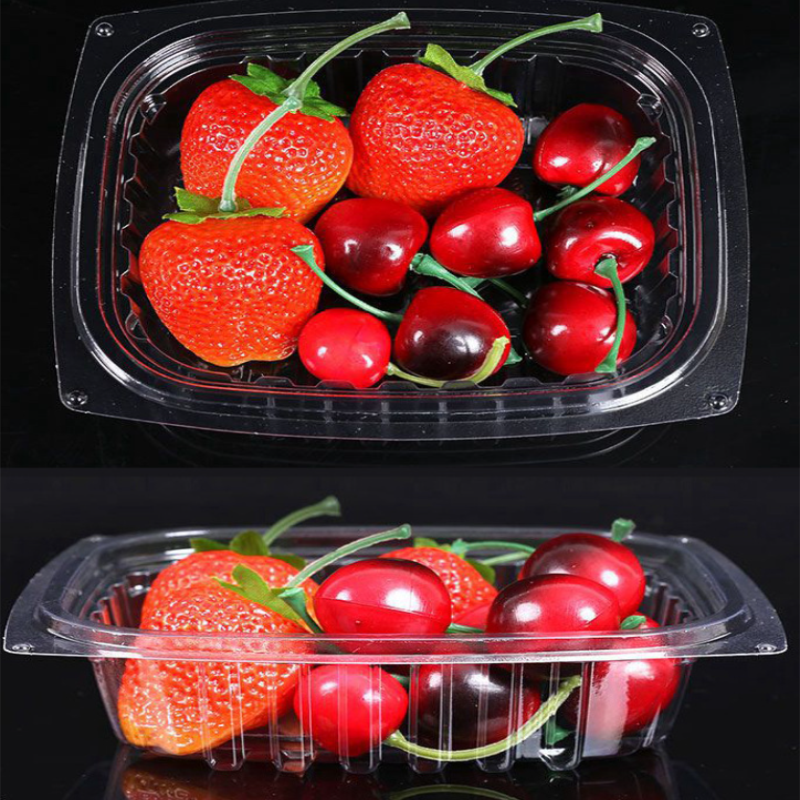
The end-destination dictates the technical specifications of your packaging components. A container designed for a retail shelf requires different structural attributes than one built for cross-country transit. You must evaluate these dimensions to ensure the packaging performs its intended function without failing under environmental stress, vibration, or handling.
Aesthetic presentation and consumer safety drive retail packaging design. Consumers expect pristine, highly visible products on the shelf. Trays must support high-clarity cling films without distorting the visual appeal or creating glare. Furthermore, these containers must resist puncture from bone-in meats, sharp produce stems, or crustacean shells. A punctured film compromises food safety, introduces oxygen, and leads to immediate product rejection at the store level.
Continuous tension characterizes retail-level stretch wrapping. The film constantly pulls against the container's structure due to its elastic memory. Leak-proof base designs maintain integrity under this relentless pressure. If the base flexes too much, the film loses tension, creating a sloppy, wrinkled appearance. A well-engineered supermarket fresh tray features reinforced ribbing that resists this inward pull, keeping the package tight and secure throughout its shelf life.
Moisture retention is another critical factor for retail environments. Fresh meats and cut fruits release liquids over time. The base design must incorporate fluid-trapping channels or accommodate absorbent soaker pads. This prevents liquids from pooling at the seal interface along the flange. If purge reaches the flange, it weakens the film adhesion, causes leaks during consumer handling, and creates an unhygienic presentation.
Transit requirements contrast sharply with retail display needs. Delivery environments subject packaging to high vibration, sudden impacts, and extreme temperature fluctuations. Aesthetic appeal takes a back seat to structural resilience and leak prevention. You need packaging that survives the journey intact, maintaining food temperature and preventing cross-contamination between different menu items.
Reinforced sidewalls prevent cross-contamination and spills. During high-vibration transport in delivery vehicles, weak sidewalls buckle, breaking the film seal and allowing liquids to escape. Secure film adhesion is non-negotiable. The flange must provide an aggressive grip for the sealing film. This ensures the package remains hermetically sealed, protecting the contents from external contaminants and preventing internal liquids from leaking into the delivery bag.
Compatibility with secondary sealing techniques is essential for the catering and delivery sectors. Many operations use manual or semi-automated methods to secure packages. "Hotel wrapping" is a standard practice for saving and transporting food. It involves tightly wrapping the entire container multiple times with commercial-grade cling film to create a spill-proof barrier. A robust food delivery tray withstands the extreme compression of hotel wrapping without collapsing, ensuring a practical and secure seal for delivery drivers and end consumers.
Sub-standard containers introduce hidden inefficiencies into your production line. While they may appear adequate during manual handling, their structural flaws manifest rapidly during high-speed automated wrapping. These flaws generate excessive physical waste, force operators to slow down machinery, and cripple your overall output capacity.
Flimsy containers directly increase film waste on the production floor. When a container bows under tension, the wrapper often applies excess film to compensate for the unstable shape, resulting in longer cut lengths per package. Additionally, collapsed containers cause misaligned seals, requiring the package to be stripped, the product salvaged, and the entire unit re-wrapped. This cycle of rework consumes massive amounts of wrapping material and significantly decreases line speed.
Precision-molded containers eliminate this physical waste. Their rigid structure supports the film perfectly on the first pass through the machine. This stability enables the use of thinner gauge films without sacrificing package integrity. By downgauging your film from a standard 60-gauge to a 45-gauge, you reduce the total volume of plastic used per package. This optimization streamlines material usage, reduces the frequency of roll changeovers on the wrapper, and keeps the line running continuously.
Consistent container geometry also minimizes product damage. When wrappers jam due to warped flanges or failed denesting, the product inside is often crushed by the seal jaws or exposed to machinery grease on the conveyor belts. Reliable containers ensure smooth transit through the heat tunnel and cutting stations, protecting the product and eliminating unnecessary food waste.
Your wrapping equipment must handle various product lines efficiently to maintain high utilization rates. Choosing highly adaptable containers maximizes the utility of your existing flow wrappers and stretch machines. Equipment that supports multiple tray types and sealing materials allows production teams to pivot quickly. You transition from packing root vegetables to delicate berries without undertaking extensive machine modifications or swapping out heavy forming tubes.
Standardized flange designs across different container depths facilitate this adaptability. The wrapper's guide rails, side belts, and sealing jaws primarily interact with the top perimeter of the container. If you maintain a uniform footprint and lip architecture, you change the depth of the container to accommodate different product volumes without recalibrating the machine's primary handling mechanisms.
Avoiding aftermarket modifications keeps your production line agile. When you select containers engineered for universal wrapper compatibility, you bypass the need for custom sensor brackets, specialized cutting blades, or modified infeed pushers. This plug-and-play compatibility ensures your facility scales operations smoothly as market demands shift and new product lines are introduced.
Introducing a new container to an existing wrapping line carries inherent mechanical risks. Without a systematic approach to testing and validation, you will experience immediate line stoppages. You must anticipate mechanical conflicts, thermal mismatches, and sensor errors, addressing them before full-scale production begins.
Line stoppages usually stem from specific, identifiable root causes. Static buildup causes lightweight films to cling to machine parts instead of wrapping smoothly around the container. Incorrect film tension settings either crush the container or leave the wrap too loose. Poor denesting feeds multiple containers into the wrapper simultaneously, jamming the infeed. Inefficient cutting of non-perforated edges leaves trailing film that tangles in the discharge conveyor rollers.
Operators need a strict troubleshooting checklist when introducing a new SKU to the line:
Conducting sample runs is mandatory. Never transition a line to a new container without running a controlled batch of at least 500 units first. Monitor the interaction between the film, the container, and the sealing jaws at various speeds. Identify the threshold where structural failure occurs and set your production speed safely below that limit.
Food-contact materials require rigorous documentation and traceability. The container plays a primary role in preserving food and preventing biological contamination. You must maintain certificates of compliance verifying that the polymer base, adhesives, and any colorants are safe for direct food contact. This documentation proves that the material will not transfer harmful chemicals or microplastics into the product under normal storage conditions.
Using non-compliant recycled materials introduces severe operational risks. Impure polymers degrade rapidly when exposed to the high temperatures of heat-sealing processes. They off-gas toxic fumes, warp unpredictably, or leach contaminants into the food. You must ensure that any recycled content meets strict regulatory standards for food safety and thermal stability.
Legacy PVC wraps present similar hazards on the production floor. When exposed to high temperatures in a shrink tunnel or during cross-sealing, PVC releases chlorine gas. This poses a respiratory health risk to operators and corrodes expensive machine components over time. Transitioning to modern, compliant materials like PET eliminates these risks and ensures a safe, reliable packaging environment.
A: Compatibility relies on uniform dimensions, rigid flanges, and consistent denesting features. These structural elements prevent optical sensor faults and ensure smooth transitions through the wrapping line. A standardized footprint allows machines to maintain high throughput without frequent recalibration, guide rail adjustments, or tooling changeovers.
A: High rigidity prevents the container from collapsing under the compressive force of stretch film memory. You must balance achieving a tight wrap for load stability with preventing structural failure. Refrigerated goods require this balance to ensure the wrap remains secure while leaving adequate room for internal air circulation and breathability.
A: No. PET possesses different surface energy, heat tolerance, and adhesion properties compared to PVC or EPS. You must select films specifically engineered for PET and recalibrate your machine's heater blocks, dwell times, and cutting blades to accommodate these distinct material characteristics.
A: Jams typically result from mismatches in container width, static electricity buildup on the film web, incorrect machine sensor alignment, or inefficient film cutting. If the new design lacks dimensional consistency, optical sensors misread its position, throwing the entire wrapping sequence and cross-seal timing out of sync.
A: Perforated films release trapped moisture, preventing condensation buildup that obscures the product. The container must feature complementary base venting or ribbing to maintain airflow and avoid blocking these perforations. Additionally, films with perforated edges at specified lengths significantly improve cutting efficiency and reduce blade wear on automated lines.
A: Optimized combinations routinely exceed 100 packs per minute on automated flow wrappers. However, this benchmark depends heavily on product stability, consistent container uniformity, and precise machine calibration to prevent tracking errors, film web snapping, and cross-seal failures.


